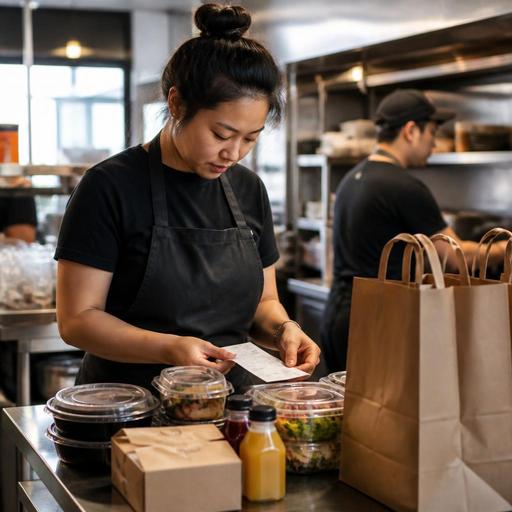
How Restaurants Can Prevent Delivery Order Errors Before They Cost Reviews
Delivery order mistakes rarely come from one big failure. More often, they come from small breakdowns that stack up during busy service: a modifier missed on the kitchen screen, a bag packed too early, a drink left on the counter, or a handoff made without a final check. For restaurants, preventing delivery order errors is not only about avoiding refunds. It is about protecting guest trust, team confidence, food quality, and the reputation that drives repeat business.
When a dine-in table gets the wrong side dish, staff can often fix it in minutes. In delivery, the same mistake becomes more expensive and more visible. The guest may be at home, the driver may already be far away, and the complaint may appear in a public review before the restaurant has a chance to respond. That is why delivery accuracy needs its own process, not just a copy of dine-in operations.
Why delivery mistakes happen even in well-run restaurants
Many operators assume delivery problems come mainly from driver delays or app issues. Those matter, but a large share of errors begins inside the restaurant. Delivery creates a second service line with different risks: sealed packaging hides mistakes, off-premise travel changes food quality, and digital order channels can introduce formatting or communication gaps.
Common root causes include:
- Fragmented order flow where orders arrive from multiple apps and staff switch between screens or printed tickets.
- Modifier confusion such as no-onion, extra sauce, allergy notes, or combo substitutions that are easy to miss during peak periods.
- No dedicated packing workflow so cooks, cashiers, and runners each assume someone else checked the order.
- Weak station coordination when hot items, cold items, desserts, and beverages are prepared in different places without one final owner.
- Packaging mismatch that causes spills, sogginess, crushed items, or missing condiments.
The lesson is simple: if delivery is treated as an add-on, mistakes multiply. If it is treated as a separate production and handoff system, accuracy improves quickly.
The most common delivery order mistakes and what causes them
1. Missing items in the bag
This is one of the most frequent and frustrating errors. It often affects drinks, sauces, desserts, side items, or combo components. The cause is usually not carelessness. It is that these items are produced at different stations and never reconciled at packing.
For example, a burger combo may be complete on the grill station, but the bottled drink is still in the fridge area and the dipping sauce is at the expo counter. If nobody owns the final bag check, the order leaves incomplete.
2. Wrong modifiers or special instructions
Guests notice these mistakes immediately because they feel personal. A burger with cheese instead of no cheese, a spicy sauce added despite a note, or a salad dressing packed incorrectly can turn a routine complaint into a serious trust issue. These mistakes often happen when modifiers are buried in a long ticket, abbreviated inconsistently, or not displayed clearly on the kitchen workflow.
3. Orders packed too early or too late
Packing too early can ruin crisp items, trap steam, and lower food quality before pickup. Packing too late can delay drivers and extend wait times. Timing errors usually happen when the team lacks a clear trigger for when to fire, finish, and stage delivery orders.
4. Driver handoff confusion
In busy periods, several orders may be waiting at once. Similar guest names, multiple bags, or unclear labeling can lead to the wrong order being handed to the wrong driver. Once that happens, recovery becomes difficult and costly.
5. Menu items that do not travel well
Some mistakes are built into the menu itself. Fries may soften, layered desserts may collapse, and fried items may lose texture if packaging and timing are not adjusted for delivery. If the menu promises a dine-in experience that the packaging cannot protect, complaints follow even when the order is technically correct.
Operational fixes that reduce errors fast
Restaurants do not need a complicated transformation to improve delivery accuracy. They need a few disciplined controls that are easy to repeat every shift.
- Create a delivery packing station. Even in a small kitchen, define one place where every delivery order is assembled, checked, sealed, and staged. This makes ownership visible and reduces the chance of items being left behind.
- Use a packing checklist by order type. Combos, family meals, beverage-heavy orders, and add-on sauces often need different checks. A short checklist helps staff verify components consistently, especially during rush periods.
- Standardize modifier visibility. Make sure special instructions are easy to see on tickets or screens. Avoid vague abbreviations. Allergy-related notes should stand out clearly in the workflow.
- Assign a final checker during peak hours. This role does not need to be permanent all day, but during high-volume windows one person should own final verification and driver handoff.
- Separate hot and cold packing. Drinks, salads, chilled desserts, and hot mains should be staged in a way that preserves temperature and prevents leaks or condensation damage.
A practical example: if your restaurant regularly misses drinks on lunch orders, do not only remind the team to be more careful. Change the process. Add drinks to the packing checklist, place beverage labels with the main order, and require the final checker to confirm them before sealing the bag.
How menu management and digital workflows prevent repeat mistakes
Many delivery errors start before the kitchen begins cooking. They begin in menu structure, order routing, and item setup. If the digital menu is unclear, the kitchen inherits confusion. If item modifiers are inconsistent across channels, staff spend service time interpreting instead of executing.
Strong menu management helps in several ways:
- Clear modifier groups reduce guesswork and make kitchen instructions more reliable.
- Accurate item availability prevents orders for sold-out items that force last-minute substitutions.
- Prep-aware menu design highlights which items need longer lead times, separate packaging, or limited delivery windows.
- Consistent naming avoids confusion between similar products, sizes, or combo variations.
This is where restaurant digitization becomes practical rather than theoretical. A connected system for menu updates, order management, and service workflows can reduce the manual steps where mistakes usually enter. If your team can manage availability quickly, route orders into a clearer workflow, and keep modifiers structured, the kitchen spends less time decoding and more time producing accurately.
For operators managing multiple channels, centralizing order flow also matters. When staff juggle several tablets, printed slips, and verbal updates, mistakes become more likely. A more unified view of incoming orders helps teams prioritize correctly and avoid duplicate or missed preparation.
Training staff to catch errors before the guest does
Even the best system fails if training is too general. Delivery needs specific routines. New team members should not only learn recipes and service standards. They should learn how delivery orders move through the restaurant from acceptance to handoff.
Focus training on these habits:
- Read back the order mentally at packing instead of assuming the bag matches the ticket.
- Check countable items such as drinks, sides, sauces, utensils, and desserts one by one.
- Escalate unclear modifiers immediately rather than guessing.
- Stage by readiness, not by arrival time alone so quality-sensitive items are not sitting too long.
- Confirm driver handoff with order name or number before release.
Managers can reinforce this with brief shift huddles. Review one delivery mistake from the previous week, identify the exact failure point, and agree on one process correction. This keeps training concrete and non-punitive. The goal is not to blame the person who packed the bag. The goal is to remove the condition that made the mistake easy.
It also helps to track complaints by category: missing item, wrong modifier, delay, packaging failure, or handoff error. You do not need elaborate statistics to learn from patterns. If the same complaint appears repeatedly, there is usually a process design issue behind it.
Protecting guest experience when something still goes wrong
No restaurant eliminates every delivery problem. What matters is how quickly and clearly the team responds. Guests are more forgiving when they feel heard and when the restaurant has a calm, consistent recovery process.
Make sure staff know:
- Who handles delivery complaints.
- What information should be checked first.
- When to offer a remake, refund path, or future credit according to policy.
- How to document the issue so it can be fixed operationally later.
The best recovery systems do two things at once: they solve the guest problem and feed information back into operations. A missing side order is not only a customer service issue. It is evidence that the packing workflow needs attention.
Delivery can expand reach and sales, but only when accuracy is treated as part of hospitality. Restaurants that reduce delivery mistakes usually do not rely on reminders alone. They build clearer menus, better order flow, stronger packing checks, and more deliberate staff routines. Platforms like Restomas can support that work by helping restaurants organize menus, manage orders, and create cleaner digital operations without adding unnecessary complexity.