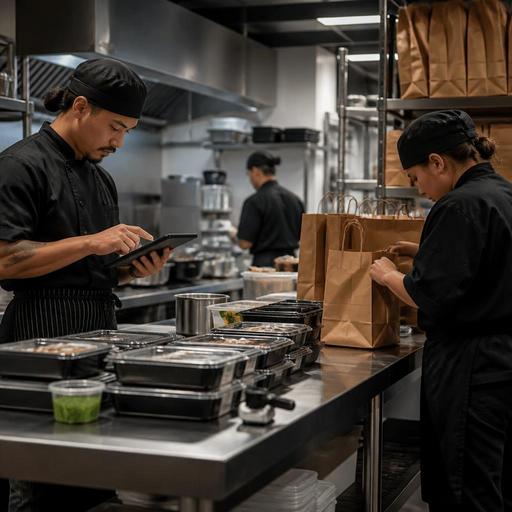
Ghost Kitchens for Restaurants: Profit Potential, Risks, and Daily Operations
Ghost kitchens for restaurants can look like a fast way to reach more delivery customers without opening a full dining room. The model is attractive because it promises lower front-of-house costs, flexible brand testing, and faster expansion into new areas. But the real question for operators is not whether the concept sounds modern. It is whether the kitchen can produce consistent food, manage delivery complexity, and protect margins every single day.
For some businesses, a ghost kitchen becomes a smart extension of an existing brand. For others, it creates menu confusion, quality problems, and order chaos. The difference usually comes down to operations, not hype. If restaurant owners treat a ghost kitchen as a disciplined production business rather than a shortcut, the model can work. If they launch too many items, too many brands, or too many delivery channels without control, the model quickly becomes expensive and difficult to manage.
What a ghost kitchen really changes in restaurant operations
A ghost kitchen removes the dining room, but it does not remove complexity. In many cases, it increases it. Instead of managing walk-in traffic, table turns, and in-person service, the business must manage packaging, dispatch timing, delivery app accuracy, item travel quality, and digital menu consistency across channels.
Consider a burger brand operating from a small production kitchen. In a dine-in setting, fries that soften after a few minutes may still reach the guest acceptably. In a ghost kitchen model, those same fries might sit through packing, courier pickup, and travel time. The issue is no longer just kitchen speed. It becomes a product design issue. The operator may need to change cut size, holding procedure, vented packaging, or even remove the item from delivery during peak periods.
Ghost kitchens also shift where the guest experience happens. Guests may never see the kitchen, staff, or dining room. Their impression of the brand comes from a few key touchpoints:
- Menu clarity in delivery apps or digital ordering pages
- Estimated preparation and delivery time
- Packaging condition on arrival
- Food temperature and texture after travel
- Accuracy of modifiers, sides, sauces, and add-ons
That means digital operations become part of hospitality. The menu, the order flow, and the handoff process are now core service functions.
Where the opportunity is real and where owners get misled
The strongest opportunity in ghost kitchens is usually focus. A restaurant can use one to serve a delivery-heavy trade area, test a narrow menu, or launch a daypart-specific concept without building a full-service location. For example, a brunch cafe may use a production kitchen to sell breakfast sandwiches and coffee bundles into office districts on weekdays. A pizza business may open a second delivery-only production point to reduce travel times and improve food quality in another neighborhood.
Another practical opportunity is brand experimentation. An operator with an existing kitchen might test a wings concept, rice bowl menu, or late-night sandwich line under a separate brand identity. This can work well if the ingredients overlap, prep methods are simple, and the team can execute without disrupting the main business.
Where owners often get misled is in assuming that every unused kitchen hour should become a new virtual brand. More brands do not automatically mean more profit. They often mean more photos, more menu maintenance, more prep lists, more training, and more room for mistakes. A chicken kitchen trying to operate as a wings brand, a salad brand, a wrap brand, and a dessert brand at the same time may overwhelm its own line.
A better approach is to ask:
- Can this concept share ingredients without harming quality?
- Can the kitchen produce it quickly during peak demand?
- Will it travel well enough to protect reviews?
- Can staff learn the menu without constant errors?
- Can all channels show the same pricing, modifiers, and availability clearly?
If the answer is unclear, the concept is probably not ready.
The biggest risks in ghost kitchen operations
Menu bloat and execution failure
The most common operational mistake is launching with too many items. Delivery menus often grow because owners want to capture every possible customer. In practice, oversized menus slow production, create stock problems, and increase substitution risk. A ghost kitchen usually performs better with a tight set of items built for speed and consistency.
Food that does not survive delivery
Some dishes are excellent in-house but weak in transit. Crispy foods lose texture. Sauced items become soggy. Cold and hot items packed together damage each other. Owners should test every item by ordering it as a customer would, then opening it after realistic travel time. If the dish fails, change the recipe, packaging, or menu placement.
Channel confusion
Ghost kitchens often sell through multiple delivery marketplaces, direct ordering pages, social media links, and phone orders. When prices, item names, or modifier rules differ across channels, staff errors rise. A guest who orders a combo on one channel may not see the same options on another. Centralized menu management becomes essential for keeping descriptions, availability, and upsells aligned.
Labor strain and unclear accountability
Because there is no dining room, owners sometimes underestimate staffing needs. But ghost kitchens still need clear production roles, expo control, packaging checks, and dispatch coordination. If no one owns final order accuracy, errors multiply quickly. A small team needs simple station design and clear responsibility for each step.
How to build a ghost kitchen that works day to day
Start with a menu engineered for delivery, not a copy of your dine-in menu. Choose items with stable holding quality, limited modifier complexity, and strong ingredient crossover. Write descriptions that help customers order correctly, especially for spice level, portion size, included sides, and add-ons.
Next, map the order journey from screen to handoff. This should include order receipt, prep timing, item assembly, packaging, labeling, courier pickup, and issue handling. Even a simple checklist can reduce mistakes. For example:
- Confirm item count before sealing the bag
- Separate hot and cold items where possible
- Mark allergy or no-onion modifications clearly
- Include sauces, cutlery, or napkins only when needed
- Pause unavailable items immediately across active channels
Owners should also set rules for peak periods. If the kitchen cannot maintain standards on every platform at once, it is better to simplify service temporarily than accept a flood of bad orders. That may mean turning off low-margin items, extending prep times, or limiting certain modifiers during rushes.
Technology helps when it reduces manual work. A digital menu system, centralized order visibility, and clear item availability controls can prevent the common problem of selling items the kitchen cannot currently produce. Integrated workflows also make it easier to update menus quickly, adjust operating hours, and keep delivery-facing information accurate.
Staff training matters just as much as software. Team members should know which items are highest risk, which packaging belongs to each order type, and how to spot common delivery mistakes before dispatch. In ghost kitchens, small errors repeat at scale. A missing sauce or wrong side is not minor if it happens all night.
Clear actions before you launch or expand a ghost kitchen
If you are considering a ghost kitchen, treat the decision as an operational rollout, not a branding exercise. Start narrow, measure friction, and expand only after the basics are stable.
- Audit your current menu and remove items that travel poorly or require too many exceptions.
- Test delivery like a customer by placing real orders at different times and reviewing quality on arrival.
- Limit brand sprawl and launch one focused concept before adding more virtual brands.
- Standardize packaging for each item type so staff do not guess during rushes.
- Centralize menu updates so prices, stock status, and modifiers stay consistent across channels.
- Assign ownership for final order checks, courier handoff, and service recovery.
- Create peak-hour rules for pausing items, adjusting prep times, and protecting kitchen flow.
The ghost kitchen model is neither a guaranteed shortcut nor an automatic problem. It is a specific operating format that rewards discipline. Restaurants that win with ghost kitchens usually do a few things very well: they keep the menu tight, design food for travel, control digital ordering details, and build repeatable kitchen routines. Restaurants that struggle usually try to scale complexity before they have process control.
If you want to explore delivery-first operations with fewer manual errors, Restomas can help you organize digital menus, ordering flows, and operational visibility in a more practical way.
