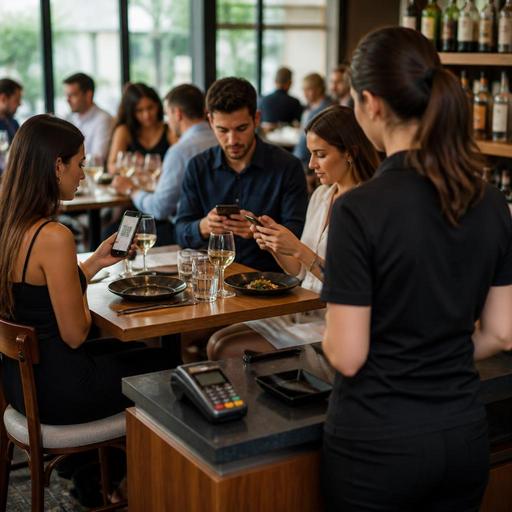
How Restaurants Lower Card Terminal Fees Through Digital Ordering
For many operators, reducing payment terminal costs is not just about negotiating with a provider. It is about redesigning the guest journey so fewer transactions depend on fixed hardware, manual handoffs, and repetitive staff steps. When restaurants move routine ordering, menu updates, and payment touchpoints into digital workflows, they often create a smoother service model with less terminal congestion, fewer avoidable errors, and more efficient use of staff time.
Payment terminals remain essential in most restaurants, especially for walk-ins, traditional table service, and guests who prefer to pay at the counter. But relying on a terminal for every small interaction can create hidden costs. These include extra hardware needs, maintenance issues, receipt paper usage, slower table turns, and staff time spent walking back and forth to complete simple transactions. A more digital workflow does not eliminate hospitality. It removes friction around the payment moment.
Why payment terminal costs are often bigger than they look
Most owners think first about rental fees or merchant service charges. Those matter, but the operational cost is often just as important. A terminal-heavy workflow can slow service during peak periods, create queues, and force staff to spend time on tasks that do not improve the guest experience.
Consider a busy cafe at lunch. If every guest orders at the counter, waits for a terminal, asks about item availability, and requests changes verbally, the queue grows quickly. One extra terminal may seem like the solution, but the deeper issue is workflow design. If guests can browse a live digital menu before reaching the cashier, or order and pay from their table or phone, the restaurant may not need to add more hardware just to handle rush periods.
In full-service restaurants, the same pattern appears differently. Servers may take an order, enter it at the POS, return later with a terminal, wait while the guest reviews the total, and then complete the transaction. That process can be perfectly acceptable, but it becomes expensive when repeated across dozens of tables every shift. Digital ordering and payment options can shorten that cycle without making service feel impersonal.
Where digital workflows reduce terminal dependency
The goal is not to force every guest into one payment method. The goal is to reduce unnecessary terminal use in moments where digital self-service works better. Restaurants can start by identifying the transactions that are most repetitive, low-risk, and easy to digitize.
- Table ordering through QR menus: Guests scan, browse, and place orders without waiting for a printed menu or a staff explanation of every item.
- Pay-at-table links or mobile checkout: Instead of bringing a terminal to every table, staff can share a secure digital payment option when appropriate.
- Prepaid pickup orders: Guests ordering ahead online can pay before arrival, reducing front-desk terminal use.
- Digitized modifiers and add-ons: Guests choose extras, sides, cooking preferences, or drink options directly, which reduces back-and-forth corrections at the register.
- Live menu availability: When sold-out items disappear or are marked clearly, staff spend less time handling refunds or awkward payment adjustments.
For example, a dessert shop with a line of evening customers may not need another counter terminal if pickup orders are prepaid and the dine-in menu is accessible through QR. A family restaurant may keep terminals for guests who want them while also offering a digital payment path for tables in a hurry. In both cases, the business is not removing choice. It is lowering the number of situations where terminal hardware is the bottleneck.
Practical ways to cut costs without disrupting service
1. Map every payment touchpoint
Start with a simple review of how orders and payments happen today. Note where guests wait, where staff duplicate work, and where payment devices are shared across too many tasks. You may find that the problem is not the number of terminals, but how often they are used for avoidable steps.
Ask questions such as:
- Do guests need a terminal just to complete small add-on purchases?
- Do servers walk long distances for bill settlement?
- Are counter staff answering menu questions that a digital menu could clarify?
- Do refunds happen because modifiers were misunderstood at the point of order?
2. Shift simple transactions online first
Do not try to digitize everything at once. Start with the easiest wins. Pickup orders, lunch preorders, and repeat items are often the best first candidates. If guests can order and pay in advance, you reduce pressure on in-store terminals while also improving throughput.
A sandwich shop, for instance, can allow office workers to place lunch orders through a digital menu before noon. The kitchen receives clearer tickets, the front counter handles fewer payment interactions, and pickup becomes a handoff instead of a full transaction.
3. Use digital menus to prevent payment-stage corrections
One overlooked source of terminal cost is the correction cycle. A guest orders, then changes a side, removes an ingredient, or realizes an item is unavailable. The payment amount changes, staff re-enter details, and sometimes the transaction must be reversed or repeated. A well-structured digital menu reduces this friction by showing options clearly before checkout.
Clear categories, required modifiers, allergen notes, and availability updates all help the guest commit to the right order earlier. That means fewer corrected tickets and fewer payment adjustments later.
4. Keep one workflow for dine-in, pickup, and delivery
Fragmented systems create hidden costs. If dine-in orders, pickup orders, and delivery requests all follow different processes, staff spend more time switching contexts and checking devices. A more unified digital workflow makes payment handling simpler because orders are easier to track from source to completion.
This is where platforms that connect QR menus, order management, and POS-related workflows become useful. The value is not just digital appearance. It is operational consistency.
How digital workflows improve guest experience at the same time
Cost reduction works best when guests also benefit. If a digital workflow feels confusing or forced, savings will be limited. But when it removes waiting and gives guests more control, it can improve satisfaction naturally.
Guests appreciate being able to:
- See current menu availability without asking staff repeatedly.
- Review modifiers and extras at their own pace.
- Split the payment journey from the ordering journey when needed.
- Pay quickly when they are in a rush.
- Avoid queueing for simple repeat orders.
In a modern cafe, for example, a guest may scan the menu, order a second coffee and pastry from the table, and pay digitally without leaving their seat or waiting for a mobile terminal. Staff are then free to focus on preparation, hospitality, and exception handling rather than routine transaction mechanics.
This also helps teams during peak hours. When fewer guests are clustered around one payment point, the room feels calmer and more organized. That can influence perceived service quality even before the food arrives.
A realistic rollout plan for restaurant owners
The best approach is incremental. Restaurants do not need to remove terminals or retrain everyone overnight. Instead, introduce digital workflows where they solve a clear operational problem.
- Step 1: Identify your busiest payment bottleneck, such as lunch queues, table settlement delays, or pickup congestion.
- Step 2: Launch one digital ordering path for that use case.
- Step 3: Clean up your menu structure so modifiers, availability, and pricing are easy to understand.
- Step 4: Train staff to guide guests confidently, without pressuring them.
- Step 5: Review whether you can reduce shared terminal pressure, defer new hardware purchases, or reassign devices more efficiently.
Over time, the savings come from several directions at once: less dependence on extra terminals, fewer order corrections, smoother rush-hour flow, and better use of labor. That is why the smartest way to reduce payment terminal costs is usually not a payment decision alone. It is an operations decision.
Restaurants that digitize ordering and menu management thoughtfully can protect service quality while lowering friction around payment. Restomas supports this kind of transition with digital menus, order workflows, and practical tools that help teams run service with more clarity.