Vegan Restaurant Food Photography Tips for Color, Light, and Freshness
Vegan restaurant food photography does more than make dishes look attractive. It shapes guest expectations, supports menu decisions, and helps plant-based food feel vivid, satisfying, and memorable before the first bite. For vegan restaurants, cafes, and delivery-focused concepts, strong images can communicate freshness, texture, and creativity in ways that plain menu text cannot. The key is not making food look artificial. It is showing real color, honest light, and the natural appeal of ingredients that already have character.
Many vegan operators face a specific challenge: some guests still assume plant-based dishes are less indulgent, less filling, or visually repetitive. Good photography helps correct that assumption. A roasted cauliflower steak can look bold and comforting. A grain bowl can feel layered and abundant. A cashew cream pasta can appear rich and polished. When your images present food clearly and consistently across menus, ordering pages, reservation touchpoints, and social channels, they become part of the guest experience and part of your operational strategy.
Start with color that feels natural and appetizing
Color is one of the biggest strengths of vegan cuisine, but it needs control. Bright produce, herbs, sauces, pickles, grains, and roasted vegetables can create strong visual contrast, yet too many competing tones can make a plate look chaotic. The goal is not maximum color. The goal is deliberate color balance.
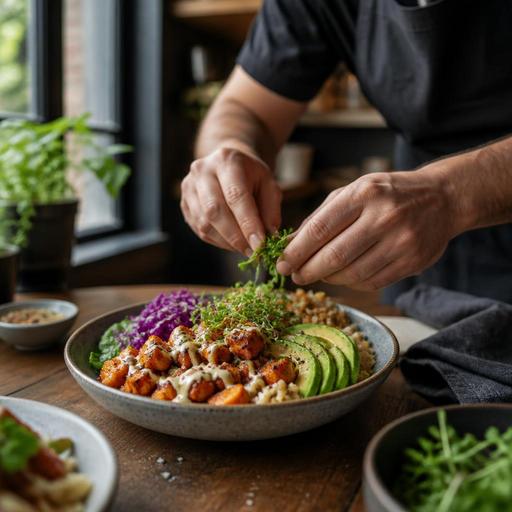
For example, a green falafel bowl with avocado, cucumber, and herbs may look fresh in person but flat in a photo if every element sits in the same tonal range. Add contrast through purple cabbage, orange carrots, white tahini drizzle, or a darker ceramic bowl. A beet hummus plate can look dramatic, but it needs a neutral base such as warm flatbread, sesame, or pale labneh-style vegan cream to keep the image balanced.
Restaurant owners can create a simple color review process before a shoot:
- Check whether the dish has a clear main color and one or two supporting colors.
- Remove garnishes that add clutter without adding contrast.
- Use plates, trays, and linens that support the food rather than compete with it.
- Keep greens fresh and unwilted, especially for herbs, salad leaves, and microgreens.
- Photograph sauces at the point when they still look glossy, not absorbed or dried out.
This matters for menu management too. If two dishes look too similar in photos, guests may struggle to see the difference quickly. Distinct visual identity between a lentil burger, a mushroom sandwich, and a grilled vegetable wrap helps reduce hesitation and makes digital menus easier to scan.
Use soft light to show texture, moisture, and depth
Light is often the difference between a dish that looks fresh and one that looks tired. Harsh overhead lighting can flatten texture and create unappealing shine on oils, bowls, and sauces. Soft side light is usually more forgiving for vegan dishes because it reveals crisp edges, steam, char, leaf texture, and the creamy body of dips or dressings.
If you photograph in your restaurant, the easiest setup is often near a window during consistent daytime hours. Place the dish so light comes from the side or slightly from behind. This gives shape to ingredients like roasted mushrooms, noodles, grains, and layered desserts. If the light is too strong, diffuse it with a thin curtain or a plain white surface. If one side becomes too dark, bounce light back with a menu board, foam board, or neutral wall.
Consider how different vegan dishes respond to light:
- Salads and bowls benefit from side light that separates leaves, seeds, grains, and toppings.
- Burgers and sandwiches need light that reveals layers inside the cut edge, not just the top bun.
- Soups and curries often look better with gentle top and side light that captures surface texture without glare.
- Bakery and desserts need soft shadows to show crumb, glaze, and fruit detail.
Do not try to fix weak lighting later with heavy editing. Oversaturated greens and unnatural orange tones can damage trust. Guests notice when the delivered or served dish looks nothing like the image. Honest lighting supports a better guest experience because it sets realistic expectations.
Build freshness into the styling, not just the editing
Freshness is central to vegan dining, and guests look for visual signals of it immediately. They notice crisp herbs, juicy citrus, glossy dressings, clean plate edges, and ingredients that still hold structure. A dish can be excellent in flavor but appear lifeless if it waits too long under heat lamps or if styling is treated as an afterthought.
Practical styling for freshness starts in the kitchen pass. Photograph dishes as close to service-ready timing as possible. Keep backup garnish portions nearby. Wipe rims. Replace bruised leaves. Refresh sauces just before shooting. If a noodle bowl thickens while waiting, remake or loosen it instead of forcing the shot.
A useful workflow is to define a photo-ready version of your best-selling dishes:
- Choose the exact plate or bowl used in service.
- Document ideal portion placement for each component.
- List final garnish added only at the last moment.
- Note how long the dish keeps its best appearance.
- Store this reference for future shoots and staff training.
This process helps with consistency across branches, seasonal updates, and delivery listings. It also makes reshoots faster because the team knows what the dish should look like. If you use QR menus or digital ordering, consistency becomes even more important. Guests compare images across channels, and mismatched presentation can create confusion.
Photograph for the menu, social media, and ordering flow differently
Not every photo should do the same job. A common mistake is using one dramatic image everywhere. In practice, menu photography, social content, and ordering interfaces need different framing and priorities.
For digital menus and ordering pages, clarity wins. Guests should see the full dish, understand portion style, and identify major ingredients quickly. Overhead or slightly angled compositions often work well here. For social media, you can be more expressive: close-up steam from a mushroom bao, a spoon pulling through vegan chocolate mousse, or a hand finishing tahini over roasted carrots. These images create appetite and brand personality.
Owners should organize photography into three categories:
- Core menu images: clean, consistent, easy to read on mobile screens.
- Campaign images: seasonal specials, limited offers, chef collaborations, holiday menus.
- Social storytelling images: prep moments, ingredient close-ups, plating, staff hands, table scenes.
This structure also improves operational efficiency. Your team spends less time searching for files, reusing poor images, or posting off-brand visuals. If your restaurant updates seasonal items regularly, keeping images tied to active menu entries prevents guests from seeing dishes that are unavailable. Platforms like Restomas can support this by helping operators keep digital menu content organized and aligned with what guests actually see when they browse or order.
Turn food photography into a repeatable restaurant system
The most effective food photography is not a one-time creative project. It is a repeatable system connected to menu updates, brand standards, and day-to-day operations. This matters especially for vegan restaurants because produce changes with seasonality, specials rotate often, and visual freshness is part of the value proposition.
Create a lightweight process your team can maintain:
- Schedule monthly or seasonal mini-shoots instead of waiting for a full rebrand.
- Prioritize best sellers, high-margin items, and dishes with strong visual appeal.
- Keep a shared reference folder for approved menu and social images.
- Review whether each image still matches current plating and portioning.
- Retire outdated photos when recipes, vessels, or garnishes change.
Also connect photography decisions to guest behavior. If a dish gets attention on social media but low conversion on the ordering page, the image may be attractive but unclear. If guests often ask what comes with a dish, the photo may not be showing the full composition. If staff repeatedly explain that a bowl is larger than it appears online, the camera angle may be misleading. These are not only marketing issues. They affect service speed, guest trust, and order confidence.
Strong vegan food photography should make the food feel alive: crisp, layered, generous, and real. When color is balanced, light is soft, and freshness is visible, your images support better menu browsing and a more confident guest decision. And when those images are updated consistently across digital touchpoints, they become a practical part of restaurant operations, not just decoration. If your team is refining digital menus and guest-facing content, Restomas can help keep those updates organized and consistent across the customer journey.