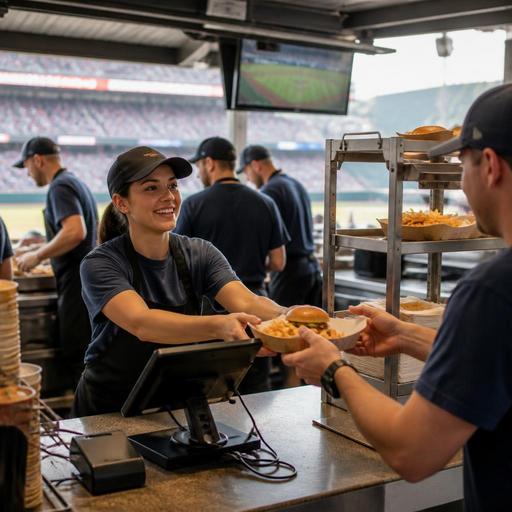
Stadium Concession Order Management for Faster U.S. Event Service
Stadium concession order management is different from running a neighborhood restaurant because every rush arrives at once, guest patience is short, and the cost of a slow handoff shows up immediately in lines, missed innings, and abandoned checks. For U.S. event venues, the goal is not only to sell more food and drinks, but to move orders through the POS, kitchen display system, pickup shelf, and payment flow with fewer bottlenecks.
Whether you operate a burger stand in a baseball park, a beer counter in an arena concourse, premium club dining in a stadium suite level, or a grab-and-go kiosk inside a college football venue, order management has to match the pace of the event. The strongest systems combine clear menus, tightly defined prep workflows, fast payment acceptance, and pickup processes that guests can understand in seconds.
Build the menu around speed, not just variety
In stadium food service, menu design is an operations decision. A long menu with too many customizations can slow the line, overwhelm the expo station, and create errors when the concourse is packed. On game day, a stand selling hot dogs, nachos, bottled water, canned beer, and pretzels usually performs better with a short, highly visible menu than with a broad mix of made-to-order items.
For example, a football stadium chicken tender stand may run faster if it limits sauce choices during halftime and groups meals into simple combos. An arena pizza counter can reduce ticket confusion by selling whole slices and preset add-ons rather than allowing open-ended modifications. A premium club buffet may still offer more variety, but the back-of-house team should stage replenishment around expected break periods, not around steady restaurant pacing.
Menu steps that help high-volume venues
- Separate fast movers from slower items so guests can choose quickly and staff can batch production.
- Use concise item names that match the POS and kitchen display system to reduce verbal corrections.
- Limit modifiers during peak windows when customization creates line backups.
- Prepare event-specific menus for baseball doubleheaders, concerts, college games, and family promotions.
- Keep digital and printed menu displays aligned so guests see the same availability everywhere.
If your venue operates under chain rules or large-scale food-service contracts, menu labeling and allergen communication may also matter. Requirements can differ based on concept size, jurisdiction, and operating model, so teams should verify current FDA and local guidance with qualified advisors and official sources before changing labeling workflows.
Route orders by production reality, not by stand location
Many stadium delays happen after the order is already paid. The issue is not the line at the register; it is the handoff between the POS, prep station, expo, and guest pickup point. A good order management setup sends each item to the right production path immediately.
Take a large U.S. baseball stadium as an example. A guest orders a hot dog, fries, and two beers at a self-order kiosk. If the whole ticket prints at one station, the beer and food may wait on each other. If the POS stack routes alcohol to a separate staffed handoff, hot items to the fryer station, and packaged goods to grab-and-go, the order can be assembled faster and with fewer stops.
This matters even more in mixed venue environments:
- Stadium bowls and concourses: prioritize speed and short dwell time.
- Suites and club lounges: support timed firing, in-seat delivery, and premium guest notes.
- Portable carts and kiosks: keep the workflow simple because labor and storage are limited.
- Airport-adjacent or transit-connected venues: prepare for compressed pre-event rushes.
Kitchen display workflows are often more reliable than paper tickets in these settings because staff can see queue priority, fulfilled items, and held orders in real time. If one fryer station is overloaded while another stand nearby has capacity, venue operators can also review whether certain menus should be rebalanced across locations before the next event.
Design pickup so guests do not create a second traffic jam
A stadium can solve ordering speed and still lose sales at pickup. Guests crowd the counter, ask whose order is ready, and block the next customer from paying. That is why pickup design matters as much as production design.
In a basketball arena, a pickup shelf for packaged snacks and bottled drinks can keep simple orders out of the main handoff lane. In a baseball park, a separate pickup window for mobile orders can reduce conflict between walk-up guests and app users. In a premium seating section, runners delivering to suites need a clear status system so food is not left sitting while the guest is away from the room.
Practical pickup improvements for U.S. venues
- Create separate lanes for ordering, waiting, and pickup whenever space allows.
- Use clear order status signals on screens or staff devices so guests do not crowd the counter.
- Assign one team member to expo during peak periods instead of splitting that role across cashiers.
- Stage high-volume packaged items near pickup to shorten final assembly time.
- Review ADA-minded access so counters, QR ordering, and pickup points remain usable for guests with different mobility or visibility needs. Operators should confirm current local and federal accessibility expectations with qualified guidance.
QR ordering can also help in clubs, patios, and designated seating sections, especially when guests do not want to leave their seats. But QR systems should be easy to scan, mobile-friendly, and connected to real inventory status. If a stand is out of pretzels or a draft line is down, the digital menu should update quickly to prevent refund lines and frustrated fans.
Get staffing, tips, and payments ready before the gates open
Event volume is predictable in one way: the rush comes in waves. Gates open, first intermission hits, halftime hits, and then everyone wants food at once. Labor scheduling should reflect those spikes instead of using a flat restaurant shift model.
A stadium operator may need more cashiers and runners in the first hour, then more expediters and refill staff during the game, then a smaller closing crew after the crowd clears. Food trucks parked outside a stadium for pregame traffic may need a different staffing plan than permanent concession stands inside. Hotel restaurants connected to event venues may also see a surge before and after games, so front-of-house and kitchen teams should align on expected timing.
Payments also need advance planning. Many U.S. venues are increasingly card-first or mobile-first, but some still handle mixed payment methods. Make sure devices can process quickly, offline contingencies are understood, and staff know how to handle voids, refunds, and duplicate taps. If your venue uses tipping prompts, service charges, or premium hospitality fees, train teams on the guest-facing explanation and reconcile those workflows in the POS. Sales tax handling, service charge treatment, and tip reporting can vary by state and local rules, so operators should verify setup and payroll treatment with their POS provider, accountant, payroll partner, or legal advisor.
Use post-event data to improve the next game, not just close the books
The best stadium food-service operators treat every event as a test. After a concert or game, review where orders stalled, which items sold out too early, which stands underperformed, and where labor was misallocated. A pickup shelf that worked for a weekday baseball game may fail during a sold-out playoff crowd. A mobile ordering zone that performs well in club seating may create confusion on a general concourse if pickup instructions are weak.
Focus your review on practical questions:
- Which menu items had the longest ticket times?
- Which stands had the highest abandonment or refund issues?
- Were direct mobile orders balanced well against walk-up traffic?
- Did delivery app integration matter for premium suites, staff meal programs, or off-hours venue operations?
- Were inventory counts accurate enough to prevent stockouts before the final quarter or inning?
- Did multi-location reporting show consistent prep and pricing across the venue?
For operators managing multiple stands, clubs, or satellite kiosks, centralized visibility matters. You want one view of menus, order flow, inventory signals, and sales patterns across the property, especially when the same kitchen supports several points of sale. That is where digital restaurant systems can reduce guesswork and help venue teams make cleaner decisions before the next event day.
Restomas helps food-service operators connect menus, ordering, POS workflows, and pickup operations in a way that can support faster, more organized event-day service.
