5 Strong Negotiation Arguments for a Yemeksepeti Commission Reduction
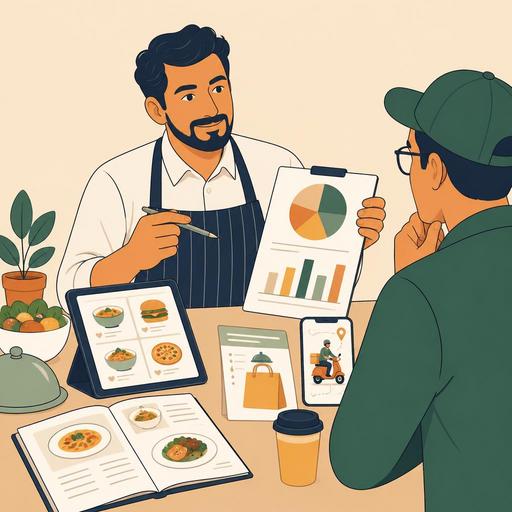
Yemeksepeti (food-delivery platform) commission negotiations are a matter that directly affects profitability for restaurants whose delivery volume is growing. Many businesses see the commission rate as fixed and unchangeable; yet with the right preparation, the right data, and the right framing, these talks can proceed far more constructively. The critical point here is to treat the negotiation not merely as a "request to lower the rate," but as a professional negotiation that makes the commercial value you provide to the platform visible. In this article, we will examine 5 strong arguments restaurant owners can use, the preparation before the meeting, and the steps that increase the chance of getting a concrete result at the table.
Before Entering Commission Negotiations: Prepare a File, Not a Demand
Many restaurants begin the meeting with the sentence "the commission is too high." Although this approach is understandable, its persuasive power is low. What matters to the platform side is your business's performance within the system and the commercial contribution it can generate, as much as your sustainability. For this reason, prepare a short but strong negotiation file before the meeting.
This file should include the following headings:
- Order volume trend: The growth or stability over recent months
- Average basket: The value your product mix creates for the platform
- Operational quality: Cancellation rate, preparation time, customer complaint management
- Customer loyalty signals: The profile of users who reorder
- Profitability pressure: The impact of the current commission due to rising costs
If you track your orders digitally, measure menu performance, and follow contribution margin on an item basis, doing this preparation becomes much easier. Digital tools such as a QR menu, order management, and item performance tracking clarify which item actually leaves a profit and how the platform channel affects the business.
Argument 1: A Strong Operation Is Value for the Platform Too
One of the most effective arguments in a commission negotiation is the restaurant's operational reliability. Platforms want to work not only with businesses that receive many orders, but also with businesses that don't leave customers disappointed. Orders being prepared on time, a low cancellation rate, missing items not occurring, and the scarcity of recurring problems that spoil customer satisfaction all form a serious bargaining chip.
For example, you can use the following framing in the meeting: "We invest in operational quality as much as order volume. We manage our menu more carefully, quickly close out-of-stock items, and keep the kitchen flow orderly. For this reason, we are a partner that protects the customer experience on the platform side. We would like the commission structure to be reassessed accordingly."
The aim here is to present the request for a reduction not as a complaint, but as a justified expectation based on performance.
Argument 2: Average Basket and Product Mix Create Higher-Quality Revenue
Not every order generates the same value. Some restaurants operate with high order counts but a low average basket, while others generate more balanced, higher-quality revenue. If your business is successful in items that grow the basket, such as beverages, desserts, sides, or family menus, be sure to use this in the negotiation.
From the platform's perspective, what matters is not just the number of orders; the total value generated per order also matters. For this reason, the following kind of approach can be effective:
"We are not just a restaurant that takes orders; we are a business that grows the basket. Thanks to our menu design, we generate a stronger transaction value per user. We request that the commission be reconsidered in a way that takes this contribution into account."
To give concrete examples, analyze your product groups. Which items provide meaningful value not on their own, but when sold together? Which campaigns grow the basket without eroding profit? The answers to these questions move the negotiation from emotion to data. Restaurants that practice menu engineering have a much greater advantage at this point.
Argument 3: Brand Strength and External Traffic Bring Extra Customers to the Platform
Some restaurants gain customers from the order platform; others also bring customers to the platform. If your social media visibility is strong, your Google reviews stand out, or you are a brand known within your neighborhood or district, this should be used in the negotiation. That is because part of your visibility within the platform is fueled by your off-platform brand investment.
Restaurants with a strong presence on Instagram, a Google Business Profile, a loyal customer base, and solid review management in particular can convey this message: "We are not a passive listing on the platform. We are a brand that generates demand through our own marketing power, that is searched for, and that is preferred. For this reason, the relationship is not one-sided; we, too, contribute traffic and conversion to the platform."
Avoid exaggerated claims here. Instead of unmeasured sentences like "we bring thousands of customers," use concrete signals:
- Directing followers to the order channel in social media content
- Customers searching by your brand name
- Steady demand forming for certain items
- Repeat-order behavior being visible in reviews
This argument is especially effective for businesses with multiple locations or strong recognition in their area.
Argument 4: Without Sustainable Profitability, Quality Drops, and That Affects the Platform Too
In a commission negotiation, saying only "it's costing us" is not enough. The truly strong framing is to explain that a high commission, in the long run, puts pressure on product quality, service standards, and the customer experience. This should be built with a realistic business perspective rather than the language of threat.
For example, when food costs, packaging expenses, staff costs, and discount pressure all rise together, the restaurant's room to maneuver narrows. In this case, the business either strains its portion standard, narrows the menu, or becomes unable to sustain campaigns. All of these can affect the end-user experience.
In the meeting, the following approach is balanced: "Our aim is not just a short-term rate reduction; it is to grow the platform channel sustainably. A healthy commission structure helps us protect product quality, the operational standard, and customer satisfaction."
This argument moves the negotiation onto common ground rather than conflict with the other side.
Argument 5: A Restaurant That Invests in Alternative Channels Sits at a Stronger Table
One of the strongest bargaining factors is not being dependent on a single channel. Businesses that grow their own order channel, improve the in-table experience with a QR menu, and regularly manage reservation and customer data can behave in a more controlled way in platform negotiations. That is because they do not sit at the table as the "obligated party."
This does not mean leaving the platform. On the contrary, it means managing the platform as part of the channel mix. As the restaurant's own digital infrastructure grows stronger, the following sentence becomes more convincing: "We value this channel and want to grow it together; however, we carefully manage channel-based profitability. If a balanced commission structure is established, we can invest even more in this partnership."
Restaurants that are prepared in the following areas in particular gain an advantage in negotiations:
- Menu control: Knowing which item will be highlighted in which channel
- Order flow visibility: Detecting bottlenecks during busy hours
- Customer data: Seeing reorder and preference patterns
- Channel strategy: Managing delivery, takeaway, table service, and reservations together
For this reason, digitalization is important not only for creating order internally, but also for strengthening your hand in external negotiations.
Which Mistakes Should You Avoid in the Meeting?
As important as the right argument is avoiding the wrong tone. The following mistakes weaken your negotiating power:
- Pure complaint language: Grievances without data do not persuade
- Vague demands: Not stating clearly what you want
- Exaggerated threats: The unrealistic "we'll leave right now" approach
- Defending unprofitable campaigns: Confusing revenue with profit
- An unprepared meeting: Not knowing your menu, basket, operations, and customer data
The best approach is to conduct a short, professional, data-driven, and solution-oriented meeting. If possible, state your request clearly in a single sentence, then share the 3 main data points that support it, and indicate that you are open to discussing an alternative model.
Conclusion: A Commission Negotiation Also Reveals a Restaurant's Management Quality
A Yemeksepeti commission negotiation is not just a purchasing or sales meeting; it reveals how much the restaurant measures, how systematically it works, and how seriously it takes channel profitability. A strong operation, high basket quality, brand demand, the need for sustainable profitability, and the presence of an alternative channel are the 5 most solid arguments you can use at the table.
The commission rate may not always change in a single meeting. But if you establish a data-driven, consistent, and professional framework, you can negotiate not just the rate, but also campaign terms, the visibility model, or the partnership structure on healthier ground. As digital visibility and operational data increase in restaurant management, such negotiations are conducted with strategy rather than intuition.
Restomas can help you support such commercial decisions with more solid data by making your menu and order flow more visible.
