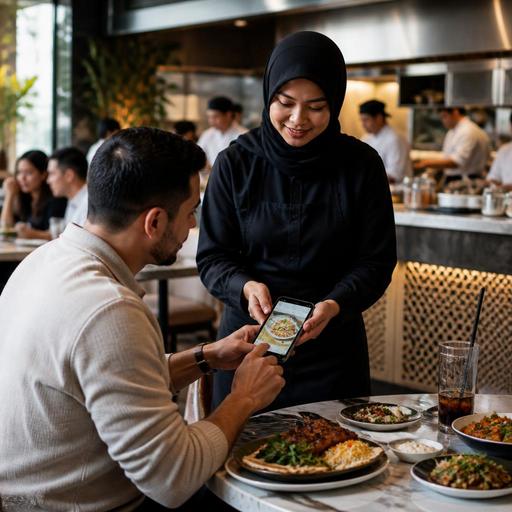
Halal Certification for Tourist-Area Restaurants: A Practical Guide
For restaurants in travel hubs, halal certification for tourist-area restaurants is not only a compliance topic. It is a trust signal that affects where guests choose to eat, how confidently they order, and whether they recommend your business to family, tour leaders, and online communities. In districts where international visitors compare options quickly, clear halal practices can reduce hesitation and help your team serve guests with more confidence.
Many operators think about halal certification only as a document on the wall. In practice, it is an operating system. It influences sourcing, storage, prep flow, menu wording, staff scripts, reservation notes, and guest communication across dine-in, takeaway, and delivery. For restaurants serving tourist markets, the real challenge is consistency: a guest who sees halal messaging online expects the same clarity on the menu, at the table, and when asking detailed questions about ingredients.
Why halal clarity matters in tourist markets
Tourist-heavy locations create a special service environment. Guests often make quick decisions, may not speak the local language fluently, and may have limited time between tours, flights, or events. In that setting, unclear halal information creates friction. Even a strong menu can lose the order if guests are unsure about meat sourcing, marinades, cooking oils, or cross-contact risks.
Consider a family arriving from abroad in a busy old-town district. They scan several menus outside different restaurants. One venue says only halal friendly, another says nothing, and a third clearly identifies certified meat items, non-meat items, and preparation notes through a digital menu. The third restaurant makes the decision easier. The issue is not only belief or dietary preference; it is speed, clarity, and confidence.
Clear halal communication also supports mixed groups. A business traveler may dine with colleagues who have different dietary needs. If your menu structure helps the table identify suitable dishes without a long back-and-forth with staff, the entire group is more likely to stay and order comfortably.
What certification changes inside daily operations
Certification standards vary by market and certifying body, so restaurant owners should always follow the requirements of the relevant authority in their country. Still, the operational themes are similar. Certification usually requires discipline in purchasing, receiving, storage, preparation, labeling, and documentation. That is why owners should approach halal readiness as a workflow project, not only a marketing project.
Supplier and purchasing control
Your first control point is procurement. If your menu promises halal dishes, your team needs a reliable process for checking supplier certificates, product specifications, and replacement items. Problems often begin when a regular product is unavailable and staff accept an alternative without confirming its status. A simple approved-supplier list and a routine for rechecking documents can prevent this.
Storage and prep separation
Even restaurants with good intentions can create confusion in storage or prep. Separate labeling, dedicated containers, and clear shelf organization help reduce mistakes. In a compact kitchen, visual controls matter: color-coded tubs, prep boards assigned by use, and written receiving labels can be more effective than verbal reminders alone.
Menu accuracy and modifier control
Tourist-facing menus often include many modifiers: extra sauce, add-ons, combo choices, shared platters, kids' items, and seasonal specials. These details matter. A dish may be halal in its base form but become questionable with a stock-based sauce, a dessert garnish, or an optional topping. The menu should identify what is halal clearly and avoid broad claims if only selected items qualify.
- Mark certified items precisely, not vaguely.
- List key ingredients or sauce notes where confusion is likely.
- Review translations so the same meaning appears in every language version.
- Update seasonal or limited-time items before they go live.
How to communicate halal status without creating guest confusion
Trust is built when your communication is specific and calm. Overpromising is risky. If only certain proteins are certified, say so. If your kitchen also handles non-halal items, do not hide that fact; explain your controls clearly. Many guests appreciate transparency more than broad claims.
A practical communication structure works across three touchpoints: before arrival, during ordering, and after questions from the table.
Before arrival: online discovery
Your website, map listings, and social profiles should align. If you mention halal options in one place but omit details elsewhere, guests may hesitate. A short statement such as certified halal chicken and lamb dishes available; ask staff for the full halal menu section is more useful than generic wording. If you use a QR menu, create a category or filter that helps guests find relevant items quickly.
During ordering: menu design and staff language
On the menu, use plain labels and avoid clutter. Staff should have a short, consistent script. For example, a server can explain which items are certified, which items are vegetarian or seafood-based, and how the kitchen handles preparation. This is especially useful during peak service when long explanations slow down the line.
After questions: escalation and verification
Some guests will ask detailed questions about gelatin, stocks, frying oil, or desserts. Front-of-house teams should know when to answer directly and when to confirm with a manager or chef. A written internal reference, available on a staff device or service station, reduces guesswork and keeps answers consistent.
Training staff for confidence, not memorization
Many service issues come from uncertainty, not bad intent. Staff members may be afraid of giving the wrong answer, especially in multilingual tourist areas. Training should focus on decision paths rather than long theory. The goal is to help employees respond accurately and quickly.
- Teach the approved item list and any exceptions.
- Explain common guest questions about meat, sauces, desserts, and cross-contact.
- Create an escalation rule for anything uncertain.
- Practice short service scripts for busy periods.
- Refresh training when suppliers or menus change.
For example, if your breakfast cafe serves both halal-certified sausage and non-certified imported charcuterie, the team should know exactly how to explain the difference. If your burger restaurant has one certified beef supplier but rotates special sauces, staff need immediate access to the current approved list before each shift.
Using digital systems to protect consistency across channels
Restaurants in tourist markets often manage several versions of the menu at once: dine-in, QR menu, delivery apps, printed takeaway sheets, and social media highlights. This is where errors appear. A dish label updated in one channel but not another can damage trust quickly. Digital menu management helps owners keep halal information aligned across touchpoints.
In practical terms, a digital system can support halal operations by making updates easier when ingredients, suppliers, or item availability change. If a certified product is temporarily unavailable, you can remove or relabel the affected dish promptly instead of relying on staff to explain the issue table by table. Reservation notes can also help when groups request halal-friendly dining in advance, allowing the floor and kitchen teams to prepare.
Operationally, this connects guest experience with back-of-house discipline. Clear item tags, modifier control, multilingual menu descriptions, and centralized updates reduce the gap between what the guest sees and what the kitchen can deliver. For restaurants using platforms like Restomas, these digital workflows can make compliance communication smoother without turning the dining experience into paperwork.
Halal certification is most effective when it is visible in the right places and supported by everyday routines behind the scenes. For tourist-market restaurants, the opportunity is simple: make trust easy. When sourcing is controlled, the menu is accurate, staff are prepared, and digital channels stay synchronized, guests spend less time doubting and more time ordering. If you want to organize halal menu information more clearly across guest touchpoints, Restomas can help simplify those updates.
