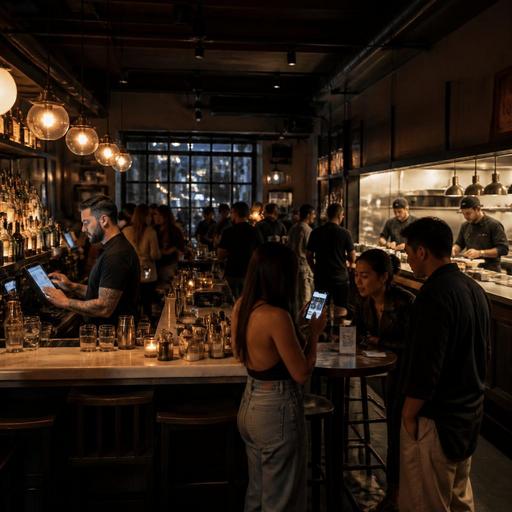
Late-Night Bar Operations: QR Ordering, Open Tabs, and Kitchen Cutoff Workflows
Late-night bar operations with QR ordering, open tabs, and kitchen cutoff workflows can run smoothly when the front of house, bar, kitchen, and POS all follow the same playbook. In the United States, the late-night rush often means crowded checks, guests moving between bar seats and tables, delivery app orders arriving near closing, and a kitchen trying to wind down without hurting revenue. Whether you run a neighborhood sports bar in Chicago, a hotel lobby bar in Dallas, a taco-and-margarita spot in Phoenix, or a college-town pub in Columbus, the goal is the same: keep orders accurate, keep tabs controlled, and set clear last-call expectations for food and drinks.
Build one late-night service flow before the rush starts
Many late-night problems are not caused by volume alone. They happen because staff members are following different rules. A bartender may keep drink tabs open, a server may close every check at each round, and the kitchen may stop taking hot food while QR ordering still shows the full menu. That mismatch creates guest frustration and comped items.
Start by defining one service flow for the final hours of operation. In a U.S. bar setting, that usually means deciding:
- When guests can still open a tab
- When QR ordering is available for drinks only versus food and drinks
- When the kitchen stops accepting full-menu orders
- Which late-night items remain available after cutoff
- How delivery apps and direct online ordering are paused near close
- Who is responsible for final tab review before closeout
For example, a Brooklyn cocktail bar with a small kitchen might stop full food service at 10:30 p.m., keep cold snacks and dessert available until 11:30 p.m., and allow QR reorders for drinks until the local last-call window. A suburban grill in Atlanta may keep a reduced fryer menu for dine-in and takeout while turning off third-party delivery earlier so the line can focus on in-house guests.
The key is to reflect these decisions everywhere guests interact: the QR menu, the POS, the kitchen display system, server scripts, and pickup workflow.
Use QR ordering to reduce congestion, not create confusion
QR ordering works well in late-night environments because it helps guests reorder another round without waiting for a server to weave through a packed room. It can also help a two-person floor team manage patio tables, bar rail guests, and lounge seating more efficiently. But QR ordering only helps if the menu logic matches the real operation.
Late at night, simplify the digital menu. Hide unavailable categories instead of leaving guests to discover an item is sold out after they try to order it. Group products by operational reality, such as late-night cocktails, draft beer, shots and canned beverages, and kitchen still open.
In a Nashville live-music bar, for instance, QR ordering can keep guests in their seats during a set while reducing traffic at the service well. In a Las Vegas hotel bar, it can help convention guests split payment more easily without flagging down staff every round. In both cases, the digital menu should clearly indicate what is still available and whether orders go to the bar, the kitchen, or both.
Operators should also think about guest access. QR ordering should not be the only path to service. Some guests may prefer a printed menu, need verbal assistance, or have device or accessibility limitations. An ADA-minded workflow means staff can offer alternatives and the digital experience is readable and straightforward. Accessibility requirements can vary by situation, so verify current expectations with qualified advisors or official guidance when reviewing your setup.
Control open tabs without slowing down the bar
Open tabs are standard in U.S. bars, but late-night volume increases risk: forgotten cards, duplicate tabs, walkouts, and confusion when guests switch seats or move from table service to the bar. The best operators make tab handling boring and predictable.
Set clear rules for where tabs live
If a guest starts at a table and then moves to the bar, staff should know whether the tab transfers, closes, or stays attached to the original service area. A simple rule prevents disputes at 12:45 a.m. In many bars, one staff member or manager should approve transfers after a certain hour.
Use preauthorization and naming standards
When your payment flow supports it, preauthorized tabs can reduce risk and speed closeout. Staff should also follow a naming convention for tabs in the POS, especially in noisy rooms where several guests may share the same first name. A useful standard might include first name plus seat area or a short descriptor, such as Chris patio high-top or Maya bar seat 8.
Decide how tipping appears in each channel
Late-night bars often combine bartender service, server service, QR ordering, and sometimes direct online pickup from a late-night food menu. Review how tip prompts, service charges, and sales tax appear on each type of check so staff can explain them consistently. Because U.S. rules on tipped wages, tip pooling, service charges, and reporting can differ by state and city, treat this as an operational review and confirm current requirements with your payroll provider, accountant, attorney, or official guidance.
A practical example: a Denver bar that uses QR ordering for patio drink reorders should test whether the guest sees the same payment flow and tipping options as a guest closing out with the bartender. Inconsistent prompts create friction and staff complaints.
Set kitchen cutoff times that protect both revenue and closing labor
Kitchen cutoff times are one of the biggest late-night pressure points. If the cutoff is too early, you leave money on the table. If it is too late, your cooks stay long after the bar has slowed, labor costs rise, and cleaning gets delayed. The answer is not just picking a time. It is building a controlled late-night menu and communicating it clearly.
Use a phased cutoff model:
- Full menu cutoff: stop items with the longest prep time, most modifiers, or heaviest cleanup burden.
- Reduced menu window: keep a short list of high-margin, fast-execution items like fries, wings, sliders, flatbreads, or cold sandwiches.
- Final food cutoff: shut off kitchen ordering in QR, POS, direct online ordering, and delivery apps at the same time.
This matters even more for multi-channel operators. A sports bar near an airport might still have bar guests ordering at 11:05 p.m. while a delivery marketplace tablet pings with a burger order at 11:07 p.m. If the kitchen is already breaking down the grill, that order either causes a delay or becomes a refund problem.
For a food-focused bar, assign one manager or closing lead to own channel shutoff. That person should confirm:
- QR food ordering reflects the reduced menu
- Third-party delivery is paused at the planned time
- Direct online ordering matches the same cutoff
- The kitchen display system no longer routes closed categories
- Pickup shelves and curbside pickup instructions are removed or updated near close
If you operate in a chain or multi-location group, avoid giving every location a different cutoff logic unless there is a real market reason. Standard playbooks make training easier, while location-level overrides can still account for stadium event nights, college-town weekends, or hotel occupancy spikes.
Train the closing team around exceptions, not just routine
Late-night success depends on how your team handles edge cases. Train for the moments that create the most friction:
- A guest orders from QR after the kitchen cutoff but before the menu updates
- A server forgets to transfer a tab before the guest sits at the bar
- A delivery driver arrives after the kitchen has shut down hot stations
- A guest disputes a drink added to a shared tab
- A barback or closing bartender finds unsigned checks at the end of the night
Write short scripts and escalation steps. For example, if a guest scans a QR code at 10:58 p.m. and the kitchen cutoff is 11:00 p.m., decide whether the order is honored based on order timestamp, payment completion, or kitchen acceptance. Then train staff to explain that policy calmly and consistently.
Also review your end-of-night reporting. Managers should compare voids, discounts, reopened checks, and closed-with-cash tabs from late-night shifts. That pattern review often reveals whether the issue is menu design, payment flow, staffing, or cutoff timing.
For U.S. operators, this is also the right time to double-check local alcohol service rules, labor scheduling practices, break requirements, and any city or state requirements tied to payments, service charges, or recordkeeping. Those rules vary, so confirm current obligations with qualified advisors and official sources.
Late-night bar operations do not need more complexity. They need tighter handoffs between the QR menu, POS, kitchen display system, payment flow, and closing checklist. Restomas helps operators connect those pieces so late-night service can stay faster, clearer, and easier to manage.
