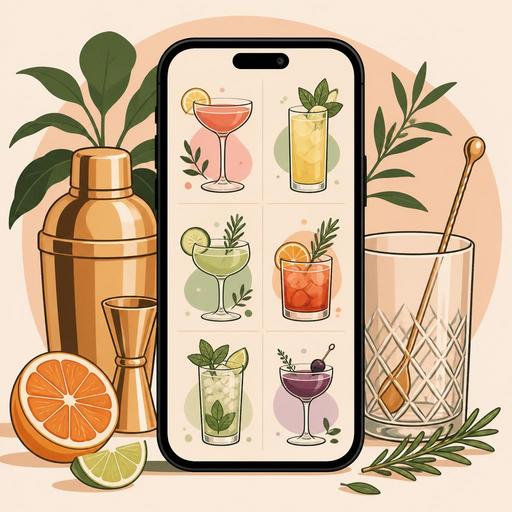
12 Effective Tips for Cocktail Menu Design in Bars
Cocktail menu design is not merely an aesthetic detail in bars; it directly affects the guest's speed of choice, ordering confidence, and the perceived quality of the experience. A well-structured menu reduces the staff's explanation burden during busy hours, makes the signature drinks you want to highlight visible, and prevents the guest from feeling indecisive. Especially for businesses using QR menus and digital menus, the visual and textual structure of the cocktail menu becomes even more critical than a physical menu; because every line on the screen can turn into a tap or an order decision.
Many bar menus get stuck between two extremes: either they become unintelligible because they are too creative, or they fail to build brand character because they are too standard. Yet the goal is to build a structure that is both memorable and easy to read. The following 12 tips are prepared not just to make your cocktail menu look more elegant, but to make it more functional.
1) First, clarify the role of the menu
A cocktail menu is more than a list of drinks. It should answer these questions for the guest: "What do people drink here?", "Which option suits my palate?", "How is the balance between price and content?" Before moving on to design, define the main role of your menu. Will you highlight signature cocktails, draw strength from classics, or aim for a fast order flow?
For example, while short but characterful descriptions work in a speakeasy-style bar, presenting refreshing, fruity, and easy-drinking options with clear categories may be more effective at a terrace bar. The design language should be an extension of the concept; it should not get in front of the concept.
2) Establish visual hierarchy: Don't let everything shout at once
The most common mistake on a menu is showing all products with the same weight. Yet you need to give the guest's eye a flow. To do this, create a deliberate hierarchy among product names, short descriptions, prices, and emphasis areas.
- The product name should be distinguishable at first glance.
- The description should remain short, supportive, and clear.
- The price should be visible but should not draw all the attention to itself.
- Signature products should be highlighted with a small mark, a separate heading, or an ordering advantage.
This hierarchy is even more important on a QR menu. On a phone, card structures with a well-balanced heading-and-description ratio are scanned more comfortably than long blocks. This way the guest does not get tired of reading the menu.
3) Translate category names into the customer's language
Although headings like "Signature," "Classics," and "Twists" are common in the industry, they may not be descriptive for every guest. Category names should appeal not to people who know bar culture, but to everyone who wants to place an order. For this reason, use guiding rather than technical headings.
Example category structures could be as follows:
- Refreshing and Citrus-Forward
- Sweet and Smooth
- Strong and Intense in Character
- Spicy and Experimental
- Non-Alcoholic Cocktails
This approach lowers the threshold of choice, especially for guests with limited cocktail knowledge. The menu will have already partly answered the staff's question, "What kind of thing do you like?"
4) Seek clarity, not poetry, in product descriptions
Cocktail descriptions are often written more abstractly than necessary. Phrases like "a sophisticated touch evoking summer evenings" may sound pleasant; but they do not give the guest enough information about the drink's taste. A good description supports the decision, not the emotion.
An effective description balances these four elements:
- The base spirit: gin, rum, tequila, whiskey, and so on
- The dominant taste profile: sour, sweet, bitter, fruity, smoky
- The distinctive ingredient: passion fruit, basil, ginger, coffee, and the like
- The serving difference: sparkling, frozen, large serve, low ABV, and so on
For example, the phrase "gin-based, with notes of grapefruit and rosemary, with a refreshing finish" is both short and functional. The guest knows what to expect. This clarity also reduces the risk of wrong orders and returns.
5) Shorten the menu length, reduce decision fatigue
Offering more options does not always mean more sales. On a cocktail menu in particular, too much clutter lengthens the decision time. Instead of 18 products with very similar profiles, 8-12 products that are distinctly different from one another often create a more powerful experience.
As a practical method, you can apply the following filter in each category: If this product were removed from the menu, would the guest truly feel a gap? If the answer is no, that product may be cluttering the menu. Simplifying the menu is beneficial both for purchasing psychology and for operations. Less complexity means more consistent production at the bar.
6) If you are going to use photos, be selective
Putting a photo of every product on cocktail menus often weakens the premium perception. Instead, using strong, consistent, and professional images for a few signature products gives better results. The purpose of a photo is not to fill the menu, but to make the decision easier.
A concrete example: if you have a signature cocktail served with a smoke effect, a single high-quality image of it can arouse curiosity. However, for a standard gin and tonic, images shot in poor light can lower the overall perception of the menu. If there are photos on the digital menu, make sure they are consistent with the product's actual presentation; otherwise the guest's expectations are thrown off.
7) Place pricing correctly within the design
Hiding the price damages trust, while over-emphasizing it can cheapen the experience. For this reason, prices should be easy to find on the menu but should not be the main character. Also, hard-aligning all prices into a single column reduces the menu to a mere comparison of numbers.
Instead, build a layout balanced with the product name and description. In the premium segment, some bars want to sell the experience rather than the price; however, today's guest expects transparency, especially on a QR menu. Hidden prices, or prices stated afterward, can lead to lost conversions.
8) Highlight signature cocktails not just by name but with context
Giving a cocktail a creative name is not enough on its own. Names like "Midnight Theory" or "Velvet Echo" can be intriguing; but if the content and taste profile are not clear, they may not turn into an order. When highlighting your signature products, add a little context.
For example, the following structure is functional: Midnight Theory – bourbon-based, intense and full-bodied with coffee liqueur and a touch of orange. This approach brings brand character and intelligibility together.
9) Don't push non-alcoholic options to the side
Non-alcoholic cocktails should not look like the "obligatory" section of the menu. For guests who are driving, those who do not drink alcohol, or those who simply want a light option, this area is an important part of the customer experience. Well-written non-alcoholic options affect the satisfaction of the entire group.
In this section, instead of just saying "we also have non-alcoholic options," offer genuinely appealing taste profiles. For example, a combination of pomegranate, lime, tonic, and fresh mint can be not just an alternative but a reason for choice in its own right.
10) Incorporate the reality of season and stock into the menu design
A menu that looks great but is operationally unsustainable creates problems very quickly. Fresh herbs, special syrups, imported ingredients, or labor-intensive garnishes may look appealing in the menu design but can cause disruptions during service. For this reason, the menu copy must be compatible with the bar's real working tempo.
A digital menu provides an important advantage here. Updating seasonal products quickly, temporarily closing a cocktail that is out of stock, or instantly bringing a new summer cocktail to the front is far more practical than with physical printing. Keeping menu management up to date is also valuable in terms of customer trust.
11) Align the staff with the menu's language
No matter how well the menu is written, if the service team does not speak the same language, the experience breaks down. The product description given by the bartender or service staff and the wording written on the menu must support each other. To this end, you can prepare a short internal-communication note for each cocktail: the base spirit, the prominent aroma, a similar classic, and the recommended customer profile.
For example, if a staff member can say, "If you like a Negroni but are looking for something more citrus-forward, you can try this," then the menu truly supports sales. The menu does not work alone; it works together with the team.
12) Don't publish the menu and forget it; measure and revise
A cocktail menu is a living tool. Which product is viewed more, which one does not convert into orders, which description stays too long, which category gets no interest at all? The answers to these questions are found through regular review. Especially businesses using a digital infrastructure can evaluate design decisions together with operational data, because they can make menu updates more nimbly.
Create a simple checklist:
- Are the products you most want to sell genuinely visible?
- Can the descriptions be read in a single breath?
- Do products with similar taste profiles create unnecessary repetition?
- Are the price, content, and presentation language consistent?
- Can the staff describe every product on the menu with the same clarity?
A good cocktail menu is not only one that looks beautiful; it is one that is read quickly, understood correctly, and ordered from comfortably. Design decisions must be thought through together with operations, staff workload, and digital usage habits as much as aesthetics. This way, the menu simplifies the sales flow while telling the story of your bar's character.
If you want to manage your menu more flexibly in the digital space and simplify the guest experience, you can take a look at Restomas's menu management solutions suitable for restaurants and bars.
