5 Profitable Effects of Digitizing Phone Orders in Restaurants
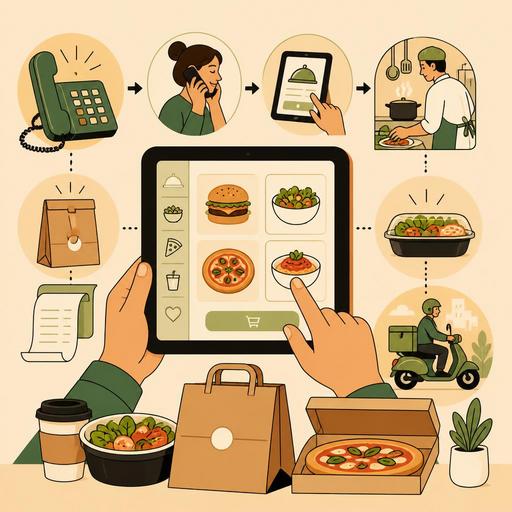
Digitizing phone orders is, for many restaurants, not merely a technological innovation; it is a management decision that directly affects profitability, workflow, and the customer experience. Taking orders by phone, especially during busy hours, produces invisible costs such as misunderstandings, incomplete addresses, forgotten add-on items, disorganized kitchen flow, and confusion over collections. A digital order flow, by contrast, makes the process clearer, more trackable, and more manageable, from order intake to relaying it to the kitchen, payment, and reporting.
Many businesses have for years viewed phone orders as a method that "works." Yet a system that works and a system that is measurably efficient are not the same thing. With an order taken by phone, staff have to describe the menu, explain promotions, confirm the address, take notes, and relay it to the kitchen all at the same time. In a digital order, a significant portion of this burden is standardized through the system. In the end, the issue isn't only reducing calls; it's lowering the cost of errors, balancing the per-person workload, and producing data on which you can make sounder decisions.
1. It lowers the cost of order errors
One of the most common problems when taking orders by phone is that order information is recorded incompletely or incorrectly. When the product size, drink preference, extra ingredient, allergen note, delivery address, or payment method is entered incorrectly, the price is not just customer dissatisfaction. The incorrectly prepared product is remade, the courier is dispatched a second time, the kitchen flow is disrupted, and a discount or refund often comes onto the agenda.
In a digital order flow, the customer selects the product themselves, required fields are filled in, and additional preferences are conveyed in a standard structure. This reduces uncertainties such as "did they say large?" or "did they want it without onions?" For restaurants using a QR menu, an online order screen, or centralized order management in particular, this standardization reduces the risk of re-making products in the kitchen.
Let's consider a concrete example: in an order for lahmacun taken by phone, it's mentioned that an ayran should be added but no note is made. When the customer sees the missing item on delivery, they place a call, the courier heads out again, or a refund is issued. In a digital order, however, products appear on the basket screen, the customer confirms, and the team sees the order complete on a single screen. As small as this difference may seem, it creates significant operational savings at the end of the day.
2. It reclaims staff time for sales and service
In most businesses, phone orders create an invisible workload. The staff member taking the call doesn't just take the order; they describe the menu, explain out-of-stock products, repeat promotional information, write down the address, and often relay it separately to the kitchen. During busy hours this creates distraction across the register, the dining room, and takeaway.
Digitization produces a direct financial impact here because the same staff hour is used more efficiently. Instead of relaying information on the phone, team members can focus on the following areas:
- Improving the customer experience at the table
- Increasing the quality of takeaway preparation
- Coordinating the delivery flow better
- Capitalizing on upselling opportunities at the moment of service
Especially in restaurants operating with limited staff, shifting orders to a digital channel can improve capacity management without hiring new staff. The critical point here is not that the phone disappears entirely; it's that the phone stops being the mandatory primary channel. Businesses working with order management and menu editing tools like Restomas can reduce the repetitive explanation burden on the team by keeping product information up to date.
3. It provides visibility that increases basket value
With a phone order, the customer usually states the two or three products on their mind and the call wraps up quickly. On a digital order screen, however, the customer sees all the categories, drinks, desserts, side items, and additional options. This visibility supports add-on sales naturally, without a pushy sales pitch.
The financial benefit here is not only "selling more products." The real value is standardizing the menu's selling power. Upselling performance on the phone varies with staff experience, energy, and how busy it is. On a digital menu, suggested products, complementary options, and popular combinations are presented consistently to every customer.
For example, a fries, drink, or dessert suggestion appearing in the system for a customer ordering a burger is more effective than the question "anything else?" on the phone. Because the customer makes their decision within a visual and structured flow. Moreover, presenting promotions or menu combinations clearly in digital form also reduces misunderstandings.
The thing to be careful of here is not to crowd the menu but to make decision-making easier. Highlighting the most frequently co-purchased products, sensible add-on options, and high-margin complements yields better results.
4. It makes cash flow and reporting more predictable
Another significant problem with phone orders is record-keeping discipline. An order may be written on different scraps of paper, the payment method may change later, a canceled order may not be entered into the system, or the effect of promotional products may not be clearly seen. This makes it difficult to soundly answer questions such as how much of which product sold, on which channel a problem arose, and during which hours a bottleneck formed at the end of the day.
Digital order management, on the other hand, turns the order into data. Information such as which product sold when, which order was canceled, which channel generated the most demand, and during which hours the kitchen got backed up can be tracked more systematically. This way, the business owner can look not only at the total revenue at the register but also at how that revenue was generated.
This visibility is very valuable financially because it enables the right action. For example:
- You can re-plan prep staff during busy hours.
- You can revise frequently canceled products on the menu.
- You can simplify product names that are often misunderstood over the phone.
- You can create menu bundles based on the most frequently co-purchased products.
POS integration and consolidating the order flow in one place are also important here. Instead of fragmented data across separate channels, you gain a more holistic view of operations. This helps you build a restaurant structure managed by records rather than intuition.
5. It reduces customer loss and supports repeat orders
Bad experiences with phone orders often lead to silent customer loss. A customer who experiences a long wait, a busy line, a wrong address, a missing item, or a confusing payment process doesn't always complain; they turn to another alternative for their next order. This loss goes unnoticed amid daily busyness but affects revenue over the medium term.
A digital order flow offers the customer a more controlled experience. Steps such as easy access to the menu, clear product descriptions, seeing the order summary, entering the correct address, and where possible tracking the order status increase the sense of trust. Trust is the foundation of repeat orders in the food and beverage sector.
What matters here is not only setting up technology but designing the flow correctly. Restaurant owners can get faster results with these actions:
- Write the most-asked-about products on the phone more descriptively on the digital menu.
- Standardize the options for extra ingredients and content to be removed.
- Create ready-made combinations for frequently ordered products.
- Keep the delivery and payment steps as short as possible.
- Simplify the order screen that the kitchen and takeaway team will see.
Such a structure not only makes the first order easier but also makes the second order more likely. Because the perception "ordering from this restaurant is effortless" forms in the customer's mind.
A practical roadmap for getting the transition right
The transition from phone orders to digital orders doesn't have to happen overnight. The healthiest method is to manage the two channels together for a while and gradually get the customer used to the new behavior. To do this, first get your menu clean and up to date digitally. Then offer customers who call an order link, a QR menu, or a quick-access option. Within the team as well, clarify how the order will drop into the kitchen and how cancellations and changes will be managed.
You also need to measure success correctly. Look not only at total order count but at missing-item complaints, cancellation reasons, call volume, preparation time, and add-on sales. This way you can see the true financial impact of digitization more clearly.
Phone orders may be a familiar habit for many restaurants; but for businesses that want to grow, reduce the cost of errors, and build a more predictable operation, a digital order flow is now a strong competitive advantage. Restomas can offer a simple starting point for businesses that want to manage menu, order flow, and restaurant operations more systematically in one place.
