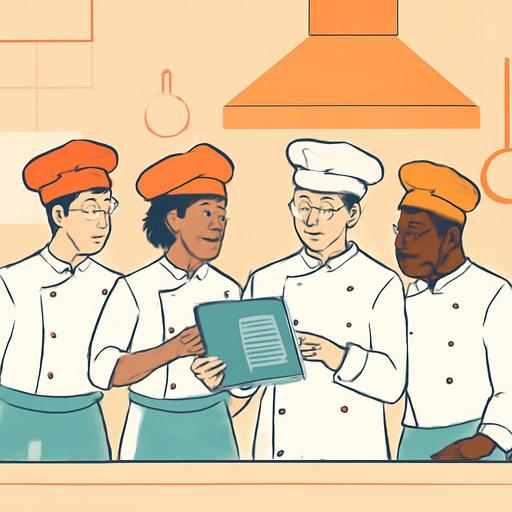
Getting Your Kitchen Team Ready for Menu Changes Within 24 Hours
In the restaurant business, menu changes are inevitable. When you update your menu for reasons such as seasonal items, supplier changes, customer feedback, or cost optimization, the real challenge begins in the kitchen. You can plan a new recipe perfectly on paper, but if your kitchen team is not ready for that change, chaos ensues during service. Orders go out late, portions become inconsistent, and customer satisfaction drops.
Successful restaurants treat menu updates not just as a recipe change, but as a process of team management and operational planning. In this article, we will share concrete, actionable strategies for adapting your kitchen staff to new menu items quickly.
The Preparation Process Before a Menu Change
Most restaurant owners leave the menu change to the last minute and announce it to their team by saying, "Starting tomorrow, we'll be making these dishes." This approach causes stress and mistakes even among experienced chefs. For a successful transition, a preparation period of at least one week is essential.
The first step is to clarify the scope of the change. List the items being completely removed from the menu, the newly added ones, and the modified ones separately. Determine at which station (hot kitchen, cold kitchen, grill, etc.) each new dish will be prepared. This helps the staff build a mental map.
Let's take the example of a chef working at an Italian restaurant: when a new type of risotto is added to the menu, simply learning the recipe is not enough. Capturing the exact consistency of the risotto requires 15-20 attempts. For this reason, organizing practice sessions before the change is critical.
The Power of a Digital Recipe Library
Paper recipes get lost, wet, or greasy in the kitchen environment. Creating a digital recipe library that kitchen staff can access at any time significantly speeds up the adaptation process. A cook who can instantly reach recipes on a tablet or kitchen screen can check ingredient ratios, cooking times, and presentation details.
This system is a lifesaver, especially for part-time or newly hired staff. Instead of answering the same questions every time, experienced chefs can direct team members to the digital resource. This both saves time and guarantees consistency of information.
A Phased Training and Practice Method
Instead of implementing all menu changes at once, adopt a phased approach. Here is a proven three-stage training model:
- Stage 1 - Theoretical Introduction: In short 15-minute briefings before the shift, explain the concept, ingredients, and expected presentation standard of the new dishes. Show visual examples.
- Stage 2 - Live Demo: The head chef or sous chef prepares the new dish from start to finish while the whole team watches. During this, emphasize the critical points (heat adjustment, timing, presentation details).
- Stage 3 - Hands-On Practice: Each member of the kitchen staff prepares the new dish at least twice, preferably during quiet shift hours. The head chef provides feedback and makes corrections if necessary.
This process can take an average of 2-3 days for a new main course and 1 day for a simple starter or dessert. Investing in this process rather than rushing increases customer satisfaction and operational efficiency in the long run.
Optimize Your Communication Channels
The kitchen is a busy, noisy, and stressful environment. Communication breakdowns are very common during menu changes. Servers don't know the contents of the new dishes, kitchen staff misinterpret special requests, or order notes are conveyed incompletely.
Digital ordering systems solve this problem at its root. The order given to the server is pushed directly to the kitchen screen, eliminating the problem of deciphering handwritten notes. Especially for new menu items, allergies or special requests are displayed clearly. When the kitchen staff completes an order, they mark it in the system, and the service team is notified instantly.
For example, imagine you add a vegan burger to your menu. The difference between a classic burger and a vegan burger can easily be missed on a handwritten order. In a digital system, however, the order can be highlighted with color codes or special markers, so the cook minimizes the risk of using the wrong ingredient.
Standard Portioning and Quality Control
One of the biggest problems in the first weeks of menu changes is portion inconsistency. One cook serves 200 grams of meat, while another puts 250 grams. This both disrupts cost control and leads to inconsistency in the customer experience.
Set clear portion standards for each new dish and post them in visible places in the kitchen. Use scales, measuring tools, and standard containers. During the first two weeks, conduct random portion checks on every shift and provide feedback.
An In-Team Mentorship System
Pair experienced kitchen staff with new or less experienced employees. Designate a "master" for each new menu item. This person should be the one who prepares that dish best and maintains the standards. Other team members can direct their questions to this mentor.
This system not only develops technical skills but also strengthens solidarity within the team. Experienced staff feel valued, while new staff find a safe learning environment.
A Real-Time Feedback Loop
The first week of a menu change is critical. During this period, continuously collect feedback from the kitchen and service teams. Which dishes take longer to prepare than expected? Which ingredients are missing or were ordered incorrectly? Which dishes are customers asking questions about or complaining about?
Hold short daily meetings (5-10 minutes). In these meetings:
- Discuss the problems experienced in the previous shift
- Share and recognize successful practices
- Make quick corrections to recipes or procedures if necessary
- Answer team members' questions
This loop prevents small problems from turning into big crises. It also shows team members that their ideas are valuable and increases engagement.
The Role of Technology: Real-Time Menu Synchronization
In traditional menu management, when a change is made, the physical menus, price list, kitchen recipe cards, and server notes all have to be updated separately. This process is both time-consuming and prone to errors. When an item is removed from the menu, the kitchen may not be informed and may continue to prepare it.
Modern digital menu systems synchronize all platforms with a single central update. The change in the QR menu, the recipes on the kitchen screen, and the prices in the POS system are all updated simultaneously. This eliminates human error and speeds up the adaptation process.
For example, in a seafood restaurant where the menu changes based on the daily fresh catch, when the products coming from the supplier in the morning are entered into the system, the QR menu updates automatically and the kitchen team sees in real time which fish are available. Servers present the dishes of the day to customers with accurate information.
Motivation and Recognition
Menu changes mean extra workload for kitchen staff. They have to learn new recipes, change their habits, and work more carefully. To ease this process, motivate your team and recognize their successes.
Reward staff who successfully implement new menu items. This can be a financial bonus, but it can also be recognition in a team meeting, flexible shift selection, or the opportunity to learn new skills. Positive reinforcement reduces resistance to change and keeps the team open to new ideas.
Continuous Improvement and Documentation
Learn from your first menu-change experience and document the process. Which training methods worked? Which communication channels were effective? Which problems recurred?
Create a checklist for the next menu update. This list might include:
- Informing the team at least 7 days before the change date
- Updating the digital library for new recipes
- Planning at least two practice sessions
- Setting and posting portion standards
- Briefing the service team on the new dishes
- Holding daily feedback meetings during the first week
This systematic approach makes the process smoother with each new change. Over time, your team gets used to change and the adaptation time shortens.
Success in menu updates is measured not just by good recipes, but by how quickly and effectively your team adapts to these changes. With proper preparation, effective communication, smart use of digital tools, and continuous feedback, you can make your kitchen staff stronger with every new menu cycle. Integrated digital solutions like Restomas contribute to your restaurant's operational success by making this process more transparent, error-free, and efficient.
