Halal Certification for Tourist-Focused Restaurants: A Practical Guide
For restaurants in tourist areas, halal certification for tourist-focused restaurants is not only a compliance topic. It is a trust signal that can influence where guests choose to dine, how confident they feel when ordering, and whether they recommend the venue to family, tour groups, or online travel communities. Travelers often make quick decisions in unfamiliar cities, and when halal status is unclear, even a strong menu or attractive location may not be enough to win the visit.
Restaurant owners often think halal service begins and ends with sourcing approved meat. In practice, the guest experience depends on a wider system: supplier verification, storage rules, preparation controls, menu clarity, staff communication, and consistent updates across every customer touchpoint. A restaurant that serves tourists needs these details to be especially visible, because many guests cannot easily ask follow-up questions in their first language and may rely on digital menus, maps listings, or review platforms before they ever walk in.
Why halal clarity matters in tourist markets
Tourist-heavy restaurants serve guests with different cultural expectations, languages, and levels of familiarity with local dining norms. Some travelers look specifically for certified halal venues before a trip. Others may simply want reassurance that ingredients, preparation methods, and handling practices align with their needs. In both cases, uncertainty creates friction.
A practical example is a mixed-menu restaurant in a city center that serves grilled chicken, seafood, desserts, and breakfast. If the venue uses halal-certified poultry but also stores non-halal products in the same kitchen, the owner must think carefully about separation, labeling, and what can honestly be promised. If the menu says “halal” without context, staff may be forced into difficult conversations at the table. If the menu explains which dishes are certified, which are halal-friendly, and how the kitchen manages handling, guests can make informed choices with less hesitation.
Clarity also matters online. A tourist may find a restaurant through Google Maps, Instagram, a hotel recommendation, or a QR menu shared by a friend. If halal information differs across channels, trust drops quickly. The goal is not to add more marketing language. The goal is to make operational truth easy to verify.
What certification changes inside the operation
Halal certification usually requires discipline that improves broader restaurant management as well. Even when local certification processes differ, restaurant operators typically need to document sourcing, handling, storage, and preparation standards. This pushes the business toward clearer workflows.
Supplier and ingredient control
Start with a simple rule: every halal claim should connect to a document and a process. Keep supplier certificates, product specifications, and delivery records organized and current. If a marinade, sauce, dessert topping, or frozen item contains ingredients that need verification, do not assume they are acceptable because the main protein is certified. Tourist guests often ask about hidden ingredients, not just meat.
Useful actions include:
- Maintain a current list of approved halal suppliers and products.
- Record expiry dates for supplier certificates and review them before renewal deadlines.
- Separate verified items from non-verified items in receiving, storage, and prep areas.
- Check secondary ingredients such as broths, flavorings, gelatin, and ready-made sauces.
Kitchen separation and preparation rules
Certification becomes fragile when kitchens rely on informal habits. Shared cutting boards, unclear containers, reused fryer oil, or unlabeled prep bins can undermine guest trust and create compliance risk. This is especially important in restaurants that serve both halal and non-halal items.
Owners should define specific rules for:
- Receiving and labeling products on arrival.
- Cold storage placement and shelf separation.
- Color-coded tools or dedicated equipment where needed.
- Prep sequencing to reduce cross-contact risk.
- Cleaning and verification between tasks.
These controls should be written clearly enough that a new cook or temporary staff member can follow them without guesswork.
How to communicate halal status without confusing guests
Many restaurants lose credibility not because their standards are weak, but because their messaging is vague. Words like “Muslim-friendly” or “halal options available” can mean very different things to different guests. A better approach is to describe the status of the menu honestly and consistently.
For example, a restaurant might say that all chicken and beef dishes are prepared using halal-certified meat, while seafood dishes are available separately, and certain items are not halal-certified. Another venue may state that the entire kitchen and menu are halal certified. These are very different operating models, and both can be communicated clearly if the business avoids overstatement.
Your menu should answer the questions guests are most likely to ask:
- Is the whole restaurant halal certified, or only selected items?
- Which dishes are covered?
- Are there any shared preparation areas or equipment?
- Can staff explain sourcing if requested?
- Is the same information visible online and in-house?
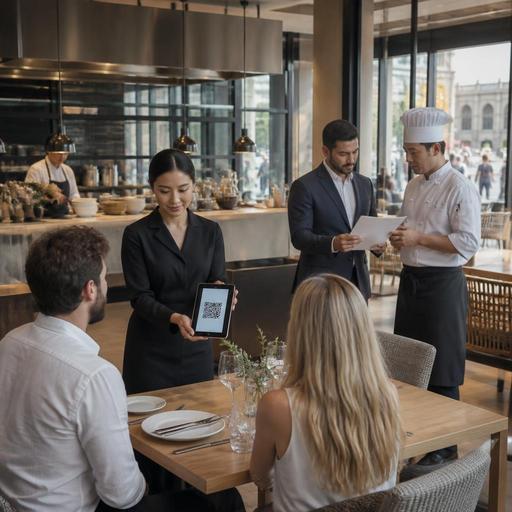
Digital menus are especially helpful here because they allow owners to update item descriptions, icons, and notes quickly when suppliers or recipes change. If a certified product is temporarily unavailable, the menu should be updated immediately rather than leaving staff to explain the issue table by table. That kind of real-time accuracy supports both compliance and guest confidence.
Staff training is where trust is won or lost
A certification file in the office does not help if the front-of-house team gives uncertain or contradictory answers. Tourist guests often ask short, direct questions: “Is this halal?” “Is the whole kitchen halal?” “Do you use separate fryers?” Staff should be trained to answer accurately, briefly, and without improvising.
Create a simple internal guide for servers, cashiers, and hosts. It should include approved wording, escalation steps, and common guest questions. A practical script can prevent confusion. For instance, staff can be trained to say, “These dishes are prepared with halal-certified chicken and beef. These menu items are not part of that certification. If you would like, I can show you the marked section of the menu.” This is better than a vague yes or an overconfident promise.
Training should also cover operational behavior, not just guest communication. If a server notices the wrong label on a menu item, or a kitchen worker spots a storage issue, the team should know who to alert and how to correct it quickly. This is where digital operations tools can help managers centralize menu edits, track item availability, and keep service teams aligned across shifts.
Building a halal-friendly guest journey from discovery to repeat visits
Tourists interact with a restaurant long before they sit down. They may search for halal restaurants nearby, browse photos, scan reviews, or open a QR menu outside the door. Each step should reduce uncertainty.
A practical guest journey might look like this:
- The restaurant’s map listing mentions halal status in clear language.
- Social media highlights signature dishes and shows clean, credible food presentation without making unclear claims.
- The QR menu marks certified items consistently and includes concise notes.
- Staff confirm details confidently when guests ask.
- The ordering and kitchen workflow keeps certified items accurate and available.
This approach is not about turning halal into a promotional slogan. It is about reducing friction for a valuable customer segment. When guests feel respected and informed, they are more likely to leave positive reviews, recommend the venue to other travelers, and return on later visits.
Restaurant operators should review their setup quarterly. Check whether supplier documents are current, whether menu labels still match reality, whether staff scripts are being used correctly, and whether online listings reflect the same information guests see in the restaurant. Small inconsistencies can create outsized trust problems in tourist markets.
For growing restaurants, this is also a scalability issue. A single-location business may manage halal communication through memory and informal routines, but that becomes risky as the menu expands, seasonal items rotate, or additional branches open. Standardized digital menu management, item-level notes, and centralized updates make it easier to protect both guest trust and operational consistency.
Restaurants that want to serve tourist markets well should treat halal certification as part of a larger service design: truthful menus, disciplined kitchen workflows, trained staff, and accurate digital communication. Restomas can support that process by helping teams keep QR menus, item details, and ordering information consistent across guest touchpoints.
