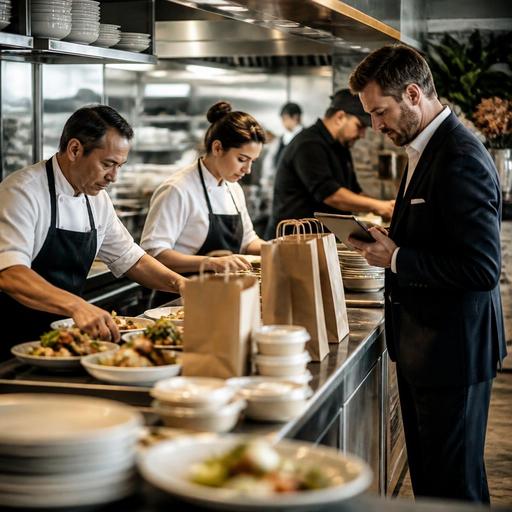
How Large Kitchens Prioritize VIP, Dine-In, and Delivery Orders
Order prioritization in large kitchens is one of the hardest operational problems for busy restaurants. A full dining room, a sudden wave of delivery tickets, and a VIP table that expects flawless timing can all hit the pass at once. When there is no clear system, the kitchen starts reacting emotionally instead of operationally: the loudest ticket wins, cooks interrupt each other, and guests feel the inconsistency. A better approach is to design a practical order flow that protects guest experience, keeps the line moving, and gives staff a shared rule set for what should happen first.
For restaurant owners and operations managers, the goal is not to make every order equally urgent. The goal is to define which orders need immediate action, which need timed pacing, and which can be sequenced without hurting quality. In large kitchens, this usually means separating urgency from importance, then translating both into clear prep, fire, and handoff rules.
Why order prioritization breaks down in large kitchens
Many kitchens do not fail because the team is weak. They fail because the flow is unclear. A dine-in steak may need exact timing with sides and table service, while a delivery burger may need fast assembly but can tolerate a different plating sequence. A VIP tasting table may require extra communication with the floor. If all of these land in the same queue without context, the kitchen sees only volume, not service logic.
Common breakdowns usually look like this:
- Delivery platforms inject orders in bursts that overwhelm the hot line.
- Servers verbally push dine-in tickets, creating side-channel pressure.
- VIP orders are flagged informally, so only some team members know about them.
- Expo has no reliable view of prep times across stations.
- Staff rushes one channel and delays another, causing re-fires and complaints.
In practice, the issue is rarely speed alone. It is sequencing. A kitchen can produce a high number of covers and still disappoint guests if order release, station timing, and packaging are not aligned.
Build a priority framework before service starts
The best kitchens decide their priority logic before the rush, not during it. This framework should be simple enough to use under pressure and specific enough to guide real decisions. Instead of saying, “VIP comes first,” define what that actually means. Does it mean immediate fire? More quality checks? Different expo attention? Separate plating? The answer depends on your concept.
Use three layers of priority
A useful model is to classify orders through three layers:
- Service channel: dine-in, pickup, delivery, catering, room service, or event orders.
- Time sensitivity: immediate fire, hold and pace, or timed dispatch.
- Experience level: standard, special handling, or VIP.
This matters because a VIP order is not always the fastest order, and a delivery order is not always the least important. For example, a dine-in anniversary table may need synchronized mains after a starter course, while a delivery order may need to leave within a packaging window to avoid quality loss. Both are important, but they require different treatment.
Define what each label changes
Each priority label should trigger a visible action. For example:
- VIP dine-in: alert expo, assign final plate check, confirm course pacing with front-of-house.
- Standard dine-in: fire by course timing and table pacing.
- Delivery: batch by dispatch window, package at the last possible quality-safe moment.
- Pickup: avoid early completion if the guest arrival time is known.
When labels do not change behavior, they become noise. The kitchen needs priority markers that affect timing, not just appearance on a screen or printed chit.
Separate firing decisions from production decisions
One of the most useful changes in large kitchens is to stop treating every incoming order as a command to cook immediately. Some items should start at once because they take time. Others should wait because they degrade quickly or must align with service. This is where firing logic becomes more important than simple queue order.
Consider a practical example. A VIP table orders grilled fish, a risotto, and two appetizers. At the same moment, six delivery orders arrive with fried items and sandwiches. If the line simply cooks in ticket order, the VIP table may receive uneven timing and the delivery food may sit too long before courier pickup. A better system breaks the orders into production phases:
- Start long-cook items early.
- Hold fragile finishing steps until handoff is near.
- Use expo to coordinate final fire based on table status or courier readiness.
This approach reduces two common problems: dead time on the pass and food quality decline after completion. It also helps staff understand that “priority” does not always mean “cook now.” Sometimes it means “reserve attention and time the finish correctly.”
Give expo and stations the same view of urgency
Large kitchens depend on shared visibility. If grill, fry, garde manger, and packaging each interpret urgency differently, the pass becomes a negotiation point. The expo role is critical because expo translates service needs into station actions. But expo can only do that well if the information is structured and visible.
At minimum, teams should see:
- Order channel
- Promised or target time
- Course stage for dine-in
- Special handling flags such as allergy, VIP, or courier arrival
- Station status and bottlenecks
For example, if delivery orders are piling up because fry station is overloaded, the answer may not be to shout for speed. It may be to pause incoming availability for specific menu items, re-sequence packaging, or route one staff member temporarily to support that station. Good prioritization is operational, not theatrical.
Digital order management helps here because it can centralize incoming channels and make priority visible without relying on memory or verbal relays. A platform such as Restomas can support this kind of structured flow by connecting QR ordering, order routing, and service visibility so teams can react from the same information set instead of fragmented signals.
Train staff on exception handling, not just standard flow
Most kitchens can manage a normal lunch or dinner. The true test is what happens when exceptions stack up at the same time. A delayed courier, a VIP walk-in, a table recook, and a late server fire can quickly break a fragile system. That is why staff training should include exception scenarios, not only ideal workflows.
Set decision rules for common pressure points
Restaurant owners should document a few non-negotiable rules. For example:
- Do not bump delivery ahead of all dine-in tickets unless dispatch timing will fail.
- Do not fire full VIP mains until front-of-house confirms course readiness.
- Do not complete fried delivery items too early if the courier is not close.
- Do not allow verbal rush requests to override the visible queue without expo approval.
These rules reduce politics during service. They also protect newer staff from having to guess whose pressure matters most.
Review service after the shift
Post-shift reviews do not need to be long. Focus on a few questions:
- Which channel created the most disruption today?
- Where did timing fail: firing, plating, packaging, or handoff?
- Which menu items caused station congestion?
- Did VIP handling improve the guest experience or just create stress?
These conversations often reveal that the problem is not staffing alone. Sometimes the menu mix is wrong for peak periods. Sometimes the delivery window is too aggressive for the current line setup. Sometimes dine-in pacing is weak because front-of-house and kitchen are not sharing timing clearly enough.
Practical actions restaurant owners can take this month
If your kitchen regularly juggles dine-in, VIP, and delivery traffic, start with a few controlled changes instead of a full overhaul:
- Map your order channels and identify where each one enters the kitchen flow.
- Create three to five clear priority labels that actually change kitchen behavior.
- Define firing rules by menu type, especially for items that lose quality quickly.
- Give expo final authority over queue exceptions during service.
- Run one pre-service briefing each day on expected pressure points.
- Review one disrupted service period per week and adjust routing or staffing accordingly.
Large-kitchen prioritization works best when it is visible, repeatable, and calm. The aim is not to make every order feel urgent; it is to make every order move through the right path at the right time. When that happens, VIP guests feel cared for, dine-in tables experience better pacing, delivery orders leave in stronger condition, and staff spend less energy reacting to chaos.
If you are refining multi-channel kitchen flow, Restomas can help organize digital menus, order routing, and service visibility in a way that supports clearer prioritization across the whole operation.
