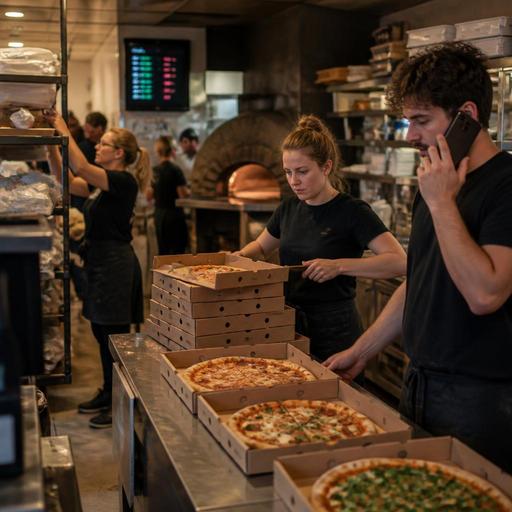
Pizza Shop KDS Timing: Manage Ovens, Drivers, and Pickup Windows
Pizza shop KDS timing can do much more than replace paper tickets. In a U.S. pizzeria, timing on the kitchen display system can help you control the oven queue, coordinate drivers, and give guests more realistic pickup windows for takeout and delivery. Whether you run a neighborhood slice shop, a suburban delivery-heavy store, a campus-adjacent late-night spot, or a multi-location pizza brand, better timing logic can reduce remake risk, improve handoff flow, and make the whole line feel less chaotic during the dinner rush.
Why timing matters more in pizza than in many other restaurants
Pizza operations have a unique bottleneck: the oven. A burger line can often add another grill spot or hold fries for a short period, but pizza quality depends on a tight sequence from make line to oven to cut table to handoff. If tickets hit the kitchen display in the wrong order, your team may build pies too early, crowd the oven, or leave finished orders waiting too long on a pickup shelf.
That problem gets bigger when your shop handles multiple channels at once. A Friday night pizzeria in Chicago might have dine-in tabs, direct online ordering, delivery app tickets, curbside pickup, and phone orders all feeding the same kitchen. If every order is treated as “fire now,” the oven becomes the traffic jam and the front counter starts quoting pickup times that the kitchen cannot actually hit.
A well-configured KDS helps by showing not just what to make, but when to start each step. Instead of relying on a counter person to guess, the system can support pacing rules based on promised time, order channel, item mix, and handoff method.
Set KDS timing around the oven, not just the order time
Many operators schedule tickets from the moment the order is placed. For pizza, a better approach is to work backward from the promised ready time. That means estimating prep time, oven time, cut-and-box time, and handoff time, then using the KDS to release the order to the make line at the right moment.
For example, a New Jersey delivery-focused pizza shop may promise a 6:30 p.m. pickup for a large pepperoni, garlic knots, and a two-liter soda. If the food items need a predictable amount of make and bake time, the KDS should hold or stage that order so it does not enter active production too early. The soda can be added at packout, while the hot items are timed closer to the guest arrival window.
Practical setup points include:
- Create station-specific timing: Make line, oven, cut table, and expo may each need separate views or countdown cues.
- Use promised-time prioritization: Sort active tickets by target handoff time, not only by order entry time.
- Flag large or complex orders: A school catering order with ten pies should not be treated like a single carryout pizza.
- Separate hot-hold risk items: Thin-crust pies, fries, wings, and toasted subs lose quality fast if finished too early.
- Build in channel buffers: Third-party delivery orders may need different pacing than direct pickup orders, depending on your driver flow and marketplace pickup behavior.
If you operate multiple locations, avoid copying one timing template to every store without review. A downtown store with foot traffic and pickup shelves may need different pacing than a suburban store handling curbside pickup and a larger delivery radius.
Use KDS timing to coordinate drivers and delivery handoff
In many U.S. pizza shops, the biggest service failure is not the bake. It is the handoff. Food can be ready, but the driver is still out on a run, or a third-party courier has not arrived. When that happens, your cut table becomes a holding zone and quality drops.
KDS timing works best when it connects kitchen readiness with dispatch decisions. If you use in-house drivers, the manager or dispatcher should be able to see when orders are expected to leave the oven and group runs accordingly. A driver returning in eight minutes should influence when the next delivery order is fired. That is especially important for Friday night peaks, bad weather, game-day surges, and apartment-heavy routes where drop-offs take longer.
For third-party delivery apps, timing still matters even if you do not control the courier. Your team can use KDS milestones to avoid boxing pizzas too early and to identify orders that are ready but not yet claimed. If a courier is delayed, staff may need a standard workflow: confirm status, check whether a remake will be needed, and update the guest if the order came through a direct channel with contact information.
Operationally, pizza shops should define clear rules for:
- When an order moves from prep to oven based on promised delivery or pickup time.
- When dispatch is notified that an in-house driver run is forming.
- How long completed orders can wait before a manager intervenes.
- Which orders get priority when a driver is available for only one run.
- How guest updates are handled for delayed delivery or curbside pickup.
Keep labor and payroll workflows practical too. If your team includes tipped staff, drivers, or service charges on certain orders, make sure your POS and reporting process match your actual handoff model. Operators should verify local payroll, tip reporting, and service charge treatment with qualified advisors and current official guidance.
Tighten pickup windows for carryout, curbside, and pickup shelves
Pickup promises affect both guest satisfaction and lobby flow. If your system tells everyone “20 minutes,” but the kitchen is buried, you create a crowded front area, a messy pickup shelf, and repeated check-ins at the host stand or counter. A better KDS setup helps you quote narrower, more realistic windows.
Consider three common U.S. scenarios:
Counter pickup: A Brooklyn slice-and-pie shop may have a heavy walk-in line plus scheduled online orders. The KDS should help staff distinguish immediate slice service from whole-pie promises so one does not bury the other.
Curbside pickup: A suburban family pizza restaurant may rely on car-based handoff during youth sports nights. Here, the order should not be boxed too early just because the guest checked in from the parking lot. Staff need a clear trigger for when to finish and run the order out.
Pickup shelf: A college-town pizzeria with late-night online volume may use a shelf near the entrance. The KDS should support a final verification step so the right boxed order lands on the shelf with the right sides, dips, and bottled drinks.
Also think about accessibility and guest communication. QR ordering, text updates, and pickup instructions can improve speed, but operators should make sure ordering and handoff workflows remain usable for guests who need clear non-QR options or staff assistance. ADA-related obligations can vary by situation, so it is wise to review current requirements with qualified advisors and official guidance.
What owners should review this week
If you want better oven pacing and fewer late handoffs, start with a short operational audit instead of a full rebuild.
- Map your actual production stages: Order entry, make line, oven, cut table, packout, shelf, curbside, or driver dispatch.
- Compare promised times to real completion times: Look for patterns by channel, daypart, and order size.
- Check which tickets enter the kitchen too early: These often create avoidable hot holding.
- Review your oven bottleneck: Identify when screen load or deck space, not labor, is the true limiter.
- Define delay responses: Decide who updates guests, who reroutes drivers, and when remakes are approved.
- Align front counter and digital ordering quotes: Phone orders, direct online ordering, and delivery apps should not promise wildly different timing without a reason.
- Test by store: Multi-location brands should validate timing rules per unit, not assume one suburban store matches an airport concession or hotel pizza outlet.
Pizza shops do not need more noise during rush; they need better sequencing. When your KDS reflects the real pace of the oven, the real availability of drivers, and the real handoff capacity at the counter, pickup shelf, or curbside lane, your team can make smarter decisions under pressure. Restomas helps operators connect digital ordering, POS flow, and kitchen timing so pizza service runs with fewer surprises.
