Plant-Based Menu Growth for Restaurants: Practical Steps That Sell
Plant-based menu growth for restaurants is no longer limited to niche vegan concepts. Many guests now expect at least a few well-designed meat-free choices, whether they identify as vegan, vegetarian, flexitarian, or simply want a lighter option on certain days. For restaurant owners, the opportunity is not about chasing a trend with token dishes. It is about building menu items that guests actually want to order again, while protecting kitchen flow, food cost control, and brand consistency.
A practical response starts with a simple question: where can plant-based dishes fit naturally into your concept? A burger restaurant may add a strong plant-based patty and dairy-free sauce options. A cafe may expand breakfast with oat-based bowls, tofu scrambles, or vegan pastries. A casual dining restaurant may redesign a few best-selling formats such as pasta, bowls, wraps, or grilled vegetable plates so guests can choose protein styles without confusion. The goal is not to rebuild the entire menu. The goal is to make plant-based choices visible, credible, and operationally manageable.
Start with demand patterns, not assumptions
One common mistake is launching a vegan item because competitors have one, without checking whether it fits the restaurant’s audience, price point, and kitchen capabilities. Instead, review your current order behavior and guest questions. Which dishes already attract modification requests such as “no cheese,” “no butter,” or “extra vegetables”? Which channels create the most dietary questions: dine-in, takeaway, or delivery? Which times of day are most suitable for lighter or plant-forward items?
Concrete examples help here. If guests often ask whether your soup contains cream, a dairy-free soup may be a low-friction addition. If your wraps already use roasted vegetables, you may only need a vegan spread and clearer menu labeling to create a complete plant-based option. If your pizza menu is popular, offering one balanced vegan pizza with well-tested toppings may perform better than adding four weak options that staff cannot explain confidently.
Digital menus are especially useful at this stage because they help operators test descriptions, modifiers, and placement without the cost and delay of reprinting. You can observe which dishes get viewed, selected, or customized more often, then refine the menu based on actual guest behavior.
Design dishes for repeat orders, not just menu coverage
A plant-based section should not feel like an afterthought. Guests notice when the vegan option is just the standard dish with ingredients removed. Strong plant-based menu growth usually comes from dishes built for flavor, texture, and satisfaction from the beginning.
When developing dishes, focus on these principles:
- Use familiar formats: bowls, burgers, curries, tacos, flatbreads, pasta, salads, and breakfast plates are easy entry points.
- Build complete flavor: acidity, spice, herbs, texture, and sauces matter more than simply replacing meat.
- Avoid weak substitutions: a bland replacement can damage guest trust faster than having fewer options.
- Clarify what the guest gets: list ingredients and preparation style clearly instead of relying only on labels like “vegan.”
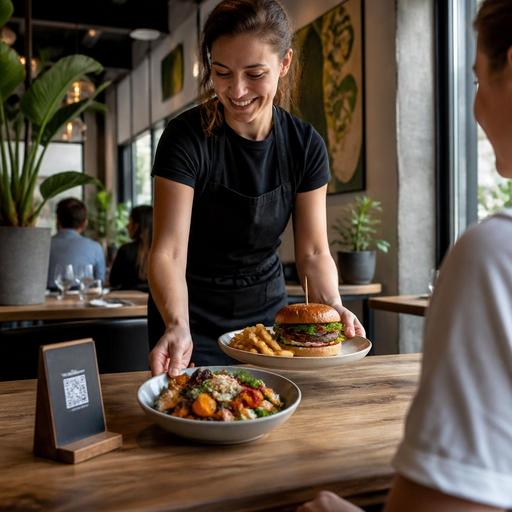
For example, a strong plant-based burger might include a well-seared patty, pickled onions, lettuce, tomato, a smoky dairy-free sauce, and seasoned fries. A cafe grain bowl might combine quinoa or rice, roasted chickpeas, seasonal vegetables, tahini dressing, herbs, and crunchy seeds. A pasta dish could feature slow-cooked tomato sauce, olives, capers, garlic, chili, and roasted eggplant rather than simply “pasta without parmesan.”
Descriptions matter. “Vegan bowl” is less persuasive than “Roasted cauliflower and chickpea bowl with tahini-lemon dressing, herbs, and toasted seeds.” Clear wording improves confidence for both committed plant-based guests and curious mainstream diners.
Make operations simple enough to execute consistently
The best menu idea still fails if it creates prep confusion, cross-contamination risk, or ticket delays. Before launching new items, map the operational impact from prep to service.
Review ingredients and prep overlap
Look for ingredients that can work across multiple dishes. A roasted vegetable mix, house tomato sauce, marinated tofu, vegan aioli, or tahini dressing can support several menu items. This reduces waste and makes ordering more predictable.
Separate where needed
If you market dishes as vegan, train the team on which ingredients, pans, utensils, and fryers may create problems. Guests asking for vegan items are often also watching for hidden ingredients such as butter, yogurt sauces, honey, or stock bases. Clear kitchen notes and modifier logic help reduce mistakes.
Use menu logic that supports service speed
Instead of creating many one-off dishes, consider a modular structure:
- Choose a base, such as bowl, wrap, pasta, or salad.
- Select a plant-based protein or topping.
- Add clearly listed sauces and extras.
- Flag allergens and vegan suitability accurately.
This structure is easier for staff to explain and easier for guests to customize. It also works well in QR menus and digital ordering flows, where modifiers can be presented in a clean and controlled way.
Train staff to sell with confidence, not scripts
Many restaurants underestimate how much plant-based sales depend on front-of-house confidence. If a guest asks, “What do you recommend if I do not eat dairy?” and the answer sounds uncertain, the sale becomes harder immediately.
Staff do not need long speeches. They need practical knowledge:
- Which dishes are fully vegan
- Which dishes can be modified easily
- Which sauces, breads, desserts, and sides contain hidden animal products
- How to suggest add-ons or swaps that improve the meal
Role-play helps. A server should be able to answer questions like, “Is this filling enough?” “Can I make this gluten-free too?” or “What drink pairs well with it?” A cashier taking takeaway orders should know which plant-based dishes travel well and which are best for dine-in. A delivery team should understand packaging needs so sauces, herbs, and textures arrive in good condition.
Digital menu systems can support training by standardizing dish names, modifiers, and allergen information across channels. When the menu wording is consistent on tables, web ordering, and internal systems, staff have fewer details to memorize and fewer chances to give conflicting information.
Promote plant-based choices without alienating your core audience
Restaurants often worry that promoting vegan items will confuse regular guests or shift the brand too far. In practice, the issue is usually positioning. You do not need to make plant-based dishes the entire identity of the business. You need to present them as attractive menu choices within your concept.
Some practical promotion ideas include:
- Feature one signature item first: it is easier to market a standout dish than a broad but weak category.
- Use seasonal specials: limited-time plant-forward dishes help test demand without permanent menu pressure.
- Show the dish visually: appetizing photography matters because some guests still assume vegan food is less satisfying.
- Explain benefits through flavor: lead with taste and ingredients rather than ideology.
- Keep social media practical: short videos of assembly, sauces, or fresh ingredients often perform better than generic announcements.
For example, a brunch cafe can post a short reel showing a tofu scramble finished with herbs and chili oil. A burger restaurant can highlight the texture and toppings of its plant-based burger. A neighborhood bistro can introduce a seasonal roasted vegetable flatbread as a chef special and monitor response before adding it permanently.
Menu placement also influences results. Plant-based dishes should not be hidden at the bottom of the menu as a compliance item. Integrate them where guests naturally look: among signatures, bowls, mains, or chef picks. Digital menus make this easier because placement, badges, and upsell prompts can be adjusted quickly.
Turn feedback into a smarter menu cycle
Plant-based menu growth is rarely a one-time launch. The strongest operators treat it as an ongoing feedback loop. Watch what sells, what gets modified, what gets abandoned, and what staff keep explaining repeatedly. Those signals show where the menu is unclear or where demand is stronger than expected.
Useful questions to review each month include:
- Which plant-based items sell repeatedly without discounting?
- Which dishes generate the most modifications or guest questions?
- Are there prep-heavy items that do not justify their complexity?
- Which add-ons increase average ticket without slowing the line?
- Do dine-in, takeaway, and delivery guests behave differently?
Small improvements often matter more than dramatic relaunches. A better sauce, clearer label, improved photo, or smarter modifier setup can make a plant-based dish easier to order and easier to execute. Over time, this creates a menu that serves changing guest preferences without disrupting the rest of the business.
Restaurants that respond well to plant-based demand do not treat it as a marketing stunt. They build options that fit the brand, train staff to guide guests clearly, and use digital tools to keep menus accurate across every channel. Restomas helps restaurants manage that kind of menu clarity and operational consistency in a practical, guest-friendly way.
