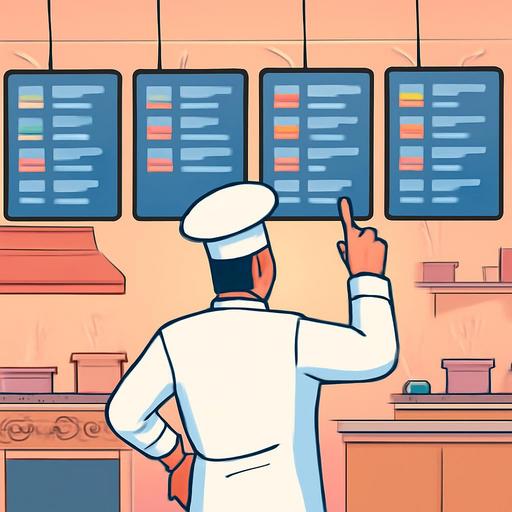
Prioritization Strategies That Speed Up Order Flow in Busy Kitchens
Friday night, 8:30 PM. There are 35 open orders in your kitchen, servers are waiting at the expo line, the chef is shouting under stress, and complaints are coming in from the tables. At that very moment, a notification arrives from your reservation system: your VIP guest has arrived and their order has just hit the kitchen. In this chaotic environment, how will you decide which order should go out first?
In high-capacity restaurants, especially venues seating 100 or more, order prioritization is not just a luxury; it is a survival strategy. Setting up the right prioritization system both reduces your kitchen team's stress and increases customer satisfaction many times over. In this article, we will explore concrete ways and actionable strategies to optimize order flow in busy kitchens.
The Golden Rules of Order Prioritization
In kitchen management, prioritization is far more complex than a simple "first come, first served" logic. There are several core factors that professional kitchens must take into account:
- Order timing: How long the table has been waiting
- Guest profile: VIP status, loyal customer, special-occasion celebration
- Dish type: Preparation time, cooking technique, serving temperature
- Table size: A table for two, or a group of 12?
- Operational capacity: The current workload of each station (grill, cold kitchen, pastry)
- Service flow: Synchronization of starters, main courses, and desserts
None of these factors is decisive on its own. A successful prioritization system is a dynamic structure that balances all of these variables.
VIP Guest Management: A Balance That Requires Finesse
Giving priority to your VIP guests is critical for the long-term profitability of your business. However, managing this priority poorly can disadvantage your other guests and create a perception of unfairness in the kitchen.
A smart VIP strategy works like this: when a VIP order comes in, an automatic notification is pushed to the kitchen and the order becomes visible on the screen in a different color or with a marker. The key point here, however, is that the VIP order is not always bumped to the very front, but prioritized within a reasonable time frame.
For example, when there is an order from a regular table that has been waiting for 45 minutes, immediately bumping a newly arrived VIP order to the front is both unethical and creates operational confusion. Instead, the VIP order is brought into the flow within 5-10 minutes, and the chef uses this time to coordinate between stations.
The Digital Advantage in VIP Prioritization
Modern kitchen management systems offer the ability to identify VIP guests in advance. For a VIP guest flagged at the reservation stage, the kitchen team can prepare ahead: the necessary ingredients can be readied in advance, special presentations can be planned, and the relevant station chef can be informed. This proactive approach eliminates last-minute panic prioritization.
The Strategic Use of Fast-Service Categories
Some orders are quick to prepare and send out by their very nature: salads, cold appetizers, and certain desserts. Using these items wisely both reduces the perceived wait at tables and regulates kitchen flow.
The prioritization logic for fast-service categories:
- Early starters: When an order comes in for a main course with a long cooking time, prepare and send out that table's starters right away. The main course gets prepared while the customer is eating.
- Filler orders: While the grill or oven is busy, use cold-kitchen orders as fillers in between. This prevents tables from waiting empty.
- Children's menus: Prioritize the orders of children dining with families. A hungry, impatient child negatively affects the entire table's experience.
- Beverage synchronization: While the dishes are being prepared, make sure the beverages reach the table on time. A dry table will complain before the food even arrives.
Station-Based Prioritization: Solving Bottlenecks
In large kitchens, each station (grill, saute, cold kitchen, pastry) operates at a different speed. Smart prioritization must take each station's capacity into account in real time.
For example, while 8 orders have piled up at the grill station and the cold kitchen is idle, priority can be given to tables whose incoming orders include cold starters. This both provides fast service to the customer and gives the grill room to breathe.
Practical Station Management Techniques
Parallel cooking: Prepare the different dishes of the same table at different stations simultaneously. Digital kitchen displays allow all stations to see the same table's order and work in sync.
Wait-time estimates: A system that knows the average preparation time for each dish type can automatically calculate the order in which dishes should be started. This way, all dishes arrive at the expo line at the same time.
Red-flag system: Orders exceeding 30 minutes are automatically flagged, and the chef draws the kitchen's attention to these orders. This simple visual system prevents orders from being forgotten.
Team Communication and a Culture of Prioritization
Even the most advanced digital system is useless without a shared culture of prioritization within the team. Your kitchen team needs to understand and embrace the logic of prioritization.
Suggestions for team training:
- In weekly review meetings, discuss the prioritization decisions made during busy services
- Give chefs the responsibility of explaining their prioritization decisions to the team
- Establish a server-kitchen communication protocol: in which situations can a server reach the chef directly?
- Share and celebrate successful prioritization examples with the team
An experienced chef working in a restaurant kitchen once said: "Prioritization is not a math problem, it's conducting an orchestra. You have to know exactly when each instrument should come in."
The Role of Technology in Prioritization
Manual prioritization is manageable up to about 20-30 orders. Beyond that, human memory and decision-making capacity fall short. This is exactly where digital kitchen management systems come into play.
Modern systems offer the following features:
- Automatic prioritization algorithms: They sort orders by wait time, guest profile, and dish type
- Color labeling: They visually distinguish VIP, allergic, and urgent orders
- Station-based screens: Each chef sees only the priorities relevant to their own station, reducing distraction
- Real-time alerts: They issue warnings when critical thresholds are crossed (such as an order waiting 30 minutes)
- Reporting: They show which stations become bottlenecks at which hours, helping with future planning
Another advantage of digital systems is that prioritization decisions are documented. In the event of a customer complaint, you can clearly see when the order was taken, which stages it passed through, and why it was delayed.
Avoiding Prioritization Mistakes
Incorrect prioritization is more harmful than correct prioritization. Common mistakes include:
Blindly bumping every VIP to the front: This disadvantages other guests and creates a perception of "unfairness" within the team. VIP priority must stay within reasonable limits.
Looking only at wait time: A slow-roasted lamb order that has been waiting 40 minutes but requires 90 minutes of preparation is not "more urgent" than a salad order that has been waiting 25 minutes and will be ready in 10.
Giving in to server pressure: Every server thinks their own table is the most important. The chef must make objective decisions by seeing the overall kitchen flow.
Breaking up group orders: Sending out a 10-person table's order at different times ruins the table's experience. Group orders should be prepared in sync.
Conclusion: Prioritization Is a Matter of Systems
Successful order prioritization is a matter of an established system far more than it is of day-to-day decisions. When clear criteria, team training, the right technology, and a culture of continuous improvement come together, even busy kitchens can run smoothly.
Remember: the goal of prioritization is not to favor certain customers, but to optimize resources in a way that delivers the best experience to all customers. A well-established system ensures that both your VIP guest and your first-time customer leave satisfied.
Integrated kitchen management systems like Restomas automate the prioritization process, freeing your chefs from operational stress and allowing them to focus on what truly matters: creating great food.
