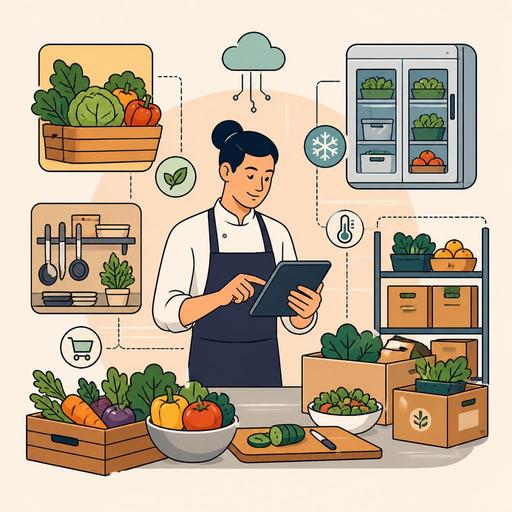
7 Digital Methods to Reduce Produce Wastage in Restaurants
Reducing fruit and vegetable wastage in restaurants is not solely a matter of cost control; it is directly tied to menu sustainability, kitchen discipline, and the customer experience. Fresh produce can quickly lose its value due to poor purchasing, inconsistent stock tracking, weak prep planning, and demand imbalances on the menu. Especially in restaurants with high daily operational volume, the problem stays invisible when technology is not set up correctly; when applied properly, it systematically drives wastage down.
In this article, we will look at practical technological methods that help restaurant owners and kitchen managers reduce produce spoilage. The goal is not merely to "throw less away"; it is to build more predictable kitchen management by connecting purchasing, storage, production, and sales data to one another.
1. The first step in reducing wastage: product-level digital inventory tracking
In many businesses, stock tracking still runs through broad categories: "we have greens," "tomatoes are running low," "we need to order fruit." Yet spoilage feeds most on uncertainty. If it isn't visible which product was received when, which storage area it went to, how many days it took to consume, and which recipes it was used in, wastage looks like chance but is actually a systemic issue.
Digital inventory tracking plays a critical role here. Products should be tracked not by box or crate but according to usage logic. For example, when the receiving date and expected shelf life are recorded for sensitive products such as arugula, parsley, strawberries, avocado, or mushrooms, the kitchen team can see far more clearly which product should be used first.
- The receiving date is recorded.
- A use-by priority is established.
- Storage and cabinet-based placement becomes visible.
- Thanks to the recipe link, you can track which product is consumed in which dish.
For instance, in a salad-focused cafe, the consumption of lettuce, arugula, and cherry tomatoes can follow different patterns on weekdays versus weekends. When a digital stock history is kept, it becomes easy to notice that greens over-ordered on Monday have lingered until Thursday and spoiled. This, in turn, makes it possible to rebuild the purchasing routine.
2. Base purchasing decisions on demand data, not guesswork
One of the most common causes of produce spoilage is purchasing done "by habit." Ordering the same quantity simply because the supplier comes every Tuesday harms the business when actual demand shifts. Weather, reservation volume, increases in online orders, seasonal menu changes, and promotions all directly affect fresh produce consumption.
This is where demand planning informed by sales and order data comes to the fore. When a restaurant's POS, order management, or reservation data can be read together, the kitchen can produce a more realistic purchasing list. For example, if weekend brunch reservations are high, consumption of avocado, fresh tomatoes, fresh mint, and oranges may rise. Conversely, on rainy days some drink garnishes or fruit platters may move more slowly.
The critical point here is to plan product orders not only by looking at the previous week but according to the upcoming operational load. A digital structure where order management and the reservation flow can be seen on a single screen reduces purchasing mistakes. This lowers the risk of over-ordering and also reduces the need to make rushed, expensive purchases due to product shortages.
3. Digitize the prep plan to prevent excessive pre-preparation
Wastage doesn't only occur in storage; it often begins at the preparation stage. Vegetables chopped in greater quantities than will be used during the day, fruit cut in advance, or incorrectly portioned garnishes quickly lose quality. This is especially common in hotel breakfasts, open buffet services, busy brunch spots, and businesses with a cocktail menu.
A digital prep plan clarifies how much of which product will be prepared in which shift. The kitchen team acts based on order flow and sales history rather than the "better to have extra so we don't run out" reflex. For example:
- The amount of vegetables to be chopped during the morning shift is determined.
- The need for a second round of prep is checked after the lunch rush.
- If prep needs to be done again for evening service, the quantity is updated.
Let's give a concrete example: in a business selling bowls, salads, and sandwiches, rather than chopping all the cucumbers in the morning, limited prep can be done for the first service. If lunch sales data falls below expectations, the second prep is canceled. This way, the product preserves its service quality and end-of-day waste drops.
This approach creates discipline in the kitchen. It also lets staff answer the question "how much should we prepare?" based on visible operations rather than personal experience.
4. Use menu engineering to make slow-moving fresh products visible
Some products spoil not in storage but in the menu design. Because if certain vegetables and fruits are tied to only a single item on the menu, when that item sells slowly the entire raw material falls at risk. This is more pronounced with products such as basil, fresh thyme, asparagus, blackberries, mango, microgreens, or specialty garnishes.
Menu engineering is a powerful tool here. To see which products are moving slowly, sales data must be evaluated together with recipe usage. If a product appears in only a single dish, an alternative use case should be created.
- Feature the same product in the dish of the day's special.
- Highlight seasonal products within the QR menu.
- Plan cross-usage in a side dish, sauce, soup, or daily special.
- Review low-performing dishes at the recipe level.
For example, basil used in only a single pasta dish can also be put to use in lemonades, starter sauces, or the soup of the day. The ability to update seasonal suggestions quickly via the QR menu helps carry available fresh produce into sales more nimbly. This way, wastage doesn't rise while the menu stays fixed; as the menu becomes more dynamic, product flow improves.
5. Support storage discipline with sensors and task flows
A significant portion of fresh produce spoilage results from incorrect temperature, improper humidity, faulty stacking, and weak shift communication. Technology here should be used not merely to "collect data" but to make standard operations actionable.
Particularly in cold rooms, produce cabinets, and prep areas, temperature monitoring, checklists, and shift task flows reduce wastage. Not every product requires the same conditions for produce. The storage needs of tomatoes, bananas, greens, citrus, or cut fruit are all different. For this reason, visible digital checklists yield more reliable results than verbal information passed around the team.
Here are simple but effective steps you can implement:
- Tie the FIFO rule, that is first in first out, to the digital task list.
- Standardize the storage check at the start of each shift.
- Track cut and whole products separately.
- Create an in-day usage alert for products close to spoiling.
This structure is especially important in businesses that experience staff turnover. Because good systems take the operation out of the dependence on the memory of specific employees.
6. Make end-of-day wastage logging mandatory
Wastage that isn't measured becomes permanent. In many restaurants product goes in the trash but the reason isn't recorded: over-purchasing, incorrect prep, low sales, or a storage error? When this distinction isn't made, the solution is sought in the wrong place too.
You don't need a complex structure for end-of-day wastage logging. Even a short digital form can be enough. What matters is regularly answering the following questions:
- Which product was wasted?
- How much wastage occurred?
- Why did it occur?
- Which menu items was this product connected to?
- Is there a recurring pattern?
For example, if strawberries are wasted several times a week, the problem may not be supply quality but an imbalance in dessert sales or excessive prep. If arugula constantly spoils, the salad sales forecast may be wrong. Within a few weeks, this data provides the business with an extremely clear basis for decision-making.
The true value of systems that digitize restaurant operations emerges exactly here: order, menu, reservation, and stock data gain meaning not separately but together. This way, the kitchen turns into a structure that not only gets through today but plans tomorrow more accurately.
Conclusion: to reduce wastage, technology must work alongside process, not alone
The technological methods that reduce produce spoilage are not limited to a single device or a single software feature. The real difference comes from the union of purchasing, stock, prep, menu, and sales data within the same operational logic. When product-level inventory tracking, demand-driven purchasing, a digital prep plan, menu engineering, storage control, and regular wastage logging are applied together, the invisible losses in the kitchen become visible.
For restaurant owners, the best starting point is not to change the entire system at once; it is to choose the 5 most-wasted products and set up digital tracking for them. In a short time it becomes clear where the loss is occurring, and the team begins to operate with more control.
By making menu, order, and operational data more visible, Restomas can help restaurants make more measurable decisions aimed at reducing wastage.
