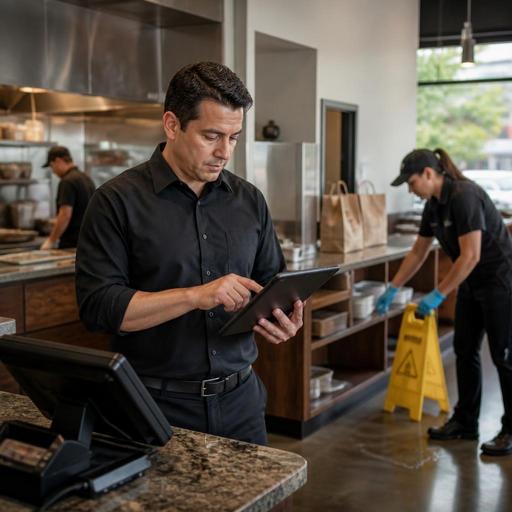
Restaurant Incident Logs and Insurance Workflows U.S. Owners Miss
Restaurant incident logs and insurance workflows are easy to push aside when service is slammed, but they matter most on the worst day of the month: a guest slip near the soda station, a delivery driver bumping into a pickup shelf, a fryer flare-up, a chargeback tied to a disputed tab, or a cooler failure that forces a food discard. For U.S. restaurant operators, the real risk is often not just the incident itself. It is the missing record, inconsistent staff response, lost camera footage, or delayed follow-up that makes insurance claims, internal reviews, and vendor discussions harder than they need to be.
A neighborhood diner, a fast-casual salad chain, a hotel restaurant, and a food truck all face different exposures, but the operational fix is similar: create one simple reporting workflow, train the team to use it, and store records where managers can actually retrieve them later.
Build one incident workflow for every shift
Many restaurants still handle incidents informally. A server tells the shift lead that a guest fell, someone wipes up the spill, and the team moves on. Two weeks later, ownership gets a claim notice and nobody remembers the exact timeline. A usable workflow should be short enough for a busy Friday night and consistent enough for a multi-location group.
Start with a standard incident form for all locations and all dayparts. It should cover guest injuries, employee injuries, property damage, vehicle issues in curbside pickup zones, delivery handoff disputes, food safety complaints, alcohol-related disturbances where relevant, and equipment events such as hood, freezer, or POS failures.
- What happened: plain-language description without guesses or blame
- When and where: exact time, station, dining room area, parking lot zone, patio, bar rail, restroom, or truck window
- Who was involved: guest, employee, courier, vendor, or third party
- Witnesses: names and contact details if available
- Immediate response: first aid, manager visit, cleanup, product pulled, equipment shut down, police or EMS contacted if needed
- Evidence saved: photos, video clips, receipts, check details, POS order number, reservation record, maintenance logs, and staff statements
- Follow-up owner: the manager or operator responsible for next steps
Keep the form factual. Staff should document observations, not diagnoses, legal conclusions, or admissions of fault. If the issue touches employment, alcohol service, health department matters, ADA access, food labeling, tip disputes, or payment complaints, operators should verify current local requirements with qualified advisors, insurers, or official guidance.
Match the record to the type of claim you may face
Not every incident becomes an insurance claim, but your documentation should assume it might. Different events require different supporting records.
Guest slip, trip, or fall
In a family restaurant, a child may slip near a self-serve drink station. Save camera footage before it auto-deletes, note floor condition, weather if water was tracked in, cleaning log timing, and who responded. If a wet floor sign was out, record that too. For a multi-unit operator, this is a strong reason to standardize opening, bathroom, and dining room checklists across stores.
Food complaint or alleged illness
If a guest says takeout caused illness, pull the order details, item modifiers, prep time, staff on station, and any batch or holding records. In a fast-casual bowl concept, that may include lot tracking on proteins or sauces if your operation keeps it. In a hotel restaurant or airport concession, include banquet or concession stand service details if the complaint came from a group event or travel-related purchase.
Property damage or equipment failure
A burst ice machine line can damage flooring and force section closures. Save maintenance history, vendor invoices, service calls, photos, and the exact timeline of discovery and shutdown. If product was discarded, match the incident to inventory adjustments and manager notes.
Vehicle and pickup area issues
Curbside pickup creates a less obvious risk area. If a guest claims their car was damaged in a congested pickup lane or a staff runner was involved in a minor accident, document stall number, weather, camera angles, and who directed traffic. The same applies to food trucks operating in tight festival lots and stadium vendors moving product carts through crowded service corridors.
Close the gaps between POS, cameras, schedules, and manager notes
The overlooked problem in many U.S. restaurants is not lack of data. It is that the data lives in five places. The POS has the check and payment trail. The scheduling app shows who worked. The kitchen display system shows ticket timing. Security footage sits on another login. Delivery apps hold courier and handoff details. Managers text each other screenshots that are impossible to find later.
A better workflow is to create one incident record that links the core evidence:
- Open the incident entry as soon as the situation is stable.
- Attach the order number, check number, or reservation reference if relevant.
- Add staff on duty from the schedule.
- Save photos and export or bookmark camera footage before retention limits erase it.
- Note whether the issue involved dine-in, takeout, direct online ordering, delivery apps, curbside pickup, or a third-party courier.
- Assign follow-up tasks with deadlines: guest callback, insurer notice, vendor repair, product quarantine, refund review, or retraining.
For example, if a guest disputes a service charge on a banquet check at a hotel outlet, the manager may need the signed check, POS settings, private event agreement, and notes on how the charge was presented. Because service charges and tips are handled differently operationally and may be treated differently for reporting purposes, operators should confirm setup and current rules with payroll, tax, and legal advisors.
Train managers on the first 30 minutes after an incident
Your best form will fail if nobody knows what to do in the moment. Build a short response playbook for managers and key shift leads.
- Make the area safe first: block traffic, stop service at the affected station, or shut down equipment.
- Check on the guest or employee and contact emergency help when appropriate.
- Notify the manager on duty and ownership chain based on severity.
- Preserve evidence immediately, especially camera footage and cleaning or temperature logs.
- Document facts while memories are fresh.
- Avoid casual promises, arguments, or speculation in front of guests or staff.
- Escalate to your insurance contact or broker according to your internal protocol.
This matters in everyday U.S. scenarios: a server carrying hot coffee in a breakfast diner, a bartender handling a broken glass injury, a QSR employee slipping near the fry station, or a courier claiming the wrong order was handed off from the pickup shelf. Each event needs a calm, repeatable response, not improvisation.
Use incident records to improve operations, not just react to claims
The strongest operators treat incident logs as an operations tool. If three stores report repeated lobby slips during rainy weather, you may need better mat placement and entry cleaning rounds. If chargebacks keep appearing on late-night bar tabs, you may need stronger receipt capture and POS verification steps. If handoff disputes rise on third-party delivery orders, redesign the pickup shelf, add order status checkpoints, or separate courier pickup from guest takeout.
Incident records can also expose staffing and training gaps. A pattern of burns during peak periods may point to rushed line rotations. Repeated parking lot issues during curbside pickup may show that runners need a safer route and clearer lane control. In a food truck, generator or propane-related notes may reveal preventive maintenance problems before they become bigger losses.
For chain operators, consistency matters even more. One store should not keep paper notes in a desk while another stores photos on a manager's personal phone. Standardized digital records make renewals, insurer conversations, and internal audits easier. They also help when leadership changes and institutional memory disappears.
A practical system does not need to be complicated. It needs to be used every time. If your restaurant already runs digital ordering, reservations, POS integrations, or kitchen workflows, incident logging should sit close to those daily tools so managers can capture facts fast instead of rebuilding the story later. Restomas can help operators bring more of those records into one operational flow.
