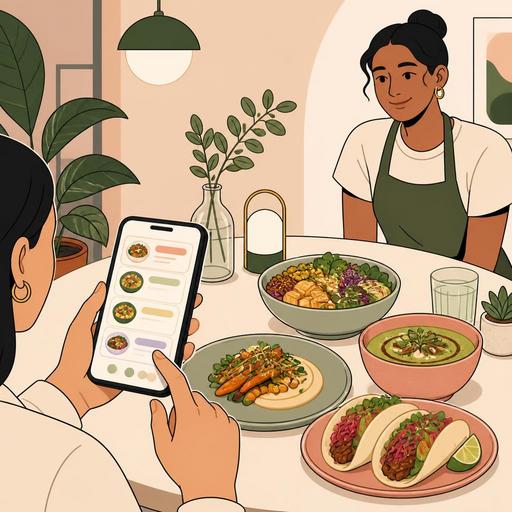
How Do Restaurants Grow a New Customer Base With Vegan Menu Demand?
Vegan menu growth today is not only about meeting a particular dietary preference; it is a concrete way for restaurants to build a new customer base, be chosen more often for group reservations, and manage the menu more flexibly. Especially when it comes to groups of friends, families, office teams, and tourist customers, even a single vegan or plant-forward eater at the table can influence the restaurant choice. For this reason, the topic is not just "offering a vegan customer a couple of options" but making a broader demand visible and convertible into orders.
Many businesses still treat vegan options as a niche demand. Yet in practice the matter is broader: those who do not consume lactose, those looking for lighter food, those with a sustainability sensitivity, those reducing red meat, those eating plant-based seasonally, and customers who want to try new flavors out of curiosity all meet in the same menu space. In other words, a vegan menu matters not only for the "strict vegan" customer but for a larger audience looking for flexibility at the decision stage.
Why does plant-based menu growth appeal to a broader customer pool?
The purchasing decision in a restaurant is often not made by a single person. Imagine a table of four: one of them is vegan, one wants light food, one prefers a classic burger, and the other is open to new flavors. If the menu can meet these different expectations under one roof, the restaurant gains an advantage. If it cannot, the table goes elsewhere. For this reason, plant-based options become not just a single product category but a reason for choice that makes the group decision easier.
Let's give a concrete example: if a brunch spot offers only a classic spread breakfast and egg-based plates, it can lose a vegan group of guests entirely. By contrast, a business with options such as hummus toast, avocado bread, a granola bowl made with plant-based yogurt, olive-oil dishes, and coffee with a milk alternative stands out as a place "suitable for everyone" within the same group. What matters here is not transforming the entire menu but not appearing exclusionary at the moment of choice.
A similar situation applies in the fast-service, café, and casual-dining segments. Products such as a falafel bowl, a plant-based burger, mushroom tacos, vegetable-based noodles, or a vegan dessert are often chosen not only by vegan customers but also by customers looking for a lighter or different meal. In other words, a well-built plant-based menu can broaden the core customer base rather than opening up a niche area.
Which signals should you look at to understand the size of the new customer base?
The real question for a business is this: "Does this demand genuinely exist in my area and within my customer profile?" The answer to this should be sought not through assumptions but through operational signals. Small signs coming from the field are often a strong starting point for data.
- Frequently asked questions: If questions such as "Do you have a milk alternative?", "Can this product be prepared without meat?", "Can the cheese be left out?", and "Do you have a vegan dessert?" recur regularly, there is invisible demand.
- Group reservation behavior: Groups that ask for the menu link before reserving or ask "do you have a vegan option?" are making their choice based on how inclusive the menu is.
- Social media engagement: Plant-based plate posts being saved more, getting more comments, or being asked about via DM is worth noting.
- Product customization requests: If requests to remove meat, butter, cheese, yogurt, or mayonnaise from existing products are increasing, a directly positioned option may be missing from the menu.
At this point, digital menu infrastructure becomes critical. Businesses using a QR menu can observe more clearly which product pages are viewed more, which categories attract interest, and which product descriptions leave the customer undecided. For example, if the vegan bowl page is opened frequently but does not convert into orders, the problem is not a lack of demand; it can be an inadequate description, a weak image, or price positioning.
The most common mistake when adding a vegan menu: making a weak addition, not a separate showcase
Many restaurants fall into one of two extremes when transitioning to a vegan menu: they either ignore the topic entirely or hastily add a few weak options. Yet the customer quickly notices the "let there be something on the list" approach. A strong plant-based menu perception does not form with just a salad, grilled vegetables, or a plate of pasta with the cheese removed.
The more correct approach is to develop products that are thought through from the start and appealing in their own right. For example:
- A balanced vegan burger based on chickpeas, mushrooms, or legumes instead of a burger with the meat removed
- A plant-based pizza with a strong balance of vegetables, sauce, and texture instead of a cheeseless pizza
- A bowl with a filling combination of grains, legumes, and sauce instead of a salad that feels like a side dish
- A beverage experience considered together with an oat or almond drink option, not just "coffee without milk"
Naming also matters here. Some customers specifically look for the "vegan" label; others connect more easily with appetizing descriptions like "a bowl with charred eggplant and tahini sauce." The best solution is to highlight the product's flavor while also clearly giving the dietary information. When labeling, ingredient descriptions, and allergen notes are presented together on the digital menu, the customer makes a more confident decision.
How do you grow a plant-based menu without complicating operations?
One of restaurant owners' most legitimate concerns is operational complexity. Every new product added to the menu without controlling separate sourcing, cross-contamination risk, staff training, and recipe standards can create problems in the kitchen. For this reason, growth should be controlled.
- Start with products that can come out of the existing station. Dishes developed with ingredients already used in the kitchen, such as chickpeas, mushrooms, avocado, charred vegetables, tahini, and olive-oil sauces, are more sustainable to start with.
- Offer few but clear options. Instead of opening a broad vegan category all at once, starting with 3-5 genuinely strong products is healthier.
- Establish recipe and presentation standards. Instead of a "we can make it vegan if requested" approach, how each product will be prepared should be clearly defined.
- Train staff on the menu language. Rather than the server saying "I think it's suitable," they need to know the ingredients, allergens, and substitutable components.
- Set up stock and visibility synchronization. A sold-out plant-based product still appearing on the digital menu damages customer trust.
At this point, order management and menu-update tools give the business speed. Instantly deactivating products that sell out during the day, featuring certain categories at certain hours, or quickly adding seasonal vegan products to the menu keeps operations and customer expectations on the same line.
How should a vegan menu be positioned on the marketing side?
A successful plant-based menu strategy does not end with product development; it grows with the right messaging. But the common mistake made here is confining the communication to a narrow frame like "exclusively for vegans." The more effective approach is to talk along the axis of flavor, variety, and accessibility.
For example, instead of just saying "new vegan product" on social media, content that explains the product's texture, ingredients, presentation, and which meal it is suitable for works better. Messages such as "a light but filling option for the lunch break," "a plant-based dessert alternative alongside your coffee," and "a table experience suitable for everyone in a group of friends" reach a broader customer base.
In addition, being able to share the menu link digitally provides an important advantage. If the customer can examine the vegan labels, ingredient descriptions, and product images on the menu before reserving or while deciding with a group of friends, the likelihood of conversion increases. For this reason, you need to make the menu accessible not only inside the restaurant but also at the touchpoints before the decision.
An actionable plan you can apply today
If you want to turn plant-based and vegan menu growth into an opportunity in your business, you can start with these practical steps:
- As a team, list the vegan or modification requests received in the last month.
- Identify 5 products from the existing menu that can be easily converted.
- Bring the 2-3 of them that will strain operations the least into a test menu.
- Publish these products on the QR menu with clear labels, descriptions, and, if possible, strong images.
- Give the service team a short information note for each product: ingredients, allergens, alternatives.
- On social media, explain not just that the product is "vegan" but why it is delicious and which need it suits.
- Track the first feedback and revise the recipe, portion, and price position.
In conclusion, vegan menu growth is not just a trend heading; it is a strategic opportunity for the restaurant to become more inclusive, more visible, and stronger in group decisions. When structured correctly, this approach opens the door to a new customer base without alienating the existing customer. With Restomas, by managing the digital menu, order flow, and product visibility more flexibly, you can plan this transition without disrupting operations.