U.S. Restaurant Loyalty Programs for Visits, Spend, Birthdays, and Smart Messaging
For many operators, U.S. restaurant loyalty programs work best when they stay simple, measurable, and easy for guests to use across dine-in, takeout, and direct online ordering. A neighborhood coffee shop may reward every fifth visit, a fast-casual salad brand may reward by dollars spent, and a family grill may send a birthday offer that brings back lapsed regulars. The challenge is not just choosing visits, spend, or birthdays. It is setting up a system that fits your service model, your POS stack, your pickup workflow, and your communication habits without creating front-of-house confusion.
In the U.S. market, loyalty also touches real operating details: guests ordering through delivery apps versus your own site, staff handling phone numbers at the counter, QR ordering at the table, sales tax treatment on discounts, and guest expectations around text messages and email. The goal is practical: make repeat visits easier to earn, easier to redeem, and easier to track by location.
Choose a loyalty structure that matches how your restaurant sells
The right loyalty design usually starts with ticket pattern and service style. A visit-based model works well when average checks are predictable and frequency matters more than ticket size. Think of a suburban bagel shop, a neighborhood coffee bar, or a lunch-focused food truck parked near office buildings. If most guests spend within a narrow range, rewarding visits can feel clear and fair.
A spend-based program often fits restaurants with wider check averages. A casual dining restaurant with lunch, dinner, cocktails, and takeout will usually see more variation per check. In that case, rewarding dollars spent may better reflect guest value. A guest who orders family takeout twice a month should not feel less recognized than a solo lunch guest who visits more often.
Birthday rewards can work across many concepts, but they are strongest when paired with an existing loyalty profile. For example, a neighborhood Mexican restaurant can send a free dessert or appetizer during a birthday month, while a hotel restaurant may offer a birthday cocktail mocktail or brunch incentive to local guests who already opted into messages. The birthday offer should fit your margins and your redemption flow, not just your marketing calendar.
- Visit-based: best for coffee shops, bakeries, food trucks, quick lunch counters, and simple repeat routines.
- Spend-based: best for casual dining, bars with food, family meal takeout, and brands with varied check sizes.
- Birthday-based: best as a supporting trigger, not the whole program.
- Hybrid models: useful for multi-location brands that want base rewards plus special occasion campaigns.
If you operate several units, avoid making each store manager invent separate loyalty rules. A guest who earns points at one location but cannot redeem at another will notice immediately. Standardize the logic first, then allow limited local promotions where needed.
Build enrollment into the ordering flow, not just the host stand
Many loyalty programs underperform because sign-up depends on a rushed staff script. In a busy QSR line, a cashier already needs to confirm modifiers, upsells, payment, and sometimes tip prompts. Adding a long enrollment ask can slow the line and reduce accuracy. Instead, place loyalty capture where guests already expect to interact digitally.
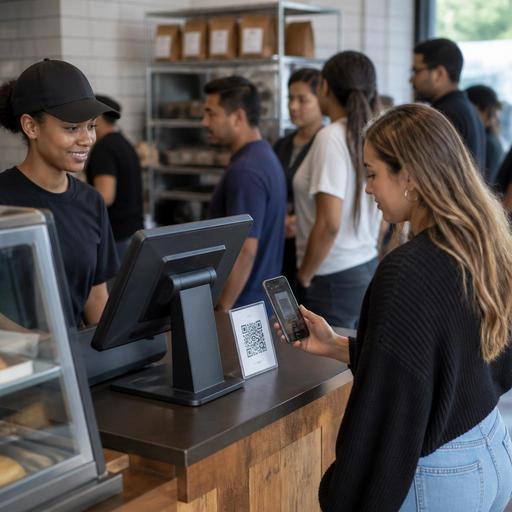
For direct online ordering, include loyalty enrollment during checkout or account creation. For QR ordering in a fast-casual dining room or brewery taproom, let guests join before submitting an order or after payment through a simple mobile prompt. At a takeout counter, a customer-facing POS screen can invite the guest to enter a phone number or email without the cashier spelling everything back.
Concrete U.S. examples help here. A pizza shop with a pickup shelf can promote loyalty on order confirmation and pickup follow-up rather than forcing a long counter conversation on Friday night. A diner with strong breakfast traffic can train servers to mention rewards only when dropping the check, not when greeting a four-top during a rush. A food truck can use a QR code near the pickup window so guests self-enroll while waiting for their order.
Keep the experience accessible. If you use QR codes, provide a clear alternative for guests who prefer not to scan or who use assistive technology. If you rely on text or email capture, make sure the screen flow is readable and straightforward. Operators should review accessibility expectations for their digital guest experience and verify current requirements with qualified advisors when needed.
Use responsible messaging that feels helpful, not pushy
Responsible messaging is where many loyalty programs either build trust or lose it. Restaurant guests in the U.S. are used to promotional emails and text alerts, but they are also quick to ignore brands that message too often or without relevance. The best loyalty communication is tied to a clear reason: a missed-visit reminder, a birthday reward, a limited-time lunch offer for weekday regulars, or a reminder that points are about to expire if your program uses expiration rules.
Segment by behavior, not just by your full contact list. A cafe might message weekday commuters about a morning bundle, while a sports bar can reach game-day regulars with a pre-order takeout offer. A multi-location fast-casual brand might send a local store reopening offer only to guests near that unit, instead of blasting every contact in the system.
- Set a basic message calendar so guests are not hearing from you every other day.
- Use one clear call to action per message, such as order takeout, redeem birthday reward, or visit this week.
- Exclude recent purchasers from unnecessary win-back campaigns.
- Make opt-out and preference management easy.
- Review federal, state, and platform-specific messaging rules with qualified advisors before launching SMS or email automations.
This matters operationally too. If you send a text blast for a free add-on at 5 p.m., your line cooks and expo team need to know about it. Otherwise, the guest arrives expecting an offer the staff cannot find in the POS, and the front-of-house team has to improvise at the register.
Connect loyalty rewards to POS, tax handling, and service workflows
Loyalty only works smoothly when redemption is easy at the register and visible in reporting. Before launching any reward, test how it appears in your POS, kitchen display system, receipts, online ordering flow, and end-of-day summaries. A reward that looks clean in marketing but creates manual comp entries during dinner service will frustrate managers fast.
For example, if a guest redeems a birthday dessert in a full-service restaurant, the server should know whether to ring it as a discount, a comp, or a loyalty item. If a fast-casual guest earns dollars off a bowl ordered online, the discount should apply automatically without requiring a phone call to the store. If your concept uses service charges for events or large parties, make sure staff understand how loyalty discounts interact with those workflows and with guest-facing check presentation. Operators should verify sales tax, service charge, and reporting treatment with their accountant, POS provider, or official state and local guidance.
Also think about channels. Third-party delivery apps may not support your in-house loyalty logic the same way your direct ordering system does. Many operators use delivery marketplaces for reach but reserve their strongest loyalty benefits for direct ordering, where guest data and repeat behavior are easier to track. A wing shop, for instance, may include a bag insert or post-order email inviting app customers to order direct next time for rewards and pickup perks.
Measure what repeat behavior actually improves
A loyalty program should change guest behavior, not just collect contacts. Start with a few operating metrics your managers can review weekly. Look at repeat visit rate, average check among members, redemption rate, direct online ordering share, and whether birthday offers bring back previously inactive guests. For a bar and grill, you may also compare slower midweek traffic before and after targeted member campaigns. For a food truck, you might track whether loyalty improves office park lunch frequency across recurring stops.
Watch for friction signals too. If guests enroll but rarely redeem, the reward may be confusing or too far away. If staff keep overriding rewards manually, your POS mapping may need cleanup. If one location has strong sign-up but another does not, compare the checkout flow, not just the manager effort.
The most durable U.S. restaurant loyalty programs are not flashy. They are consistent across channels, easy for staff to explain, and relevant to how guests already buy. Visits, spend, birthdays, and responsible messaging can work together when the program supports real operations instead of adding one more layer of complexity during service.
Restomas can help operators connect digital ordering, guest touchpoints, and day-to-day workflows so loyalty feels practical across locations and service channels.
