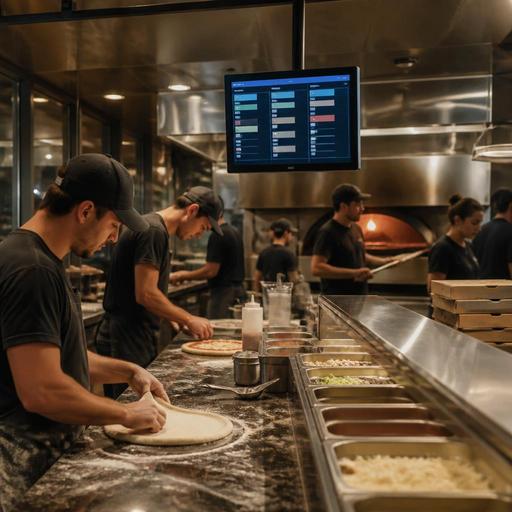
Kitchen Display Systems for Pizza Shops: Better Timing, Flow, and Waste Control
A kitchen display system for pizza shops can do far more than replace paper tickets. In a pizza operation, where dough timing, topping accuracy, oven capacity, and handoff speed all need to stay aligned, the kitchen screen becomes a control point for the entire line. When it is set up well, the team can see what must be stretched now, what should wait, what needs to hit the oven next, and which orders are at risk of becoming late, cold, or remade. For owners and operators, that means better flow during rush periods, fewer avoidable mistakes, and tighter control over food waste.
Pizza kitchens are especially sensitive to sequencing problems. A burger can often be fired and plated in one station, but a pizza order moves across several stages: order intake, dough prep, stretching, saucing, topping, baking, cutting, boxing, and dispatch. If one stage starts too early or too late, quality drops quickly. A pizza left boxed too long loses texture. A pie sent to the oven before the rest of the order is ready can create mismatched handoff times. A kitchen display system helps the team time each step according to channel, promised pickup window, and current oven load.
Why pizza lines need a different KDS setup
Many kitchens can work with a simple chronological order queue. Pizza lines often need a more deliberate view. The kitchen is not only deciding what to make, but when to start each component. A useful setup reflects the real production stages of the business rather than forcing every ticket into one generic screen.
For example, a Friday night rush may include dine-in tables, scheduled pickups, app delivery orders, and walk-in slices or whole pies. If all of them appear in one undifferentiated list, the line tends to react to noise instead of priority. Staff may start topping a delivery order too early, then let it sit in the box while waiting for the driver. Or they may delay a dine-in order that should have been fired first because the guest is already seated.
A practical pizza KDS usually separates work by stage or at least by decision point. One screen may help the make line see what is coming soon. Another may show oven-ready items in the right sequence. A final handoff view may track boxing, sides, drinks, and dispatch status. This structure supports the actual rhythm of the line instead of treating the kitchen like a single station.
How to improve timing without rushing the line
Good timing in a pizza shop is not about making every order immediately. It is about releasing each order into production at the right moment. That is where a kitchen display system can reduce both stress and waste.
Use promised-time logic by order channel
Dine-in, pickup, and delivery should not be treated the same way. A dine-in margherita may need to move quickly because the guest is already waiting in the dining room. A scheduled pickup order for 7:30 should not be stretched at 7:05 just because it entered the system early. A delivery order may need to be paced around driver readiness or dispatch batching.
When owners define channel-specific timing rules, the team stops guessing. Instead of asking whether to fire an order now, staff can follow screen cues based on prep lead time and promised handoff time.
Match screen timing to oven capacity
The oven is usually the true bottleneck in a pizza line. If the make station produces faster than the oven can accept pies, the bench fills with topped pizzas waiting too long to bake. That can affect dough performance, topping spread, and final consistency. A better KDS workflow helps staff release orders according to available oven space, not just ticket arrival order.
For instance, if the oven can handle a certain number of pies in one cycle, the screen should support a clear queue for what enters next. This helps prevent the common peak-hour pattern where the front of house keeps sending orders, the make line keeps building them, and the oven becomes a traffic jam.
Flag aging tickets before they become remakes
In pizza operations, late discovery is expensive. If a ticket sits unseen, the result may be a rushed build, a missed modification, or a remake after the guest complains. Visual aging indicators help the team notice slow-moving orders early enough to recover them calmly. The goal is not panic. The goal is visibility.
Building smoother station flow from dough to dispatch
A kitchen display system works best when it mirrors the physical path of the product. Before changing software settings, operators should map the line itself. Where do tickets get stuck? Where do verbal questions repeat? Where do staff double-handle the same order?
In many pizza shops, the biggest flow problems happen in three places:
- At the make table, where modifiers are missed or specialty pizzas slow down the queue.
- At the oven, where limited capacity forces on-the-fly reprioritization.
- At handoff, where boxed pizzas wait for sides, drinks, or driver assignment.
A practical fix is to define clear status changes. For example:
- Order received and waiting for release
- In prep on the make line
- Ready for oven
- Baking or finishing
- Boxing and quality check
- Ready for pickup, table run, or delivery dispatch
With this structure, staff no longer rely on memory or shouting across the kitchen. A missing garlic dip, extra topping request, or half-and-half pizza instruction is easier to catch when the system keeps the order visible through each stage.
It also helps managers coach more precisely. If delays mostly happen between boxing and dispatch, the issue may not be kitchen speed at all. It may be packaging layout, expo staffing, or unclear pickup shelf organization.
Using KDS workflows to reduce pizza waste
Waste in a pizza business is not only spoilage. It also includes remakes, abandoned orders, overproduction, and quality loss from poor timing. A kitchen display system can support waste control when it helps the team avoid preventable production errors.
Reduce remakes from missed modifiers
Special instructions such as no onion, light cheese, extra bake, or gluten-aware handling can easily get lost on handwritten tickets or crowded printers. A well-structured display makes modifiers more visible at the station where they matter. That reduces the chance of building the wrong pizza and throwing it away.
Prevent early firing on scheduled orders
One common waste source in pizza shops is making scheduled pickup or delivery orders too soon. The pizza may technically be correct, but by the time it reaches the guest, quality has dropped. Some operators then offer a remake or discount. Smarter release timing protects both food quality and margin.
Track repeat problem patterns
If the same products are often remade, delayed, or returned, that is a process signal. Maybe a build is too complex for peak hours. Maybe one station needs clearer prep containers. Maybe online menu modifiers are creating confusion. Digital order management makes these patterns easier to spot and discuss in pre-shift meetings.
What restaurant owners should implement first
Owners do not need a complicated rollout to get value from a pizza KDS. Start with a few operational decisions that make the line calmer and more predictable.
- Separate orders by channel so dine-in, pickup, and delivery follow timing rules that fit the guest promise.
- Define production stages clearly from release to dispatch, and train staff on when to change status.
- Set oven-first priorities so the make line does not outproduce your baking capacity.
- Highlight modifiers visually for allergy notes, half-and-half builds, bake level, and add-ons.
- Review late and remade orders weekly to find repeat bottlenecks instead of treating every mistake as random.
- Align front-of-house promises with kitchen reality so quoted pickup times reflect actual rush capacity.
For multi-channel pizza businesses, the biggest gains often come from connecting order intake, kitchen flow, and guest communication in one digital process. When the team can see order status clearly and guests receive realistic timing, service becomes more consistent without pushing staff into constant firefighting.
Platforms such as Restomas can support this kind of restaurant digitization by linking digital menus, order flow, and operational visibility in a way that fits real kitchen routines rather than adding another disconnected tool.
