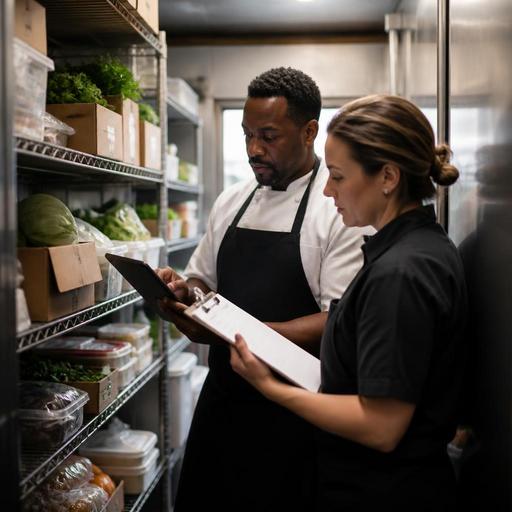
Faster Weekly Inventory Counts for U.S. Restaurants That Stay Accurate
Weekly inventory counts for U.S. restaurants do not have to turn into a late-night spreadsheet exercise that still leaves you guessing about shrinkage, prep loss, or what to reorder. Whether you run a neighborhood diner, a fast-casual bowl shop, a food truck, or a multi-location bar and grill, the goal is the same: make counts faster, make them more reliable, and make the numbers useful for purchasing and kitchen decisions the next morning.
In many U.S. operations, inventory goes off track for simple reasons: different staff count the same item in different units, open bottles are estimated loosely, prep items are not standardized, delivery invoices are entered late, and products are stored in too many places. A better weekly count system is less about working harder and more about creating one repeatable workflow that your managers, chefs, and shift leads can follow every time.
Build one counting system before you try to count faster
If your count sheet does not match how your restaurant actually stores product, speed will always create mistakes. Start by organizing inventory around the physical path a person walks during the count. In a full-service restaurant, that may mean bar, walk-in cooler, lowboy stations, dry storage, freezer, dessert station, and beverage cage. In a food truck, it may be reach-in cooler, under-counter dry bins, paper goods shelf, and commissary stock.
Use one standard unit for each item and keep it consistent week after week. For example, count chicken breasts by pounds, burger patties by case and each, fryer oil by jug, canned tomatoes by can, and liquor by bottle fraction if that is how your bar team already reconciles usage. The point is not to use a perfect theoretical unit. The point is to use the same operational unit every time so your usage reports actually mean something.
For U.S. restaurant teams, this also helps when different managers cover different shifts. A brunch manager at an urban cafe should be able to count oat milk, bacon, coffee beans, and pastry boxes the same way the closing manager does on Sunday night. A sports bar manager should not be estimating wing sauce from memory while the kitchen manager counts raw wings by case weight. Standardization removes debate.
- Assign a fixed storage location for each high-volume item whenever possible.
- List items in shelf order on the count sheet or mobile device.
- Use one naming convention so the POS, purchasing list, and count sheet match.
- Separate unopened product from open product to reduce guesswork.
- Include disposables such as takeout containers, cups, lids, and delivery bags if they materially affect margins.
Reduce count time with prep rules and par discipline
Most weekly counts drag because the kitchen is full of partially used prep containers with unclear yields. If your team preps five gallons of ranch, two hotel pans of mac and cheese, and three cambros of pico de gallo without standard batch sizes, the count becomes a rough estimate. That weakens ordering and can hide waste.
Create count-friendly prep standards. For example, a fast-casual salad concept can batch grilled chicken in labeled pans with known cooked weight. A hotel restaurant can standardize banquet sauces into dated containers with fixed fill levels. A coffee shop can count syrups and alt-milk cartons by bottle and carton rather than trying to back into usage from memory.
Par levels matter too. If your walk-in is overloaded after weekend deliveries, counting takes longer because product is split across too many shelves and backup cases are buried. Tight pars make counts faster because staff can see what is on hand quickly. This is especially useful for operators juggling direct online ordering, third-party delivery apps, curbside pickup, and dine-in service, where packaging and ingredients can disappear faster than expected during peak shifts.
A practical U.S. example: a suburban burger restaurant with heavy Friday takeout volume may keep burger buns in the main kitchen, backup dry storage, and a front counter pickup shelf area for rush replenishment. If those locations are not defined on the count process, buns get double-counted or missed. The fix is simple: one primary storage map, one backup location, and one person accountable for consolidating before count night.
Make counts more reliable with role clarity and timing
Speed improves when every person knows exactly what they are responsible for. In many restaurants, the best setup is a two-person team: one counts, one records. In a smaller cafe or food truck, one manager may do both, but the workflow still needs structure. Count the same day and time each week, ideally after a known business period and before the next major delivery. Consistency helps you compare usage fairly across weeks.
For bars and restaurants with tipped staff, avoid doing inventory during active closeout chaos when servers are still settling tabs, tip adjustments are being reviewed, and managers are handling cash-outs. Inventory accuracy drops when the same manager is also answering delivery app tablet alerts or fixing a POS issue. Protect a dedicated count window.
Use clear rules for what counts as inventory on hand:
- All received product must be checked in and logged before the count starts.
- All transfers between locations or departments should be recorded the same day.
- All waste, spills, comps, remakes, and employee meals should follow one tracking process.
- Open prep should be counted using pre-agreed yield assumptions, not guesswork made on the spot.
If you operate more than one unit, keep the count method identical across stores. A franchise group or regional operator should not allow one location to count cheese by case while another counts by partial block estimate. Multi-location consistency is what lets leadership compare food cost patterns and spot training issues.
Because rules around labor, reporting, and recordkeeping can vary by state or city, operators should verify any local requirements with qualified advisors or official guidance when inventory tasks intersect with scheduling, payroll responsibilities, or internal controls.
Connect inventory counts to POS sales, ordering, and waste tracking
A weekly count only creates value if it feeds the rest of your operation. Once count data is tied to POS sales, recipe usage, and purchasing, you can see whether problems come from over-ordering, portion drift, spoilage, theft, or menu mix changes. This matters in U.S. restaurants where sales channels are fragmented. Dine-in, QR ordering, direct online ordering, pickup shelves, curbside pickup, and delivery marketplaces can all change item velocity in different ways.
For example, a wing-focused bar may see ranch usage spike because delivery orders include too many sauce cups compared with in-house checks. A breakfast diner may discover that avocado spoilage rises on weekdays but not weekends, suggesting the order cycle is wrong. A fast-casual chain may learn that one store is using more paper bowls per $1,000 in sales because staff double-bowl hot items during peak periods.
When your inventory workflow is digital, managers can move faster because item lists, vendor products, and count history already exist in one place. That reduces manual re-entry and makes it easier to compare this week against last week before placing orders. It also supports cleaner handoffs between front-of-house and kitchen teams, especially when your operation already relies on POS integrations, kitchen display workflows, and order management tools.
What to fix this week in your restaurant
If your counts are slow today, do not try to rebuild everything at once. Pick the top ten items that most affect your food or beverage cost and standardize those first. In many U.S. restaurants, that shortlist includes proteins, fryer oil, cheese, liquor, beer, coffee, high-volume produce, and takeout packaging.
- Rewrite the count sheet in the exact order staff walk the building.
- Standardize units for every major item and train all managers on them.
- Consolidate duplicate storage before count night.
- Label prep with known batch sizes and dates.
- Set one weekly count time that does not compete with closeout or receiving.
- Review variances the next morning and connect them to sales, waste, and ordering decisions.
The restaurants that improve inventory fastest are not always the ones with the biggest teams. They are the ones with the clearest routine. A disciplined count process helps an independent diner order smarter, helps a food truck avoid emergency commissary runs, and helps a multi-location fast-casual brand compare stores with confidence.
Restomas can help operators connect digital ordering, POS workflows, and inventory visibility so weekly counts become easier to act on.
