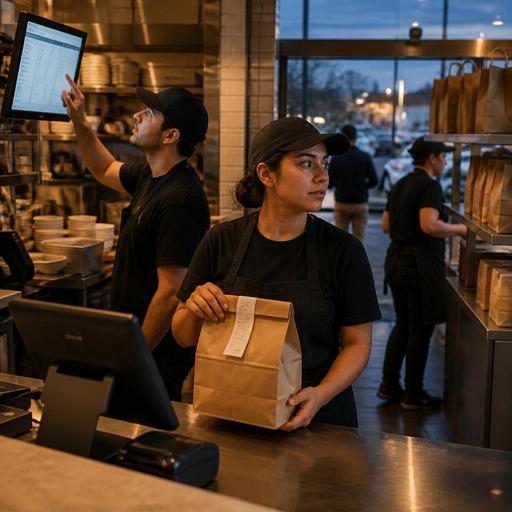
Direct Online Ordering Fraud Prevention for U.S. Restaurants
Direct online ordering fraud prevention for U.S. restaurants is no longer just a payments issue. It is an operations issue that affects food cost, labor, guest experience, and whether your team trusts digital orders during a busy shift. A fast-casual bowl shop in Austin, a neighborhood pizza place in New Jersey, a hotel restaurant handling late-night takeout, and a food truck taking preorders for pickup can all lose money when fake orders slip through or when legitimate orders later turn into chargebacks.
For U.S. operators, the goal is not to make ordering difficult. It is to build a checkout and fulfillment process that catches risky behavior early, documents what happened, and gives staff a simple playbook when something looks off. Because payment rules, card network standards, accessibility expectations, and state or local requirements can vary, operators should verify current requirements with their payment processor, POS provider, and qualified advisors when needed.
Why fake orders hurt more than the ticket total
When a fraudulent order hits the kitchen, the loss is bigger than the menu price. You may lose ingredients, packaging, delivery handoff time, and labor minutes on the line. If the order is refunded or charged back, you may also lose processing costs and team confidence. In direct ordering, the restaurant owns more of the guest relationship, which is a major advantage over delivery apps, but it also means your team needs a tighter fraud workflow.
Consider a suburban wing concept on a Friday night. A series of high-dollar orders comes in within ten minutes, all for curbside pickup, all with slight variations of the same cardholder name, and all requesting extra protein. If the kitchen fires every order immediately, the store can get stuck with a pile of food and a packed expo station. Or picture a downtown coffee shop offering group breakfast pickup. A stolen card is used for multiple pastry trays, then the cardholder disputes the transaction the next day. Without a clear order record, pickup timestamp, and communication log, the operator has little to support the transaction.
Build a checkout flow that filters risk without hurting conversion
The best fraud controls are often small operational decisions. They should protect the business while keeping the ordering experience smooth for legitimate guests.
Use layered verification for higher-risk orders
Not every order needs the same treatment. A $14 lunch pickup from a repeat guest is different from a $240 same-day catering-style order placed from a new device. Set rules in your direct ordering stack for when an order should be reviewed before the kitchen starts production. Examples include unusually large checks, multiple declined payment attempts, mismatched contact details, or repeated orders from the same IP or device pattern.
- Require prepayment for online orders instead of pay-at-pickup when fraud is a concern.
- Delay kitchen release for flagged orders until payment screening is complete.
- Use address and card verification tools available through your processor when supported.
- Ask for a reachable mobile number and confirm it for high-value orders.
- Limit duplicate orders placed within a short time window from the same source.
A Chicago burger shop, for example, may auto-accept standard pickup orders but route large game-day platters to a manager review queue. An airport concession may tighten rules for rush-hour takeout because remakes and abandoned orders are especially costly in a high-volume environment.
Reduce anonymous ordering friction points
Guest accounts are not required for every concept, but some level of identity continuity helps. Encourage repeat guests to save profiles, payment methods through secure tokenization, and preferred pickup details. Returning-customer behavior can be easier to evaluate than one-time anonymous traffic. Keep forms short, mobile-friendly, and ADA-minded so guests using assistive technology can still complete checkout without confusion.
If your restaurant uses QR ordering at tables, make sure the digital flow clearly separates dine-in tabs from takeout ordering so the system does not create fulfillment confusion. In a bar setting, this matters even more when open tabs, tipped staff, and age-restricted items are involved. Alcohol service rules vary widely, so any identity or handoff process for alcohol should be verified against local and state requirements.
Create a fulfillment process that documents the handoff
Many chargebacks are won or lost on documentation. Even when the restaurant fulfilled the order correctly, poor records can make the dispute hard to defend. Your goal is to connect the online order, payment event, kitchen production timeline, and pickup or delivery handoff into one clear story.
Standardize what staff records at pickup
For pickup shelves, curbside pickup, and front-counter handoff, train staff to follow the same routine every time. The routine should be simple enough to use during a lunch rush.
- Confirm the guest name and order number before release.
- For high-risk or high-value orders, require an additional confirmation step such as the phone number used at checkout.
- Mark the exact pickup time in the POS or order management screen.
- Record curbside vehicle details only when operationally necessary and handle personal data carefully.
- Note unusual interactions, such as a guest changing the pickup name at arrival.
A multi-location salad chain might use a pickup shelf for low-risk orders but hold larger family bundles behind the counter until a staff member verifies the handoff. A hotel restaurant may require the room number and guest surname match before releasing a late-night order charged through a digital link. A food truck taking preorder windows for a festival may ask guests to show the order confirmation screen because the service line is crowded and names are easy to mishear.
Know when direct delivery creates extra exposure
If you run your own drivers or use a hybrid model, capture proof of delivery in a consistent way. Delivery apps may provide their own dispute workflows, but direct online ordering puts more responsibility on your operation. Save timestamps, delivery notes, and any proof your system supports. If tips are collected digitally for drivers or front-of-house staff, make sure the payment flow and reporting setup are clear in your POS and payroll process. For tip reporting, service charges, and tax treatment, confirm current federal, state, and local guidance with qualified advisors.
Train managers to spot patterns before they become losses
Fraud prevention works best when managers review exceptions, not every single order. Build a short daily or weekly review habit around suspicious activity and chargebacks.
- Watch for repeated high-ticket orders from new customers with rush pickup requests.
- Look for clusters of declines followed by one approved transaction.
- Review chargeback reasons to see whether the problem is fraud, poor guest communication, or fulfillment mistakes.
- Compare locations if you operate multiple stores, since one unit may be targeted more often.
- Track refund patterns tied to specific dayparts, menu items, or ordering channels.
For example, a pizza franchise may discover that one store near a college campus gets more prank late-night orders during finals week, while another suburban unit sees more card disputes tied to large sports weekend orders. Those are different problems with different fixes. One may need tighter order confirmation rules; the other may need better proof of pickup and clearer guest communication about timing.
It is also worth checking whether some disputes are really service issues in disguise. If pickup shelves are disorganized, if curbside instructions are unclear, or if the direct ordering site promises unrealistic prep times, guests may file disputes because they feel the experience broke down. Fixing the operational root cause can reduce both refunds and chargebacks.
Use your restaurant tech stack to connect payment, ordering, and production
Disconnected systems make fraud harder to manage. When your direct ordering channel, POS, kitchen display system, and payment processor do not share enough information, staff end up guessing. A better setup helps the team pause risky orders, avoid firing food too early, and keep a record of what happened.
In practice, that can mean routing flagged orders to manager approval before they hit the kitchen display system, holding expensive add-ons until payment checks pass, or syncing order notes so the front counter can see exactly what the guest entered. For chains and larger groups, centralized reporting can show which locations have more failed payments, abandoned carts, suspicious order spikes, or chargeback activity.
If your concept also operates on delivery marketplaces, compare fraud and dispute patterns between marketplace orders and direct online orders. Direct ordering usually gives you better guest data and margin control, but only if your workflow is disciplined. A strong system should support pickup shelves, curbside pickup, QR ordering, direct web orders, and multi-location reporting without making the guest jump through unnecessary hoops.
Protecting direct ordering does not require turning your restaurant into a bank. It requires practical guardrails, consistent handoff procedures, and better visibility across your POS and order flow. Restomas helps U.S. restaurants connect digital ordering, payment-aware workflows, and operational visibility so teams can reduce risk without slowing down service.
