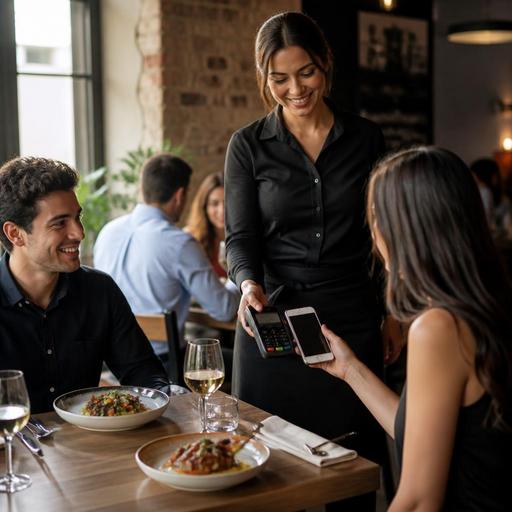
When Flexible Payment Options Actually Help Restaurant Sales
Flexible payment options for restaurants can improve the guest experience, but they do not automatically make every concept more profitable. For some businesses, offering more ways to pay removes friction at the exact moment a guest is ready to order or settle the bill. For others, it adds cost, staff confusion, and unnecessary complexity. The real question is not whether flexible payments are modern. It is whether they fit your service model, average check, guest expectations, and operational workflow.
In practice, flexible payment options can include contactless card payments, mobile wallets, pay-at-table, split payments, digital prepayment for online orders, deposits for reservations, house accounts for corporate clients, and in some markets, buy now pay later for catering or high-value events. Each option solves a different problem. Restaurant owners get better results when they start with the operational problem first and the payment method second.
Start with the moments where payment friction hurts service
Payment flexibility matters most when the payment step slows down table turnover, creates awkward guest interactions, or leads to abandoned orders. A busy cafe with morning rush traffic has different needs from a full-service restaurant handling large dinner parties. If guests regularly wait for the card machine, ask to split checks in multiple ways, or leave the line because their preferred payment method is not accepted, payment is already affecting revenue and service quality.
Consider a fast-casual lunch concept in a business district. Guests often want speed, digital receipts, and tap-to-pay convenience. In that setting, contactless payment and wallet support can reduce queue friction. Now consider a neighborhood restaurant that hosts birthdays and team dinners. There, split payments and pay-at-table may matter more because the pain point is not ordering speed but end-of-meal settlement.
Restaurant owners should review a few simple indicators during normal service:
- Guests asking whether they can pay by phone or digital wallet
- Frequent delays caused by one payment terminal serving too many tables
- Staff spending too much time dividing bills manually
- Online orders abandoned before checkout
- Reservation no-shows for high-demand time slots
If one or more of these issues appears repeatedly, flexible payment options may solve a real operational bottleneck rather than simply adding a trendy feature.
Match payment options to your restaurant model
Not every restaurant needs the same level of payment flexibility. The best setup depends on how guests order, how they consume, and when the transaction happens.
Quick-service and cafe environments
For quick-service restaurants, bakeries, and cafes, speed is usually the priority. Guests expect fast checkout, tap payments, and easy digital ordering. In these environments, the most useful options are often mobile wallets, QR-based ordering with prepayment, and clear support for card-present and card-not-present transactions. If your line forms fastest between 8 a.m. and 10 a.m., every second saved at checkout matters.
Full-service dining
In table-service restaurants, the pain point often comes later in the visit. Guests may want to split the bill by person, by item, or by couple. They may prefer to pay at the table rather than hand over a card and wait. Here, payment flexibility supports hospitality because it reduces the awkward final minutes of service and lets staff close tables more smoothly.
Group dining, events, and catering
Restaurants that handle private dining, office catering, or large family gatherings often benefit from deposits, staged payments, or invoicing for approved business clients. These tools can protect production planning, reduce no-shows, and make higher-value bookings easier to manage. Flexible payment in this case is less about convenience and more about commitment and cash-flow visibility.
Evaluate the trade-offs before adding more payment methods
More payment options can increase conversion, but they can also create hidden operational costs. Restaurant owners should evaluate each option through four lenses: cost, training, reconciliation, and guest clarity.
- Cost: Some methods carry higher processing fees or added platform charges. A payment option should solve a problem valuable enough to justify the cost.
- Training: If staff do not know when to use a method, how to explain it, or how to fix common issues, checkout becomes slower rather than faster.
- Reconciliation: Finance teams and managers need a clean daily process for matching payments across dine-in, delivery, pickup, deposits, and refunds.
- Guest clarity: Confusing rules damage trust. If deposits are nonrefundable under certain conditions, or if split payments have limits, explain that clearly before the guest reaches the final step.
A practical example is a restaurant that adds reservation deposits on peak weekends. This can be useful when no-shows hurt revenue and prep planning. But if staff cannot easily see which bookings are prepaid, how much was collected, or how to apply the deposit to the final bill, the front-of-house team ends up improvising during service. The policy may be sound, but the workflow is broken.
Use flexible payments to improve guest experience, not just checkout
The strongest payment strategies feel natural to the guest. They reduce uncertainty, speed up decisions, and support the type of occasion the restaurant serves. Flexible payments should be part of the overall guest journey, from discovery to booking to ordering to post-visit follow-up.
For example, a restaurant with a digital menu can display payment expectations early. If lunch guests can order and pay from the table, they know the visit will be efficient. If a private dining inquiry includes deposit terms from the beginning, event planners can move faster. If an online ordering flow supports simple prepayment, guests are less likely to abandon the cart at the final step.
This is also where operations and technology should connect. Payment data should not live in isolation from reservations, order management, and menu availability. If a guest prepays for a special menu item that later becomes unavailable, the team needs a fast process for substitution or refund. If a reservation deposit is collected, it should be visible when the party arrives. Platforms that connect digital menus, ordering, and reservation workflows help restaurants reduce these handoff problems.
A practical rollout plan for restaurant owners
If you are considering more flexible payment options, avoid launching everything at once. Start with one clear use case and measure whether it improves service.
- Map the friction point: Identify where payment currently slows service or causes lost sales.
- Choose one solution: For example, pay-at-table for dinner service, prepayment for pickup orders, or deposits for peak-time reservations.
- Write the rule clearly: Make sure guests and staff both understand how the option works.
- Train the team: Give staff simple scripts and escalation steps for exceptions.
- Review weekly: Check whether the change reduces delays, confusion, abandoned orders, or no-shows.
- Expand carefully: Add another payment option only if the first one works operationally.
A good rule of thumb is simple: add flexibility where it removes friction for both the guest and the team. If it only looks modern but complicates service, it is probably not the right fit yet.
Restaurants do not need every available payment method. They need the right ones for their concept, service style, and guest behavior. When payment flexibility supports faster ordering, clearer commitments, easier bill settlement, and cleaner operations, it becomes a practical growth tool rather than just another feature. Restomas can help restaurants connect digital menus, ordering flows, and reservation processes so payment works as part of a smoother operation.
