DoorDash vs Uber Eats vs Direct Ordering for U.S. Restaurants
For many operators, DoorDash vs Uber Eats vs direct ordering for U.S. restaurants is not just a marketing question. It is an operations question that affects ticket flow, margins, guest ownership, labor, pickup speed, and how your POS and kitchen display system handle demand. A neighborhood burger spot in Dallas, a fast-casual salad chain in Chicago, and a hotel restaurant in Orlando may all use the same channels, but the right workflow mix can look very different.
The practical goal is not to pick one channel and ignore the others. It is to decide what each channel should do for your business, then build a workflow that protects service quality during lunch rush, dinner peaks, curbside pickup windows, and late-night demand. Marketplace delivery apps can drive reach. Direct ordering can improve repeat business and reduce dependency. The smartest setup often combines both, with clear rules for menu availability, order throttling, packaging, and staff assignments.
What each ordering channel is really doing for your restaurant
DoorDash and Uber Eats both function as customer acquisition channels, order intake channels, and fulfillment channels. In practice, that means they can bring first-time guests who may never have visited your dining room, but they also add another layer between your restaurant and the guest. Direct ordering, by contrast, usually gives you more control over menu presentation, guest communication, and repeat ordering workflows, but you must generate your own demand through local marketing, search visibility, email, SMS, loyalty, or in-store prompts.
Think about a suburban pizza shop in New Jersey. DoorDash might help it capture Friday-night family orders from nearby neighborhoods that are browsing delivery apps. Uber Eats might perform better near apartment buildings with younger app-native diners. The restaurant’s own online ordering page may win with repeat guests who already know the brand and want easy takeout, scheduled pickup, or curbside pickup without searching an app.
For U.S. operators, channel choice also affects:
- Menu control: direct ordering usually makes it easier to push combos, family meals, modifiers, and limited-time items.
- Guest data: direct channels typically support better first-party relationship building.
- Operational complexity: each marketplace can create separate tablet, menu, and outage management tasks unless integrated.
- Margin pressure: third-party fees, promo participation, refunds, and packaging can change item-level profitability.
- Brand experience: late delivery, missing items, or poor handoff may be blamed on your restaurant even when a driver or app issue caused it.
Compare the workflow, not just the commission
Many owners start with fees, but the better comparison is the full order journey from guest tap to completed handoff. Ask your team to map three separate paths: DoorDash, Uber Eats, and direct online ordering. Then compare where mistakes, delays, and rework happen.
Marketplace workflow example
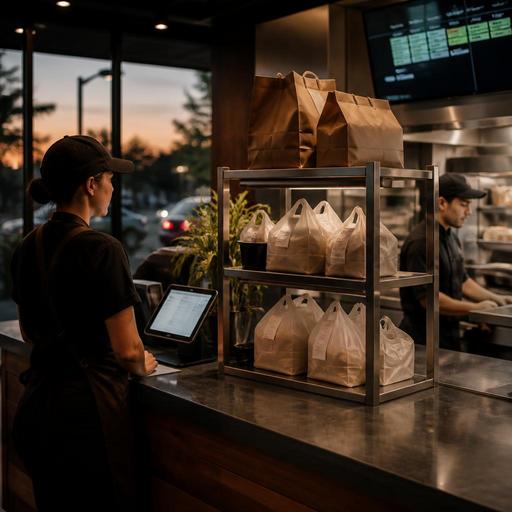
A Nashville chicken shop receives delivery app orders on an integrated POS feed or a tablet. The kitchen display system fires tickets to fry, expo, and beverage stations. Staff package the order, check modifiers, seal the bag, and stage it on a pickup shelf or hand it directly to the driver. Problems often happen at the handoff stage: drivers arrive too early, too late, or without clarity on the order status. If your team has no clear driver pickup station, the front counter can become congested and dine-in guests may feel ignored.
Direct-order workflow example
A California cafe uses QR codes on tables, a website order page, and a link in its social profiles for direct takeout. Orders flow directly to the POS and kitchen display system, with pickup times based on kitchen capacity. Staff can text or verbally guide guests to a dedicated pickup shelf, and the operator can promote add-ons like bottled drinks, pastries, or retail coffee bags. Because the guest ordered directly, the cafe can also encourage the next purchase more naturally.
When comparing channels, review these workflow questions:
- Does the order enter the POS automatically or require manual re-entry?
- Can the kitchen display system distinguish delivery, takeout, curbside pickup, and dine-in clearly?
- Who owns menu updates when an item sells out at 7:15 p.m.?
- Can you pause a channel during an unexpected rush or staff shortage?
- How are pickup promises adjusted when the fry station or grill is backed up?
- Where do drivers wait, and how do you prevent lobby crowding?
- How are refunds, substitutions, and missing-item claims documented?
Where direct ordering can outperform marketplaces
Direct ordering usually works best when your restaurant already has repeat demand, a strong local identity, or a physical location that supports easy pickup. Think of a bagel shop in Boston with a heavy weekday morning rush, a barbecue restaurant in Austin with high-value family packs, or a multi-location poke brand in Seattle trying to standardize takeout across stores.
Direct channels can be especially useful for:
- Pickup-heavy businesses: if many guests are willing to drive over, direct ordering can reduce friction and protect margins.
- Curbside pickup: your own workflow can ask for vehicle details, arrival status, and timing in a way that fits your parking lot.
- Catering and large checks: direct forms often handle lead times and special instructions better than standard marketplace flows.
- Loyal repeat guests: regulars who trust your food are easier to shift to first-party ordering with a receipt prompt or QR code at checkout.
- Multi-location routing: direct ordering can steer guests to the correct store and keep hours, menus, and item availability more consistent.
That said, direct ordering is not automatically better. If your restaurant depends on discovery by tourists, downtown office workers, airport travelers, or late-night app traffic, third-party marketplaces may still be important top-of-funnel channels. A sports bar near a stadium may see app demand spike on game days from hotels and nearby apartments. A food truck may benefit from app visibility in dense urban areas where guests decide quickly.
Build a channel strategy by daypart, menu, and location type
One of the biggest mistakes U.S. operators make is using the same menu and staffing logic for every channel. Instead, separate your strategy by daypart and unit type.
For example, a fast-casual chain might run:
- Lunch: prioritize direct pickup for office workers, with limited marketplace menu depth to protect line speed.
- Dinner: allow fuller delivery menus when dine-in pressure is lower.
- Late night: keep only travel-friendly items live on apps to reduce refund risk.
- Weekend brunch: disable fragile items like soft eggs or loaded pancakes for long delivery routes.
A diner in Phoenix may choose to keep milkshakes and crispy fries off delivery apps during summer afternoons if quality drops too much in transit. A hotel restaurant may accept direct pickup from local residents but route in-house guest orders through a separate workflow entirely. An airport concession or stadium venue may focus more on QR ordering and pickup staging than on third-party delivery, because guest movement and security rules create different constraints.
Staffing matters too. If tipped staff are packaging takeout during peak dining-room service, service on the floor can suffer. Operators should define who owns app tablets, who confirms driver pickups, and how takeout side work is assigned. If your business uses service charges, tips, or pooled gratuity models in some channels, verify current federal, state, and local requirements with qualified advisors and official guidance. The same caution applies to sales tax handling, alcohol delivery rules, ADA-minded digital access, and FDA menu labeling context for chains that may have specific obligations.
Action plan: decide what to keep, change, or stop
If you want better results from DoorDash, Uber Eats, and direct ordering, start with a 30-day operational review instead of a full rebuild.
- Pull channel-specific reports: compare order counts, average check, refunds, remakes, and peak times by channel.
- Audit menu fit: remove items that travel poorly, create bottlenecks, or generate frequent complaints.
- Clean up integrations: reduce tablet chaos by connecting channels to your POS and kitchen display workflows where possible.
- Create a pickup zone: use a dedicated shelf or handoff point for drivers and takeout guests to reduce front-counter friction.
- Set channel rules: decide when to throttle, pause, or shorten menus during rush periods.
- Train staff on exception handling: missing drinks, substitutions, late drivers, and curbside arrivals need a repeatable script.
- Promote direct ordering in-store: add QR prompts on receipts, packaging inserts, and table tents for repeat guests.
- Review accessibility and clarity: make sure ordering steps, pickup instructions, and contact options are easy to understand for all guests.
The best answer is rarely marketplace only or direct only. Most U.S. restaurants need a balanced channel mix that matches their food, labor model, guest base, and location type. If your systems make it easy to sync menus, route orders cleanly, manage sold-out items fast, and support both QR and online ordering, you can use each channel for what it does best. Restomas helps operators organize those workflows without adding unnecessary complexity.