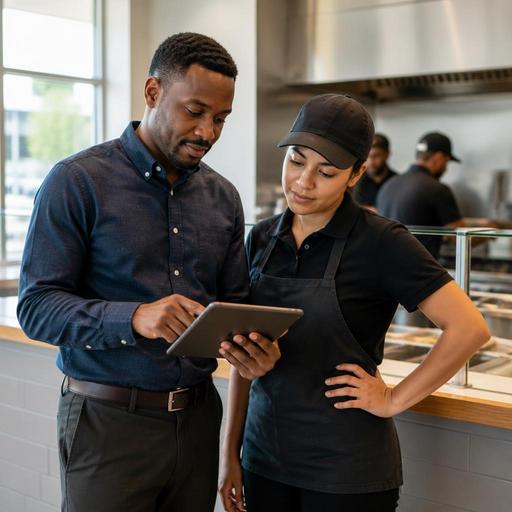
Digital Transformation Plan for Fast-Casual Restaurant Chains
Digital transformation for fast-casual restaurant chains is no longer a side project for large brands with dedicated IT teams. It has become a practical operating discipline for multi-unit businesses that need consistent service, faster decisions, and better visibility across locations. For fast-casual operators, the goal is not to add technology for its own sake. The goal is to remove friction for guests, reduce manual work for staff, and create a system that can scale from one strong store to a stable chain.
A useful roadmap starts with the daily realities of fast-casual service: lunch peaks, frequent menu updates, mixed dine-in and takeout demand, staff turnover, and the need to keep brand standards consistent without slowing down the floor. The strongest operators do not digitize everything at once. They identify the moments where delays, errors, and inconsistency hurt the business most, then build a connected stack around those priorities.
Start with an operational audit, not a software shopping list
Before choosing tools, map the guest journey and the order journey across a typical day. In a fast-casual chain, one order may begin at a counter, a QR menu, a self-order flow, a delivery app, or a staff phone call. That order must then move clearly to prep, assembly, pickup, and payment reconciliation. If any step depends on memory, handwritten notes, or staff improvisation, it is a strong candidate for digitization.
For example, a three-location salad and grill chain may discover that the real issue is not demand generation but menu inconsistency. One branch still offers an old combo, another branch is out of a dressing but cannot update guest-facing channels quickly, and the kitchen team receives unclear modifications during the lunch rush. In that case, the first digital priority is centralized menu management and cleaner order routing rather than launching a loyalty app.
During the audit, review these areas:
- Menu control: How many places need updates when an item changes?
- Order intake: Which channels create the most manual re-entry?
- Kitchen flow: Where do tickets slow down, duplicate, or create confusion?
- Guest communication: How are wait times, sold-out items, and pickup readiness shared?
- Reporting: Can head office compare branches using the same definitions and categories?
This audit creates a sequence. It prevents the common mistake of buying attractive features before fixing the most expensive operational gaps.
Build the roadmap in phases that match chain growth
Fast-casual chains usually benefit from a phased rollout. A simple roadmap helps owners avoid overwhelming store managers while still moving toward a more connected operation.
Phase 1: Standardize the digital menu foundation
Menu structure is often the hidden base layer of restaurant digitization. Categories, modifier groups, combo logic, allergen notes, branch-specific availability, and pricing rules should be documented in one controlled system. If a guest sees one item name on a QR menu, another on a delivery channel, and a third on an in-store board, confusion follows. So do staff mistakes.
A practical first step is to define one menu source of truth for all branches. That includes naming rules, photo standards if used, modifier limits, and temporary item workflows. A fast-casual taco chain, for instance, may create one approved structure for proteins, toppings, sauces, meal bundles, and add-ons. Once that structure is clean, updating seasonal items or disabling sold-out ingredients becomes much easier across locations.
Phase 2: Connect ordering and kitchen execution
After menu standardization, the next priority is clear order flow. The objective is to reduce manual handoffs. Orders should move from guest-facing channels into an organized queue that the kitchen and pickup team can understand immediately. This is especially important when the same branch handles dine-in, takeaway, and delivery at the same time.
Good digital order flow design answers practical questions:
- Can the kitchen quickly distinguish urgent in-store orders from scheduled pickups?
- Are modifiers displayed in a consistent format?
- Does the team know when to pause a channel during overload?
- Can the front counter see order status without interrupting the line?
For chains, consistency matters as much as speed. If Store A uses one ticket logic and Store B uses another, training becomes slower and transfer staff struggle to adapt.
Phase 3: Add guest experience layers
Once the foundation is stable, operators can improve convenience and personalization. This may include QR menus, digital reservations where relevant, order status communication, repeat-guest preferences, or post-visit feedback collection. In fast-casual environments, guest experience often improves most when friction disappears. Clear menus, fewer stock surprises, easier reordering, and faster pickup create a stronger impression than flashy features alone.
This is also where a platform approach becomes useful. If menu updates, order management, reservations for selected formats, and POS-connected workflows live in separate disconnected tools, each change creates more admin work. A more unified setup helps chain operators keep technology practical rather than fragmented.
Use digitization to support staff, not just management reporting
Digital projects fail when teams experience them as extra surveillance or extra clicking. In successful fast-casual chains, digitization makes work easier at station level. That means clearer prep instructions, fewer repeated guest questions, faster onboarding, and less time spent checking multiple systems.
Consider onboarding. A new cashier should not have to memorize which branch still carries a retired side item or how to explain unavailable modifiers that remain visible somewhere online. A well-managed digital menu reduces these awkward moments. Likewise, line cooks benefit when modifier language is standardized. A consistent instruction such as no onions, extra pickles, sauce on side is easier to execute than a mix of abbreviations and free-text notes.
Owners should also define branch-level responsibilities. Head office may control structure, pricing rules, and brand standards, while store managers may control temporary item availability, shift notes, and local pauses. This balance keeps centralization from becoming slow.
- Document which changes require approval.
- Train managers on urgent updates such as sold-out items.
- Create simple escalation rules for tech problems during peak periods.
- Review staff feedback after rollout, not just sales reports.
When staff can see the operational benefit quickly, adoption improves.
Measure success with operational signals you can act on
A digital transformation roadmap should not depend on vague goals like be more modern. It should be tied to observable improvements. For a fast-casual chain, useful signals usually come from consistency, speed, and error reduction.
Look for patterns such as repeated item voids, frequent guest questions about unavailable products, branch-to-branch menu differences, delays at handoff counters, or confusion around combo configuration. These are practical indicators that the system still has friction. They also point directly to corrective action.
For example, if one location repeatedly struggles with pickup congestion, the answer may not be more labor alone. It may require clearer order-ready communication, better pickup labeling, or separating in-store queue visibility from delivery pickup flow. If another branch sees frequent modification errors, review whether menu choices are too complex or whether kitchen display formatting needs improvement.
Weekly review meetings should include both store-level and chain-level questions:
- Which menu items create the most clarification requests?
- Which dayparts produce the most order bottlenecks?
- Are temporary menu changes applied consistently across branches?
- Where are staff bypassing the system and why?
The best roadmaps stay flexible. Digitization is not a one-time launch. It is an operating habit of reducing friction, reviewing workflow, and refining standards as the chain grows.
How to move from pilot location to chain-wide rollout
Many fast-casual chains make progress by testing changes in one representative store before expanding. Choose a branch with normal complexity, not the easiest location and not the most chaotic one. Pilot a limited scope, such as centralized menu updates and improved order routing, then document what changed in practice.
Create a rollout pack that includes manager training notes, menu governance rules, branch permissions, peak-hour fallback procedures, and a checklist for launch week. Keep the documentation operational, not theoretical. A store manager needs to know who changes availability at 11:45 a.m., what happens if an item is eighty-sixed, and how the counter team confirms order status without disrupting the kitchen.
For growing chains, this is where digital restaurant platforms can support a more disciplined rollout. Tools such as QR menus, order management, reservation handling where needed, and POS-connected workflows are most valuable when they reduce duplication and help every branch work from the same playbook. Restomas fits naturally into that kind of practical digitization approach by helping operators centralize guest-facing and operational processes without overcomplicating daily service.
A strong roadmap for fast-casual restaurant chains begins with menu truth, continues through order flow discipline, and expands into better guest and staff experiences. The operators who win are usually not the ones with the most tools, but the ones with the clearest sequence and the best operational follow-through.
If you are refining digital operations across one store or several, Restomas can help you bring menus, ordering, and service workflows into a more manageable system.
