Ghost Kitchen Operations: Real Opportunities, Risks, and Daily Execution
Ghost kitchen operations have moved from trend talk to practical business consideration for restaurant owners who want to grow delivery sales, test new concepts, or enter new neighborhoods without opening a full dining room. The model can look efficient on paper: lower front-of-house costs, flexible brand experiments, and a delivery-first setup. In reality, ghost kitchens succeed or fail through execution. Menu design, order flow, packaging, labor planning, platform control, and guest communication all matter more than the idea itself.
For independent restaurants, small chains, and cafe operators, the real question is not whether ghost kitchens are good or bad. It is whether the model fits your operations, brand, and margin structure. A delivery-only concept can create reach and focus, but it can also introduce hidden complexity if the kitchen, team, and systems are not prepared.
Where ghost kitchens create real opportunity
The strongest reason to consider a ghost kitchen is not hype. It is operational fit. A business with underused kitchen capacity during certain dayparts may be able to add a delivery-only brand without taking on the cost and risk of a second full-service location. A burger restaurant, for example, might launch a late-night wings concept from the same kitchen if equipment, prep, and staffing already support it. A cafe with a quiet afternoon period might test grain bowls or sandwich delivery for office customers under a separate brand.
Ghost kitchens can also help restaurants test demand before making larger investments. Instead of signing a long lease for a dine-in expansion, an operator can validate whether a new cuisine, neighborhood, or price point actually works in delivery. This is especially useful when the core brand has strong kitchen discipline but limited room for growth in the current location.
Another opportunity is sharper menu focus. Delivery-only brands do not need a broad dining-room menu. They can be built around a narrow product set that travels well, uses overlapping ingredients, and simplifies production. That focus often improves consistency because the team repeats fewer items more often.
- Market testing: Launch a focused concept before committing to a new storefront.
- Asset utilization: Use existing kitchen capacity during slower periods.
- Brand experimentation: Explore a new cuisine or customer segment with lower upfront risk.
- Delivery optimization: Build a menu specifically for off-premise performance instead of adapting dine-in dishes.
The hidden risks owners often underestimate
The most common mistake is treating a ghost kitchen as easy extra revenue. In practice, it adds another operating layer. If your current kitchen already struggles with prep timing, ticket organization, or stock visibility, a delivery-only concept can magnify those weaknesses. A second or third virtual brand may create menu confusion, longer production times, and more order mistakes if all orders arrive through different tablets or disconnected channels.
Brand risk is another issue. Guests may discover your food through a delivery app rather than through your main restaurant identity. If the packaging is poor, items arrive soggy, or order accuracy slips, the customer does not experience your dining room hospitality. They judge only the delivered product. That means quality control must be designed for the delivery journey, not just for the pass.
Margin pressure is also real. Platform commissions, discounts, packaging costs, refunds, and remakes can quietly reshape profitability. A dish that performs well in-house may not work as a delivery item once those costs are included. Fried foods, elaborate plated dishes, and highly customizable items often create more trouble than value unless the kitchen has a clear system.
There is also a staffing risk. Owners sometimes assume ghost kitchens need fewer people, but the right question is whether they need fewer roles or simply different ones. You may need stronger expo control, tighter prep planning, and someone responsible for managing incoming digital orders, delivery timing, and stock updates across channels.
Menu engineering for delivery-first reality
A ghost kitchen menu should be designed for production speed, travel durability, and margin protection. Start by identifying dishes that hold texture, temperature, and appearance for the full delivery window. Rice bowls, wraps, pasta bakes, sandwiches, and structured combo meals often perform better than fragile plated dishes or items that depend on immediate service.
Next, reduce unnecessary customization. Every modifier increases the chance of delay or error, especially during peak periods. If guests need some flexibility, offer controlled choices such as protein selection, spice level, or one side swap instead of a long build-your-own flow.
It is also wise to create a packaging map for the menu. Which items need vented containers? Which sauces should be packed separately? Which dishes need assembly instructions for the guest? A chicken sandwich may need sauce on the side to preserve texture, while fries may need a different cut or seasoning approach if they are expected to travel.
- Review your current menu and remove items that perform poorly in transit.
- Group ingredients across multiple dishes to reduce prep complexity and waste.
- Set a target prep time for each item and test it during peak conditions.
- Standardize packaging by item, not by staff memory.
- Update digital menus immediately when ingredients run low or items sell out.
This is where strong digital menu management becomes practical, not cosmetic. If a ghost kitchen runs out of a key protein or side, the menu should reflect that quickly across channels. Otherwise, the kitchen keeps receiving orders it cannot fulfill cleanly, leading to substitutions, cancellations, and poor reviews.
Staffing, workflow, and order control behind the scenes
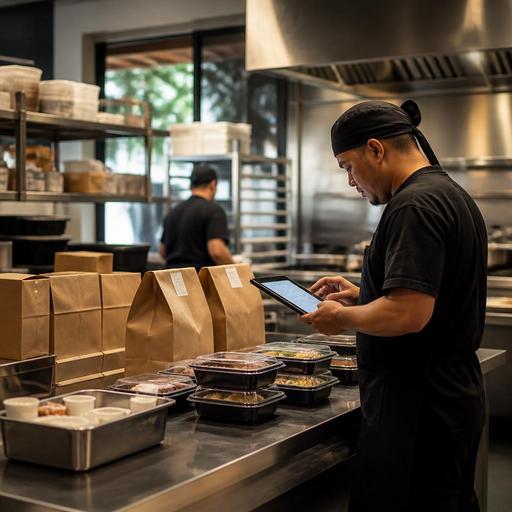
A profitable ghost kitchen depends on disciplined order flow. The kitchen needs one clear source of truth for incoming tickets, item status, and handoff timing. When operators rely on multiple devices, verbal updates, and manual rewrites, small delays turn into service breakdowns. A well-organized digital workflow helps the team see what is new, what is in progress, what is delayed, and what is ready for pickup.
Consider a practical example. A casual restaurant launches a delivery-only salad and bowl brand from the same kitchen used for lunch service. At first, the owner adds the brand on two marketplaces without changing internal workflow. Within a week, the grill station is overloaded, cold items wait too long for assembly, and runners cannot tell which courier belongs to which order. The issue is not demand. The issue is system design. Once the restaurant separates prep zones, limits modifiers, routes orders into one management view, and assigns pickup staging, service becomes more stable.
Staff training should cover more than food prep. Team members need clear instructions on packaging checks, courier handoff, sold-out updates, and issue escalation. If a courier is delayed, who decides whether to hold the order, refire an item, or contact the guest through the platform? If one virtual brand surges while another slows, how are stations adjusted?
Operational checkpoints to review weekly
- Order accuracy problems by item or daypart
- Average prep bottlenecks during peak delivery windows
- Items with frequent refunds or complaints
- Stockouts that should trigger faster menu updates
- Packaging failures reported by guests or couriers
How to evaluate whether a ghost kitchen fits your business
Before launching, owners should run a simple operational test instead of making an emotional decision. Ask whether the kitchen has unused capacity, whether the menu can be simplified, and whether delivery demand exists for the concept. Then test with a limited menu, restricted hours, and clear internal metrics such as order accuracy, prep stability, and repeat demand. You do not need a massive launch to learn what works.
It also helps to decide what kind of ghost kitchen you are building. Are you creating a true new brand, extending your existing restaurant into delivery-first service, or using a virtual concept to fill off-peak hours? Each path changes the menu, marketing, and operational expectations. A premium dine-in brand may not translate directly into a discount-heavy delivery environment. A simple, well-positioned concept often performs better than a complex one with broad ambitions.
Social media can support the launch, but it should reflect operational truth. Show real food, explain delivery availability clearly, and avoid promoting items the kitchen cannot consistently execute. Guest experience starts before the order is placed, and confusion about coverage area, hours, or product availability can create frustration before the first ticket even prints.
Ghost kitchens are not a shortcut. They are a specific operating model that rewards focus, discipline, and digital control. For restaurant owners who approach them carefully, they can open useful growth paths. For those who treat them as effortless extra sales, they often expose weaknesses already present in the business. The better your menu logic, order visibility, and team coordination, the more likely a ghost kitchen will become a durable extension of your operation rather than a distracting side project.
Restomas can help operators manage digital menus, order flow, and service visibility in ways that support a more controlled ghost kitchen setup.
