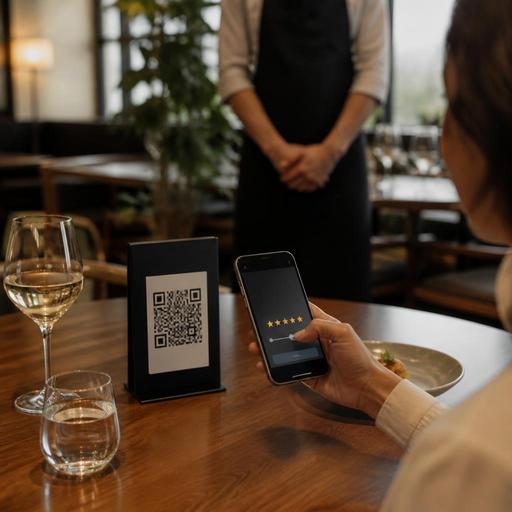
Digital Tip Jars for Restaurants: Fair, Clear Setup Guide
A digital tip jar for restaurants can feel simple on the surface: add a tipping option to a QR menu, payment screen, or online ordering flow and let guests decide. In practice, the setup affects guest trust, staff morale, and daily operations. If tipping prompts feel confusing, too aggressive, or inconsistent across channels, guests may hesitate and teams may question whether the system is fair. A well-designed digital tip jar should make expectations clear, fit your service model, and create a process your staff can explain confidently.
For restaurant owners and managers, the goal is not just to collect more tips. It is to build a tipping experience that is easy to understand, operationally clean, and aligned with how service is actually delivered in your business. A quick-service cafe, a full-service dining room, a bakery with takeaway, and a hybrid restaurant with dine-in and delivery may all need different rules.
Start with a tipping policy before you add the prompt
The biggest mistake is treating the digital tip jar as a payment feature instead of an operational policy. Before adding any tipping button, define what the tip is for, who receives it, and how the amount is handled across service channels.
Ask practical questions first:
- Will guests see tipping on dine-in QR ordering, takeaway pickup, delivery, or all three?
- Does the same tip pool apply to front-of-house, bar, runners, and support staff?
- Will management keep written rules on distribution and payout timing?
- How will refunds, voids, and cancelled orders affect tip records?
- Can staff explain the policy in one or two clear sentences?
For example, a cafe that mainly serves counter orders may choose a simple model: tips from QR orders and card payments go into one shared pool for shift staff. A full-service restaurant may decide that table-service tips are pooled by shift, while delivery tips are tracked separately because the service flow is different. The important part is consistency. If guests tip through one channel and staff do not know where that money goes, the system quickly creates internal friction.
Write the policy in plain English for both staff and managers. Avoid vague wording like tips are shared fairly without explaining what that means in practice. Clear rules reduce disputes and make onboarding easier when new team members join.
Design a guest experience that feels optional, not pressured
Guests are more comfortable tipping when the interface is respectful and transparent. The screen should never make people feel trapped into selecting a percentage just to complete payment. A digital tip jar works best when it supports hospitality rather than forcing a moment of friction.
Good design choices include:
- Showing tipping as an optional step, not a disguised fee
- Offering a visible no-tip option alongside suggested amounts
- Using simple labels such as percentage or fixed amount, without emotional pressure
- Keeping the prompt short and easy to understand on mobile devices
- Making sure taxes, service charges, and tips are not visually mixed together
Consider the difference between service models. In a full-service dining room, a guest may expect a tip prompt at payment. In a self-service bakery, a tip prompt may still be accepted by many guests, but only if the flow is low-pressure and clearly optional. In online ordering, the timing matters too. Some restaurants ask for a tip before order submission; others place the prompt at checkout after the basket is reviewed. Either approach can work if the wording is clear and the guest understands what they are choosing.
On digital menus and QR ordering systems, clarity matters even more because there is no staff member standing beside the screen to answer questions. If your interface already supports smooth menu browsing, clear item descriptions, and easy checkout, the tipping step should follow the same logic: simple, transparent, and easy to skip.
Separate tips, service charges, and fees with zero ambiguity
Many guest complaints come from confusion, not resistance. If a restaurant uses a service charge, delivery fee, cover charge, or platform fee, each item should be shown separately from the tip option. Guests should never have to guess whether they are tipping on top of an existing service charge or whether a mandatory fee already supports staff compensation.
Operationally, this separation also helps accounting and reporting. Managers need clean records that distinguish:
- Voluntary guest tips
- Mandatory service charges
- Delivery or packaging fees
- Discounts, refunds, and voided transactions
Imagine a restaurant with dine-in QR payment, takeaway pickup, and direct website orders. If all extra amounts are grouped under a generic line like service, both guests and staff may misunderstand the outcome. A better setup uses specific labels and trains staff to explain them consistently. For example: The service charge is applied automatically for large groups; the tip option is still optional and goes to the team according to our tip policy. That sentence is much easier to trust than a vague explanation given differently by each employee.
This is also where digital systems help. When menu, ordering, and payment tools are connected, restaurants can keep fee labels consistent across channels instead of improvising at each touchpoint.
Build fair internal workflows for staff trust
A guest-facing tip prompt is only half of the system. The other half is what happens after the payment is completed. Staff trust depends on visibility, consistency, and a process that can be checked when questions arise.
Restaurant owners should create a repeatable workflow:
- Define which roles are included in the tip pool.
- Decide whether distribution is based on hours, shifts, role weights, or another clear method.
- Set a payout schedule such as daily, weekly, or payroll-based.
- Document how corrections are handled when orders are refunded or adjusted.
- Review reports regularly so managers can answer staff questions quickly.
For example, if a cashier helps guests place QR orders, a runner delivers food, and a barista finishes drinks, all three roles may contribute to the guest experience. A shared pool may make sense. In another concept, individual table sections may still matter more. There is no universal rule that fits every restaurant, but there should be a rule that fits yours and can be explained without confusion.
Digital reporting can support this process by reducing manual guesswork. If your restaurant already uses digital ordering or integrated payment tools, it becomes easier to compare channels, track tip sources, and avoid end-of-shift disputes. Platforms such as Restomas can support a cleaner guest journey around menus and ordering, which makes it easier to keep payment experiences consistent as you refine your internal policy.
Review the setup regularly as your service model changes
Tipping should not be a one-time configuration. Restaurants change menus, staffing structures, opening hours, and sales channels throughout the year. A digital tip jar that made sense when you only handled dine-in may need adjustment once takeaway, events, or direct online orders become a bigger part of the business.
Schedule regular reviews with managers and shift leaders. Look for practical signals:
- Guests asking the same questions repeatedly at checkout
- Staff uncertainty about where tips go
- Different tipping behavior across QR, counter, and web orders
- Refund issues that create confusion in reports
- Interface wording that no longer matches the actual service model
A useful review does not require complex analytics. Read guest feedback, observe the payment flow on a real phone, and ask staff what they need to explain most often. Small wording changes, clearer fee labels, or a better payout explanation can improve both guest comfort and team confidence.
In the end, a strong digital tip jar is less about technology alone and more about operational honesty. Guests should understand what they are choosing. Staff should understand how the system works. Managers should be able to maintain the process without improvising every shift. When those three conditions are in place, tipping becomes one more part of a well-run digital restaurant experience instead of a recurring source of friction.
If you are improving your QR menu, ordering, or payment flow, Restomas can help you build a clearer digital guest journey that supports transparent service choices.