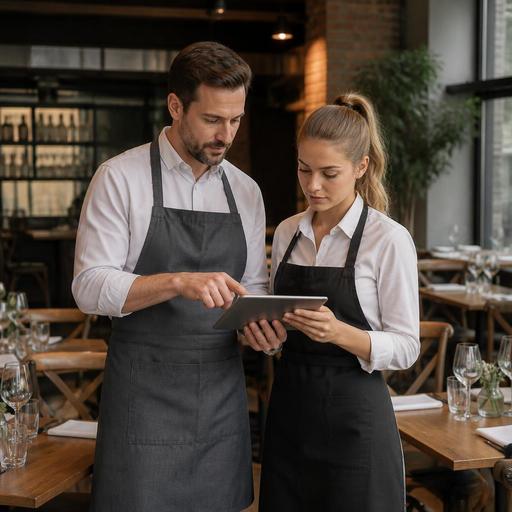
How Better Onboarding and Smarter Scheduling Reduce Restaurant Staff Turnover
Reducing restaurant staff turnover starts long before an employee decides to leave. In most restaurants, turnover is not caused by one dramatic event. It grows from repeated friction: confusing first shifts, unclear expectations, last-minute schedules, inconsistent training, and daily communication gaps between managers, servers, hosts, and kitchen staff. When operators improve onboarding and scheduling, they do more than fill shifts. They create a workplace that feels organized, fair, and easier to succeed in.
For restaurant owners and managers, the goal is practical: help new hires become productive faster, reduce avoidable stress, and give the team enough structure to do good work consistently. This article explains how to build an onboarding process that actually supports retention, how to schedule in a way that reduces burnout, and where digital tools can quietly remove friction without adding complexity.
Why Staff Turnover Often Begins in the First Weeks
Many restaurants focus on hiring speed, which is understandable when the floor is short-staffed or the kitchen is stretched. But fast hiring without structured onboarding often creates a second problem. A new employee may accept the role with enthusiasm, then walk into a first week that feels chaotic. They may not know who to report to, how side work is assigned, how menu updates are shared, or what “good performance” looks like in that specific venue.
Consider a common example: a new server starts on a Friday dinner shift because that is when coverage is needed most. They receive a quick tour, a printed menu, and verbal instructions from whoever is available. During service, they are expected to memorize table sections, modifier rules, allergy procedures, payment flow, and house standards in real time. If they make mistakes, they may be corrected sharply in front of guests or coworkers. Even if the employee is capable, the experience can feel like failure.
Turnover risk rises when early confusion gets interpreted as personal weakness instead of a process problem. Owners can reduce this risk by treating the first two weeks as an operational system, not an informal handoff.
Build an Onboarding Process That Removes Early Friction
Good onboarding in restaurants should be simple, repeatable, and visible. It does not need to be corporate or heavy. It needs to answer the new hire’s first questions clearly and make each shift feel more manageable than the one before.
Start with role-specific essentials
A host, barista, line cook, and server do not need the same first-day training. Break onboarding into role-specific essentials so people learn what matters most first. A server may need table numbers, POS order flow, menu modifiers, allergy escalation, and opening or closing side work. A line cook may need prep labeling rules, station setup, ticket timing standards, and communication with expo.
Create a short checklist for each role. This prevents managers from skipping important topics when the day gets busy and helps new hires see progress.
Use a 30-60-90 day structure
Even in independent restaurants, a light 30-60-90 day framework can improve retention. In the first 30 days, focus on orientation, standards, and confidence. By 60 days, add efficiency, upselling, and problem-solving. By 90 days, the employee should know how to handle routine pressure with less supervision and understand how performance is evaluated.
This kind of structure is useful because it replaces vague expectations with milestones. Instead of saying, “You’ll pick it up,” managers can say, “By the end of week two, you should be comfortable entering modifiers accurately and handling your section with support.”
Make menu knowledge easier to absorb
One hidden reason new staff struggle is that menu training is often delivered in a format that is hard to retain. If dishes, ingredients, allergens, and modifiers change frequently, printed sheets go out of date quickly. Digital menu access can help staff review current items before a shift, during training sessions, or after service. This is especially useful in restaurants with seasonal items, daily specials, multiple service periods, or frequent stock changes.
When staff trust that menu information is current, they answer guest questions more confidently and make fewer avoidable errors.
- Practical onboarding checklist: uniform and appearance standards
- clock-in and break policy
- table map or station layout
- menu basics and common modifiers
- allergy and escalation procedure
- service steps by shift type
- opening, running, and closing tasks
- who to ask for help in each area
Create Schedules That Feel Fair, Stable, and Operationally Realistic
Many employees do not leave only because the work is hard. They leave because the schedule feels impossible to live with. Unclear start times, last-minute changes, uneven shift distribution, and inconsistent communication create stress outside the restaurant, not just inside it.
A better scheduling process improves retention because it signals respect. Staff can arrange transportation, childcare, study time, or second jobs more reliably when schedules are posted with enough notice and adjusted through a clear process.
Reduce last-minute surprises
Managers often change shifts at the last moment to solve coverage problems, but frequent surprises have a long-term cost. If a team member feels they must always be available yet never knows their real week, resentment builds quickly.
Set a standard for schedule posting and changes. For example, publish schedules by the same day each week, use one communication channel for updates, and require shift swaps to be confirmed by management rather than passed informally in chat. This reduces confusion and protects service quality.
Match staffing to demand patterns
Smarter scheduling is not only about fairness. It is also about aligning labor with actual service patterns. If lunch is consistently quiet on certain weekdays, overstaffing frustrates employees who depend on stronger shifts. If Friday dinner is always understaffed, your best people may burn out covering the gap.
Review reservation flow, order peaks, delivery volume, and recurring busy periods when building schedules. Even simple demand-based scheduling can improve morale because the team sees that staffing decisions are based on reality rather than habit.
Cross-train without overloading
Cross-training can strengthen coverage and reduce panic when someone calls out. A host who can support takeaway handoff or a server who understands basic bar support can help the operation stay flexible. But cross-training should not become a reason to overuse reliable employees. The goal is resilience, not dependency on the same few people.
Document which employees are trained for which tasks and use that knowledge intentionally. This is where digital operations tools can help managers keep assignments clearer across shifts.
Use Communication Systems That Support Managers and Staff
Retention often improves when communication becomes less dependent on memory, paper notes, and scattered messages. Restaurants move fast, and verbal instructions get lost easily. A pre-shift note about an unavailable item, a changed modifier, or a reservation detail can disappear within minutes if there is no shared system.
Centralized digital workflows help by making information easier to access and harder to miss. For example, if menu changes, item availability, or service notes are updated in one place, both managers and staff spend less energy chasing answers. That reduces stress for new hires and frees experienced employees from repeatedly correcting preventable mistakes.
This matters for onboarding too. A new staff member who can review accurate menu details, shift expectations, and service updates independently becomes effective faster. A manager who spends less time repeating basic operational information has more time for coaching.
Turn Retention Into a Weekly Management Habit
Restaurants do not reduce turnover with one meeting or one handbook. They reduce it by building small habits into weekly operations.
- Review first-week experience: ask every new hire what felt unclear, rushed, or stressful.
- Audit schedule fairness: check for repeated clopens, uneven premium shifts, and frequent last-minute edits.
- Track training gaps: note where mistakes come from missing instruction rather than poor attitude.
- Standardize updates: keep menu, availability, and service notes in one reliable place.
- Coach managers: train shift leaders to correct calmly, explain clearly, and avoid public friction.
These actions are not glamorous, but they are powerful. In many restaurants, people stay when the job feels learnable, the standards feel consistent, and the schedule feels manageable. They leave when every shift feels like a fresh avoidable struggle.
Restaurant owners who want better retention should look closely at the first 90 days and the weekly schedule process. Those are two of the clearest places where operational design affects team stability. And when digital tools support menu clarity, communication, and day-to-day coordination, the workplace becomes easier for both staff and managers to navigate. If you are refining those systems, Restomas can support a more organized digital operating flow without changing the character of your restaurant.
