How to Choose a U.S. Restaurant Location for Menu Fit and Pickup Demand
Choosing a U.S. restaurant location for menu fit and pickup demand is not just a real estate decision. It is an operating model decision that affects ticket times, staffing, delivery app mix, curbside pickup flow, dine-in experience, and whether your menu actually works in that trade area. A great corner for a brunch cafe may fail for a wing concept with heavy late-night takeout, while a suburban strip center can outperform a downtown storefront if your sales depend on easy parking and fast pickup. Before you sign a lease, match the site to the way guests in that area want to order and the way your kitchen needs to run.
Start with menu mix, not just rent and foot traffic
Many operators begin with rent, visibility, and traffic counts. Those matter, but the first question should be simpler: what kind of menu are you trying to sell, and how will guests buy it here? A fast-casual bowl concept, neighborhood pizza shop, all-day diner, food truck, and hotel lobby cafe each need different location strengths.
For example, a breakfast-and-lunch cafe in a U.S. office corridor may thrive Monday through Friday but struggle on weekends unless nearby apartments, hotels, or hospitals create steady off-hour demand. A burger shop near a high school and youth sports complex may do strong after-school and weekend business, but only if ingress, parking, and pickup shelf flow are easy. A sushi concept in an urban neighborhood may depend less on front-door parking if local delivery volume is high and the packaging holds well for takeout.
Review your menu through three lenses:
- Travel quality: Fries, nachos, and fried seafood can lose quality fast, while rice bowls, sandwiches, pizza, and many baked items travel better.
- Daypart strength: Coffee and breakfast tacos need morning demand; wings and sports-bar food often need evening and game-day demand.
- Production complexity: If your line needs a long cook time, multiple stations, or heavy expo control, a high-volume pickup and delivery area may create bottlenecks unless the kitchen is designed for it.
A practical test is to sketch your sales mix before opening: dine-in, takeout, direct online ordering, delivery apps, catering, and walk-up. If a site only works when dine-in is very high, but the neighborhood already leans heavily toward pickup and delivery, you may be forcing the wrong concept into the wrong box.
Measure pickup demand the way operators actually feel it
Pickup demand is not just about how many people live nearby. It is about whether ordering and handoff are convenient enough for guests to choose you on a busy Tuesday. In many U.S. trade areas, especially suburbs, successful takeout depends on a smooth path from phone to food: easy online ordering, clear parking, a visible entrance, short waits, and a clean pickup shelf or counter zone.
Walk the site at lunch and dinner. Ask practical questions:
- Can a guest park quickly for a 10-minute stop, or will they circle the lot and give up?
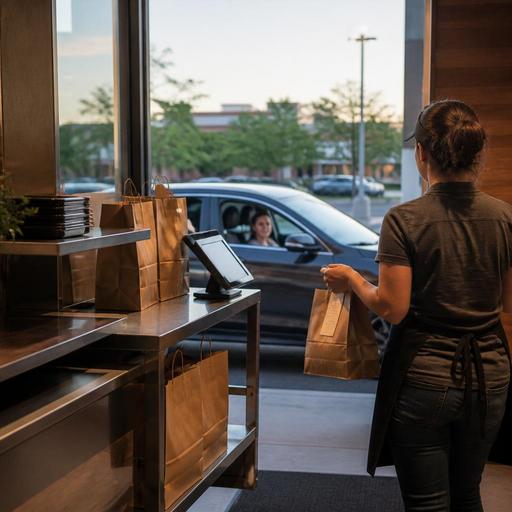
- Is there a safe curbside pickup option without blocking traffic?
- Can delivery drivers enter, wait, and exit without colliding with dine-in guests?
- Is there room for a host stand, pickup shelf, or separate takeout lane inside?
- Does the area have offices, schools, apartments, hotels, hospitals, or sports venues that drive predictable pickup patterns?
Think about specific U.S. scenarios. A strip-center chicken tender concept near a freeway exit may do excellent family takeout if the lot is easy and the kitchen can push orders fast. A downtown cafe with no short-term parking may need stronger dine-in and delivery economics because office workers will not always leave their desks for a complicated pickup trip. An airport concession or stadium venue has built-in traffic, but guests need very fast throughput and menu simplicity because dwell time is short and peaks are intense.
If pickup is important, map the handoff workflow before lease signing. Your POS, kitchen display system, and online ordering setup should support separate channels so the line can prioritize in-house tickets, direct web orders, and delivery app orders without chaos.
Study local competition by operational gap, not just cuisine
Competition analysis should go beyond counting how many taco shops or pizza places are nearby. Look for operational gaps the market is not serving well. In one U.S. suburb, there may be five pizza shops, but none with dependable curbside pickup, family-meal bundles, or a strong direct online ordering experience. In a downtown district, there may be many lunch spots, but few that can handle fast preordered pickup for office workers with a 30-minute break.
When you review competitors, note:
- Average wait times at peak
- Parking and pickup convenience
- Menu price positioning and portion style
- Packaging quality for takeout and delivery
- Delivery marketplace presence versus direct ordering
- Hours by daypart and late-night availability
- Review themes about speed, accuracy, and consistency
A diner in the Midwest might win not because it has the broadest menu, but because it offers reliable online ordering for takeout breakfasts, accurate modifiers, and fast check settlement during the morning rush. A bar-and-grill near a suburban movie theater might capture pre-show traffic if it can turn tables quickly while also staging delivery app orders away from the main entrance.
Also evaluate whether the market is overbuilt for one channel. If every nearby concept relies heavily on third-party delivery, your advantage may be a location that supports direct pickup and lower-order-friction repeat business. If the area is highly seasonal, like a beach town or college market, make sure the site can survive shoulder months without depending on unrealistic volume.
Match the site to labor, service model, and compliance workflows
Location decisions affect labor more than many first-time operators expect. A dine-in-heavy site with full service requires a different staffing model than a fast-casual shop built around QR ordering, counter service, and pickup shelves. If your concept depends on tipped staff, table turns, and larger checks, floor layout and service stations matter. If the model is QSR or fast casual, queue flow, expo space, and order accuracy matter more.
For example, a neighborhood bar may need room for tabs, ID checks, bar seating, and a late-night rush pattern, while a food truck park operator may care more about utility access, queue staging, and mobile payment reliability. A hotel restaurant may need integration with room charge workflows and breakfast peaks tied to conference schedules. Multi-location operators should also consider whether the site can fit the same POS stack, kitchen display workflow, inventory routines, and reporting structure used elsewhere.
Accessibility and compliance should be reviewed operationally from the start. If you plan to use QR menus or QR ordering, make sure guests still have a practical alternative if they do not want to scan or need assistance. Chains that may fall under menu labeling rules should build item data processes early and verify current federal and local guidance. If you use service charges, automatic gratuities, or tip prompts, make sure your checkout flow is clear and that you confirm sales tax, payroll, tip reporting, and local labor treatment with qualified advisors and official guidance. Local zoning, health department requirements, alcohol rules, signage restrictions, and parking rules can vary widely by city and state, so verify them before buildout.
Create a pre-lease location scorecard
Before signing, build a simple scorecard so emotion does not outweigh operations. Rate each site on the same criteria and involve the chef, operator, and front-of-house lead if possible.
- Menu fit: Can the food travel well, and does the kitchen layout support the menu?
- Pickup convenience: Parking, curbside potential, pickup shelf space, driver access
- Daypart demand: Breakfast, lunch, dinner, late night, weekend, event traffic
- Competition gap: What can you do better or more conveniently?
- Labor fit: Staffing availability, commute patterns, service model needs
- Technology fit: POS, online ordering, payments, KDS, reservations if needed
- Guest access: Entry flow, ADA-minded access, dine-in and takeout separation
- Unit economics: Rent, common area costs, delivery radius, expected channel mix
Then run one final stress test: picture your busiest Friday night or Monday lunch. Where do guests wait? Where do drivers stand? Where do pickup orders sit? Can servers move cleanly? Can the kitchen protect ticket times when delivery apps spike? If the answers are fuzzy before opening, they usually become expensive after opening.
The strongest restaurant locations are not always the busiest corners. They are the sites where your menu, service model, and local demand line up cleanly enough to create repeatable operations. Restomas can help operators connect digital menus, ordering, payments, and kitchen workflows so a good location decision turns into a smoother opening plan.