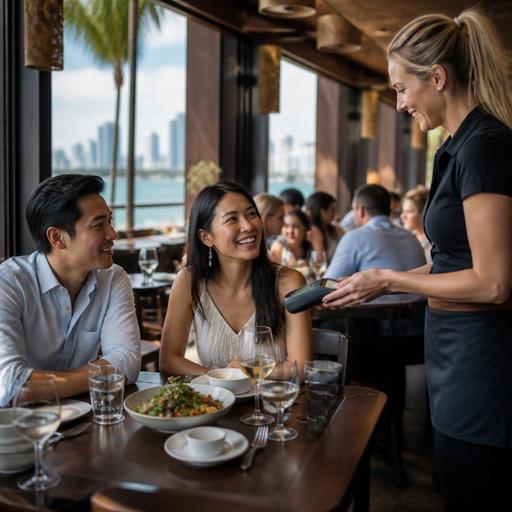
When Multi-Currency Payments Make Sense for U.S. Restaurants in Tourist Areas
Multi-currency payments for U.S. restaurants can be helpful, but only in the right markets. For most operators in the United States, the priority is still smooth dollar-based payment flow, clear tipping, fast checkout, and clean POS reconciliation. But in tourism-heavy locations such as Orlando, Las Vegas, Miami Beach, Waikiki, Manhattan, airport concessions, and hotel restaurants near convention centers, giving international guests a more familiar way to pay can improve the guest experience when it is set up carefully.
The key is not to treat multi-currency as a trendy feature. It should solve a real operational need. If a large share of your guests are international travelers, cruise passengers, convention attendees, or overseas families visiting major attractions, then multi-currency options may reduce confusion at the check and help guests feel more comfortable during payment. If your business is a neighborhood diner in Ohio, a suburban pizza shop in Texas, or a local coffee shop in Oregon with mostly domestic traffic, it may add complexity without much return.
Start with demand, not payment hype
Before turning on any multi-currency feature, look at your actual guest mix. A seafood restaurant near PortMiami, a fast-casual bowl concept by a major California theme park, or a hotel bar in Midtown Manhattan may see enough international volume to justify the workflow. A food truck serving office workers at lunch probably will not.
Good questions to ask include:
- Do your servers or cashiers often hear guests asking what their total is in their home currency?
- Do you see frequent international cards at the POS?
- Are you located near airports, cruise terminals, luxury shopping districts, resorts, convention hotels, or major tourist corridors?
- Does your concept attract one-time visitors more than repeat local regulars?
If the answer is yes, then multi-currency may be worth testing at a limited level. If not, focus instead on faster card acceptance, direct online ordering, QR ordering, and better takeout workflows.
Where multi-currency fits best in U.S. restaurant operations
Not every service model benefits equally. In full-service restaurants serving international travelers, the check presentation moment matters. A steakhouse in Las Vegas or a rooftop restaurant in Chicago may find that guests appreciate seeing a familiar payment option after a high-ticket meal. In hotel restaurants, the benefit may be even stronger because many guests are already traveling with foreign-issued cards and may expect smoother payment choices.
Other strong use cases include:
- Airport concessions: Travelers are in transit, often tired, and less patient with payment friction.
- Resort and hotel food service: International guests may charge to room, pay at the bar, or order poolside, so consistency matters.
- Tourist-district cafes and bakeries: Quick service with high visitor turnover benefits from fast, familiar checkout.
- Attraction-adjacent fast casual: Families managing budgets may appreciate more clarity at the point of payment.
By contrast, drive-thru QSR, school-adjacent lunch spots, or commuter coffee shops often gain little. For those concepts, shaving seconds off the line and keeping labor simple will usually matter more than offering extra payment choices.
How to implement it without creating front-of-house confusion
The biggest risk with multi-currency is not the technology itself. It is staff confusion, guest misunderstanding, and messy reconciliation. U.S. operators should build a simple workflow before launch.
1. Keep the base menu and check in U.S. dollars
Your menu pricing, QR menu display, POS records, reporting, and tax handling should remain operationally anchored in U.S. dollars unless your payment provider and advisors tell you otherwise for a specific workflow. In the United States, guests also expect sales tax, service charges if applicable, and tipping prompts to be clearly presented. Avoid creating a situation where the guest is unsure whether tip is based on the dollar amount, a converted amount, or a service charge already included.
Because payment rules, disclosure expectations, and tax treatment can vary by provider and jurisdiction, operators should verify current requirements with their processor, accountant, and qualified legal or compliance advisors.
2. Limit multi-currency to payment, not menu management
For most U.S. restaurants, the cleanest model is to keep one menu, one pricing structure, and one POS reporting currency, then allow eligible guests to choose a familiar payment display option at checkout if your processor supports it. That avoids constant menu updates, exchange-rate confusion, and staff having to explain why a burger basket shows one number online and another at the register.
This matters even more for multi-location groups. A restaurant company with units in Orlando, Anaheim, and New York may want multi-currency enabled only at high-tourism stores, while keeping the rest of the chain on standard dollar-only payment flow.
3. Train staff on the guest script
Servers, hosts, bartenders, and cashiers should know exactly how to explain the option in one sentence. For example: You can pay in U.S. dollars as usual, or if your card is eligible, the terminal may offer a payment display in your home currency. That script is simple and avoids overpromising. Staff should never guess about exchange rates, fees, or card issuer treatment.
In bars and full-service restaurants, this is especially important when tabs stay open for hours. A bartender should not have to troubleshoot a payment setting during a busy late-night rush. Keep exceptions rare and escalation clear.
Protect speed of service, tip flow, and reconciliation
Any payment option that slows down checkout can hurt table turns and guest satisfaction. That is why operators should test multi-currency in a controlled way before rolling it out widely.
- Enable it at one location with heavy international traffic.
- Limit use to in-person card-present transactions first.
- Watch whether checkout time increases at the table, counter, or bar.
- Review how tips appear in POS reports and payment settlements.
- Confirm that managers can reconcile sales without extra manual work.
For U.S. restaurants, tipping workflow deserves special attention. If you use handheld payment devices, countertop terminals, or QR pay-at-table options, make sure gratuity prompts remain clear and consistent. Guests should understand what they are tipping on, and staff should know how tips are captured in the POS and reflected in reporting. Operators should also verify current tip reporting and payroll handling procedures with qualified advisors, especially if a payment setup changes how transaction details appear in back-office reports.
For takeout-heavy concepts, consider whether the feature belongs only on certain channels. A pickup shelf operation serving mostly local app orders may not need it. But a hotel lobby cafe with direct QR ordering used by overseas travelers might. Delivery marketplace orders usually do not give you much control over checkout presentation anyway, so direct online ordering channels may be the better place to test guest-friendly payment options when supported.
Make it useful for guests, not distracting for the business
The best test is simple: does multi-currency remove friction for a meaningful share of guests without creating new friction for the team? If yes, it may be a smart feature for a restaurant in a tourism-driven U.S. market. If no, skip it and invest in improvements that almost every guest notices, such as faster kitchen display routing, cleaner QR menus, direct online ordering, curbside pickup coordination, or better POS integration.
A practical example: a family restaurant near the Orlando theme park corridor might enable multi-currency on select payment terminals, keep menu pricing in dollars, train servers on a short explanation, and review nightly reconciliation for a month. A neighborhood breakfast diner in Minneapolis would likely get more value from improving waitlist flow and online takeout than from adding payment complexity.
Used selectively, multi-currency can support hospitality in the right U.S. setting. Used everywhere, it can become one more system to manage. Restomas helps operators keep digital ordering, menus, and service workflows organized so new payment options fit the operation instead of disrupting it.