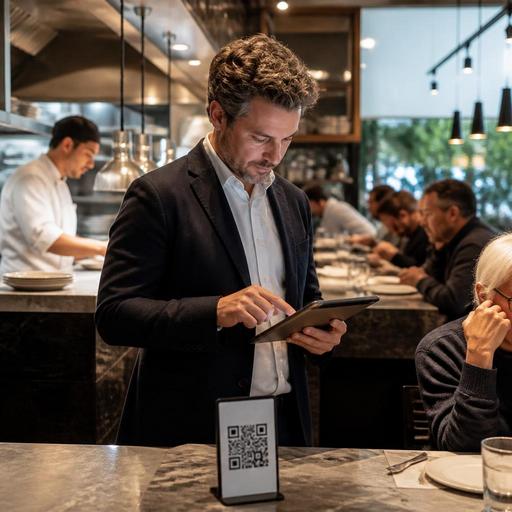
Real-Time Menu Availability: How Restaurants Hide Sold-Out Items Fast
Real-time menu availability matters most when the dining room is busy, delivery orders are coming in, and one popular item suddenly runs out. If a guest can still see and order an unavailable dish, the problem spreads quickly: staff must apologize, the kitchen must suggest replacements, and the guest experience takes an avoidable hit. For restaurant owners, sold-out automation is not just a menu feature. It is an operations tool that protects service speed, team focus, and customer trust.
Many restaurants still handle stockouts manually. A server tells the table that the sea bass is gone. A cashier warns walk-in guests that the cheesecake is unavailable. Someone tries to update one delivery platform but forgets the QR menu or the website. This creates inconsistency across channels. Guests see one thing, staff say another, and the operation absorbs the friction. A better approach is to make menu availability dynamic, immediate, and connected to real service workflows.
Why sold-out items create bigger problems than they seem
When an item remains visible after it is no longer available, the issue is not limited to one missed order. It affects several parts of the business at once. The guest feels disappointed. Front-of-house staff spend time explaining and recovering the moment. Kitchen staff deal with substitutions that may interrupt prep flow. Managers step in to solve a problem that should have been prevented upstream.
Consider a brunch cafe that sells out of avocado early on a Saturday. If avocado toast, add-on avocado, and a signature breakfast bowl all remain orderable, the team now faces repeated correction work. The cashier has to stop each order. The server must revisit tables. The kitchen may need to hold tickets while waiting for clarification. Even if guests accept alternatives, the restaurant has already lost time and confidence.
There is also a brand perception issue. Guests increasingly expect digital menus and ordering channels to reflect reality. If the menu looks current but is not accurate, it signals weak control. In contrast, a menu that instantly removes or disables unavailable items feels organized and dependable.
What instant menu removal should look like in practice
Effective sold-out automation should do more than place a small warning next to an item. In most cases, the best workflow is to remove the item from guest view or clearly mark it unavailable before the order is placed. The goal is to stop disappointment before it starts.
In practice, restaurants usually need availability controls at more than one level:
- Single item level: Hide or disable one dish, drink, or dessert when it runs out.
- Modifier level: Disable a topping, side, sauce, or add-on without removing the full parent item.
- Time-based level: End breakfast items automatically when lunch starts.
- Channel level: Adjust availability across QR menu, takeaway, delivery, and in-store ordering together.
- Location level: For multi-branch businesses, turn items off only where the stockout actually happened.
For example, a burger shop may still have patties but run out of brioche buns. Instead of removing the entire burger category, the team can disable only the items that depend on that bun, while keeping lettuce-wrap or sourdough alternatives active. A dessert counter may sell out of one cake slice while keeping whole-cake preorders available. Good menu automation supports these real-life nuances.
How to build a reliable sold-out workflow for your team
Technology helps, but the real result depends on process design. Restaurants should decide exactly who can mark items unavailable, when they should do it, and how the change reaches every sales channel.
- Define ownership. During each shift, assign responsibility for menu availability updates. This may be a shift manager, cashier lead, or expo, depending on the format.
- Set trigger points. Do not wait until the item is fully gone if prep time or remaining stock is uncertain. Teams should know when to switch an item off, such as after the last portion is committed or when a critical ingredient falls below a safe threshold.
- Standardize naming. If staff use inconsistent item names between kitchen prep sheets, POS buttons, and digital menus, stockouts become harder to manage accurately.
- Update all channels together. The same availability status should flow to QR menus, online ordering, and other active ordering surfaces whenever possible.
- Create a restore process. When an item becomes available again, staff should have a simple way to reactivate it without delay.
A practical example is a pizza restaurant during Friday dinner. The kitchen runs out of burrata. Rather than letting every channel continue to sell burrata pizza, burrata salad, and burrata add-ons, the manager marks burrata-based options unavailable in one place. The QR menu updates immediately, order errors drop, and servers no longer need to explain the same issue table after table.
Where restaurants often fail with menu availability management
The most common mistake is treating sold-out updates as an occasional exception instead of a core operating task. If the process depends on memory, it will break during peak service. Another common failure is partial updating. A restaurant may fix the issue on the dining room QR menu but forget online pickup ordering, or update the POS but not the guest-facing menu.
Restaurants also struggle when they manage availability too broadly. Turning off an entire category may be faster, but it can suppress sales unnecessarily. If only one fish entrée is unavailable, there is no reason to hide all seafood. Precision matters because availability controls should protect revenue as well as reduce friction.
Another weak point is communication between kitchen and front of house. If the kitchen knows an item is nearly gone but the service team does not act until complaints begin, the business loses the advantage of digitization. The best systems support fast handoff from kitchen reality to menu visibility.
Clear actions restaurant owners can take this week
If you want to improve sold-out automation quickly, start with a focused operational review rather than a full technology overhaul. Small changes can produce immediate service benefits.
- Audit your channels: List every place guests can see or order menu items, including QR menus, website ordering, delivery channels, and in-store devices.
- Identify your top stockout items: Look for dishes, sides, desserts, and modifiers that frequently run out or depend on limited daily prep.
- Map dependencies: Connect each ingredient shortage to the exact menu items it affects so staff can disable the right options fast.
- Train one shift workflow: Create a simple routine for opening, peak hours, and closing so availability updates become habit.
- Review guest recovery language: Even with strong automation, occasional misses happen. Give staff short, confident replacement scripts.
For restaurants using digital menu tools, this is where platform design matters. A system like Restomas can support faster menu updates, QR menu accuracy, and smoother coordination between guest-facing menus and live operations. The value is not just digital presentation. It is the ability to keep the menu aligned with what the kitchen can actually produce right now.
Sold-out automation is ultimately about reducing preventable friction. When unavailable items disappear instantly, guests make decisions with confidence, staff stay focused on service, and managers spend less time fixing avoidable mistakes. That is a practical form of restaurant digitization: not technology for its own sake, but better control at the exact moment operations get messy. If your menu still lags behind real stock conditions, this is one of the most useful process upgrades you can make.
Restomas helps restaurants keep digital menus accurate and easier to manage as availability changes throughout the day.
