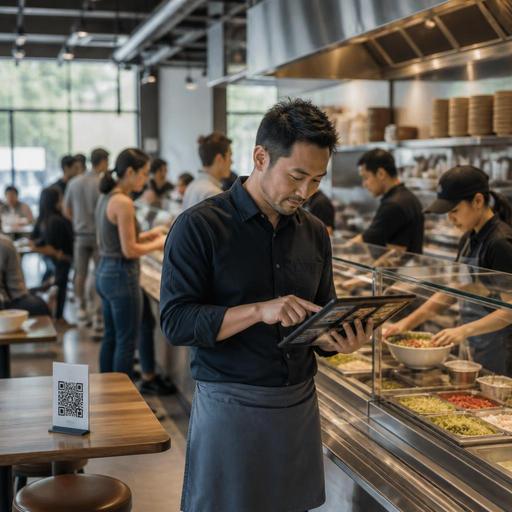
A Practical Digital Roadmap for Scaling Fast-Casual Chains
Digital transformation for fast-casual restaurant chains is not a single software purchase. It is an operating roadmap that connects menu management, ordering, kitchen flow, staff routines, reporting, and guest communication across every location. For growing brands, the real challenge is not whether to digitize, but how to do it without creating confusion between stores, slowing service, or making teams rely on workarounds.
Fast-casual chains sit in a demanding middle ground. Guests expect quick service, accurate orders, easy customization, and digital convenience, while operators need consistency across multiple branches. A practical roadmap helps leadership decide what to standardize, what to localize, and which systems should talk to each other first. The best approach is phased, operational, and tied to everyday service realities.
Start with an operational audit before buying more tools
Many chains begin digitization by reacting to pain points one by one. One branch asks for QR menus, another wants better delivery order handling, and head office wants cleaner reporting. Over time, the brand ends up with disconnected systems, duplicate data entry, and inconsistent guest experiences. A better first step is an operational audit.
Map the full guest and staff journey at store level. Look at how a menu item is created, updated, sold, prepared, and reported. Check where delays, manual edits, and communication gaps appear. For example, a seasonal chicken bowl may be updated in a PDF menu, changed later in a delivery app, and described differently by cashiers in different branches. That is not only a branding issue; it affects training, allergen clarity, and order accuracy.
A useful audit should cover:
- Menu control: where item names, modifiers, prices, and availability are updated
- Order intake: in-store, QR, takeaway, phone, and delivery platform flows
- Kitchen routing: how tickets reach prep stations and how special requests are handled
- Staff communication: shift handovers, outage alerts, item 86ing, and daily notes
- Guest communication: reservations if relevant, pickup instructions, wait-time expectations, and feedback collection
- Reporting: what managers can actually see by store, channel, and daypart
This audit creates the baseline for a chain-wide roadmap. It also prevents a common mistake: digitizing a broken process instead of redesigning it.
Build the roadmap around three priorities: consistency, speed, and visibility
Fast-casual brands usually need digital systems to achieve three things at once. First, they need consistency so guests get the same core experience across locations. Second, they need speed so service remains efficient during peak periods. Third, they need visibility so operators can spot problems before they become customer complaints.
These priorities help determine implementation order. In many chains, the highest-value starting point is centralized menu management connected to digital ordering channels. If menu data is not controlled centrally, every later initiative becomes harder. Promotions become messy, allergen notes drift, and branch teams lose confidence in what is current.
After menu control, the next layer is order flow. That means making sure orders from counter, QR, web, and marketplace channels reach the right production path with minimal re-entry. A cashier should not have to retype online orders into another screen. A kitchen team should not guess whether a custom sauce request came from a table order or a pickup order. Clear digital routing reduces friction and protects throughput.
The third layer is visibility. Multi-unit operators need comparable reporting across branches. If one store has higher voids, longer ticket times, or repeated modifier errors, leadership should be able to investigate quickly. Visibility is what turns digitization from convenience into management discipline.
Standardize the guest-facing experience without removing local flexibility
Chains often struggle with the balance between brand consistency and local adaptation. A strong digital roadmap defines which elements are fixed centrally and which can be adjusted by location. This is especially important in fast-casual, where menu changes, lunch peaks, and neighborhood preferences vary.
Central standards might include item naming rules, photography style, allergen structure, combo logic, and modifier architecture. Local flexibility might include branch-specific availability, limited regional items, pickup timing, or language options depending on the market.
Consider a salad and grain bowl chain with ten locations. Head office may want every branch to present add-ons in the same order: protein, sauce, premium toppings, drinks. That supports brand familiarity and smoother upselling. But one downtown branch may run out of avocado faster at lunch, while a suburban branch may offer a location-specific soup. Digital menu tools should allow those local updates without breaking the core structure.
This is where QR menus and centralized digital menu systems become especially useful. When used well, they help chains update descriptions, availability, and pricing more cleanly than printed materials or store-by-store edits. They also reduce the lag between a head-office decision and the guest actually seeing the correct information.
Questions to answer before rollout
- Which menu fields must be controlled centrally?
- Which branch managers can change availability or pricing?
- How will temporary outages appear to guests and staff?
- How will modifiers be structured to avoid kitchen confusion?
- What is the fallback process if a store loses connectivity?
Digitize staff workflows where service pressure is highest
Not every workflow deserves the same urgency. The best digital transformation plans focus first on moments where teams feel the most pressure. In fast-casual chains, that usually means lunch rushes, handoff zones, and multi-channel order peaks.
For example, a chain may discover that its biggest issue is not order volume itself, but the collision between in-store guests, courier pickups, and custom online orders arriving at the same prep station. In that case, a digital queue and kitchen routing improvement may matter more than adding another marketing app.
Staff workflow digitization should aim to reduce mental load. Teams perform better when systems make priorities obvious. Clear order status, item availability updates, and station-specific production views can help staff move faster with fewer verbal interruptions. This also improves training for new employees, because the process becomes more visible and less dependent on informal habits.
Practical workflow improvements include:
- Live item availability so sold-out items stop appearing across channels quickly
- Centralized menu edits to reduce branch-by-branch inconsistencies
- Kitchen display or clear digital routing for channel-specific order handling
- Pickup and handoff status tracking to reduce crowding and repeated guest questions
- Manager dashboards for monitoring exceptions, delays, and recurring errors
These changes are not glamorous, but they are often where digital investment pays off operationally.
Use implementation phases and store pilots to avoid rollout fatigue
One of the biggest mistakes chain operators make is trying to change everything at once. A practical roadmap uses phases, pilots, and feedback loops. This protects service quality while helping teams adopt new systems with less resistance.
Start with one or two pilot locations that reflect real complexity. Choose stores with strong managers but different traffic patterns, such as one mall branch and one street-level urban branch. Test menu governance, order routing, staff training, and reporting in those environments before expanding chain-wide.
During the pilot, define a short list of operational questions. Are menu edits reaching all guest touchpoints correctly? Are customizations clearer for the kitchen? Are managers spending less time on manual corrections? Are guests asking fewer clarification questions? This kind of structured review is more useful than chasing abstract ideas about innovation.
Rollout planning should also include ownership. Head office, operations, and store managers each need clear responsibilities. If nobody owns menu accuracy, channel mapping, and staff training, the system will drift quickly after launch.
A simple phased roadmap may look like this:
- Phase 1: audit current workflows and define brand standards
- Phase 2: centralize menu data and connect guest-facing channels
- Phase 3: improve kitchen and handoff workflows at peak periods
- Phase 4: build reporting routines for store and head-office review
- Phase 5: expand automation and refinement based on pilot learnings
Digital transformation works best when operators treat it as an ongoing management system, not a launch event. The goal is not to add more screens. The goal is to create a faster, clearer, and more controllable restaurant operation across every branch.
For fast-casual chains, that means using technology to support real service moments: menu clarity, accurate customization, cleaner kitchen flow, and better visibility for managers. Platforms like Restomas can support that journey by helping brands centralize digital menus, streamline ordering touchpoints, and keep daily operations more aligned across locations.