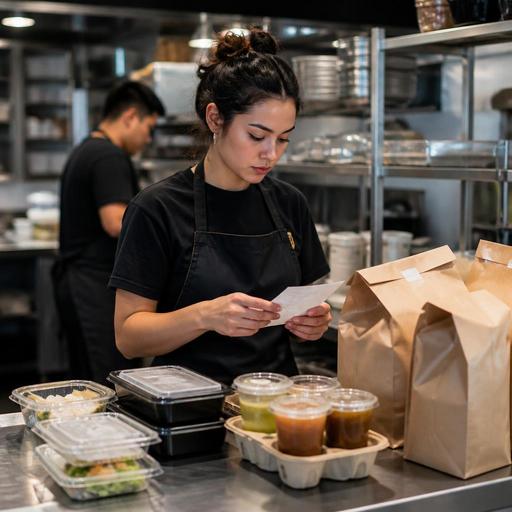
How Restaurants Can Prevent Delivery Order Errors Before They Cost Reviews
Delivery order mistakes rarely come from one big failure. In most restaurants, they happen through a chain of small gaps: a modifier is missed, a side is packed into the wrong bag, a drink is left at the pass, or the kitchen and front counter work from different information. Preventing delivery order errors starts with treating delivery as its own operating system, not as a side task squeezed into dine-in service. When restaurants build clear order flows, accurate menu rules, and simple verification habits, they protect guest trust, reduce refunds, and make service less stressful for staff.
Where delivery order mistakes usually begin
Many owners assume mistakes happen only during packing. In reality, the problem often starts much earlier, at the moment the order enters the business. If the menu is unclear, if modifiers are inconsistent across channels, or if tickets arrive from multiple tablets with different formatting, staff begin every order with a higher chance of confusion.
Consider a burger order with no onions, extra pickles, gluten-free bun, and a bottled drink. If those requests appear differently on each platform, or if the kitchen display shortens the note, the team may prepare the standard item instead of the requested version. The guest experiences this as a simple wrong order, but the root cause is menu and order management.
Common starting points for delivery mistakes include:
- Unclear item naming that makes similar dishes hard to distinguish.
- Poor modifier structure such as free-text notes instead of controlled options.
- Separate ordering channels that create duplicate work or inconsistent ticket formats.
- Missing prep and pack instructions for items that need special handling.
- No single ownership for final order verification before handoff.
If a restaurant wants fewer complaints, it must diagnose the full path of the order, from menu tap to driver pickup, rather than focusing only on the final bag check.
Menu setup mistakes that create avoidable errors
A surprising number of delivery problems come from the digital menu itself. If the menu allows guests to build combinations that the kitchen cannot execute consistently, mistakes become predictable. This is especially common with combo meals, add-ons, sauces, doneness levels, allergen-related substitutions, and family packs.
For example, a fried chicken restaurant may sell a combo with two sides and one drink. If the menu does not force side selection, the kitchen may receive an incomplete ticket. Staff then guess, delay the order, or send it without the missing item. None of those outcomes is good.
To reduce these issues, restaurants should review delivery menus with a strict operational lens:
- Make required choices mandatory. If a guest must choose a side, sauce, protein, or size, the order should not proceed without it.
- Limit free-text notes. Open notes can be useful, but they often create vague or conflicting requests. Use structured modifiers wherever possible.
- Separate similar items clearly. If you sell spicy and regular versions, family and individual portions, or hot and cold beverage variants, name them in a way that leaves no doubt.
- Add pack-level instructions. Some items need labels like “sauce packed separately” or “keep dessert upright.”
- Pause unavailable items quickly. Selling out-of-stock dishes creates substitutions, calls, and rushed decisions that increase error risk.
This is where a digital menu management process matters. When menu logic is clean and updates are centralized, restaurants spend less time correcting orders and more time producing them accurately.
How to build a reliable kitchen-to-packing workflow
Even with a good menu, execution can still fail if handoffs are loose. Delivery orders need a defined workflow that separates cooking, staging, packing, and dispatch. In busy periods, staff often assume someone else added the drink, checked the modifier, or sealed the right bag. That assumption is expensive.
A practical workflow usually works best when each step has visible responsibility:
- Order acceptance: One system receives and organizes incoming delivery orders.
- Production: The kitchen prepares from a clear ticket with modifiers easy to read.
- Staging: Finished items are grouped by order before packing begins.
- Packing: One person checks components against the ticket and packs in sequence.
- Final verification: Another quick check confirms drinks, sides, sauces, utensils if needed, and customer notes.
- Handoff: The driver receives the correct labeled order without grabbing from a mixed shelf.
Take a simple example: a pasta order, garlic bread, tiramisu, and two sodas. The kitchen may finish the hot food first, while dessert and drinks wait at another station. Without a staging rule, the bag may leave incomplete. A designated staging area with order labels prevents that gap.
Restaurants should also standardize packaging decisions. If soups always go in a separate sealed bag, if cold items are always packed apart from hot items, and if modifiers requiring labels are always marked the same way, staff make fewer judgment calls under pressure.
Staff habits that prevent missing items and wrong handoffs
Restaurants do not need long training manuals to cut delivery mistakes. They need repeatable habits that hold up during a rush. The goal is not perfection through memory; it is consistency through process.
Train teams around the most common failure points:
- Read the full ticket before packing, not while packing.
- Match every modifier to the physical item. Do not assume the kitchen caught it.
- Use a verbal or visual check for drinks and desserts. These are frequently missed because they are prepared outside the main hot line.
- Label bags clearly when multiple orders wait for pickup.
- Do not let drivers self-sort through shelves or counters.
- Record repeat error types by shift. Patterns matter more than one-off complaints.
It also helps to assign one role during peak periods: a pack checker or expediter for off-premise orders. In smaller operations, this may be the cashier, shift lead, or expo. In larger ones, it may be a dedicated station. What matters is that someone owns accuracy at the end of the line.
Managers should review complaints in operational language, not emotional language. “Guest angry about wrong order” is less useful than “sauce modifier not visible on kitchen ticket” or “drivers collecting bags before final check.” Specific causes lead to better fixes.
Using digital systems to reduce delivery confusion
Restaurants often outgrow manual delivery handling before they realize it. Multiple apps, separate tablets, handwritten notes, and verbal updates create avoidable complexity. Digital systems help when they simplify decisions instead of adding more screens and more duplication.
A strong setup usually supports four practical goals:
- Unified order flow so staff are not jumping between disconnected delivery channels.
- Consistent menu control across direct ordering and third-party platforms.
- Clear kitchen communication with readable modifiers and item-level instructions.
- Fast stock and availability updates to prevent substitution chaos.
For example, if a restaurant changes a side dish, marks an item unavailable, or updates a combo structure, those changes should be easy to manage and reflect quickly in the ordering experience. If not, the team ends up solving preventable issues with phone calls, apology messages, and refunds.
Restaurants can also use their error log to improve the menu itself. If guests often miss drink selection, make it mandatory. If “extra sauce” creates packing confusion, convert it into a counted add-on. If pickup shelves cause handoff mistakes, change the staging layout and labeling process.
Platforms such as Restomas fit naturally into this operational approach by helping restaurants centralize digital menus, organize incoming orders, and create a cleaner flow between guest choice, kitchen execution, and final handoff.
Turn every delivery mistake into a process improvement
The best restaurants do not treat delivery mistakes as random bad luck. They treat them as signals. A missing side may point to poor modifier design. A wrong bag may reveal a weak pickup station. A repeated allergy-related complaint may show that menu notes and kitchen instructions are not aligned.
Start with a short weekly review. Look at the last few delivery complaints and ask:
- Did the problem begin in menu setup, production, packing, or handoff?
- Was the instruction visible and understandable?
- Who owned the final check?
- Can this be prevented through a system rule instead of staff memory?
Delivery can absolutely be accurate, fast, and guest-friendly, but only when restaurants design it deliberately. The winning approach is simple: cleaner menus, clearer tickets, stronger packing routines, and one source of truth for off-premise operations. If you want to make delivery more reliable without making the team slower, Restomas can help bring menu control and order flow into one practical system.