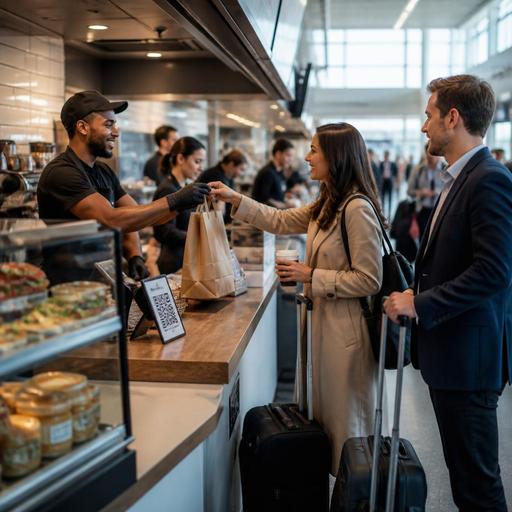
Airport Concession Menu Strategy for Faster U.S. Terminal Service
Airport concession menu strategy matters because terminal guests make fast decisions under pressure, often while juggling boarding times, carry-ons, mobile phones, and changing gate information. In U.S. airports, a menu has to do more than look good on a wall board. It needs to move a line, reduce order errors, support kitchen timing, and help guests understand what they can get quickly. Whether you run a coffee counter in a regional airport, a burger concept in a major hub, or a bar-and-grill near a connecting terminal, menu clarity directly affects throughput and guest satisfaction.
Unlike a neighborhood restaurant, an airport concession serves a high mix of first-time guests who may never come back to ask questions. That makes plain language, visible modifiers, and accurate item availability especially important. Operators also need practical workflows for digital updates, POS consistency, pickup handoff, and accessibility-minded communication. If your brand works with alcohol service, packaged grab-and-go, breakfast cutoffs, or all-day menus, the menu system should reflect those operating realities without creating friction at the register.
Build menus for rushed travelers, not ideal browsing time
Airport guests rarely read a menu the way a sit-down diner guest does. They scan. They compare. They ask one quick question and decide. That means your highest-volume items should be the easiest to understand and the fastest to ring into the POS.
For example, a breakfast sandwich counter in Dallas or Atlanta may have only a few minutes to capture a sale before a boarding group starts lining up. If guests need to ask whether the combo includes coffee, whether the sandwich can be made without cheese, or whether the fruit cup is still available, your line slows immediately. A better setup is a short menu path: signature items first, easy add-ons second, and limited customizations clearly listed.
- Lead with the fastest items during peak departure windows, such as prebuilt yogurt parfaits, hot breakfast sandwiches, or boxed salads.
- Separate made-to-order from grab-and-go so guests can self-sort based on time.
- Use plain item names instead of brand language that a one-time traveler may not understand.
- Show common modifiers up front like no cheese, gluten-aware options, side swaps, or extra protein when operationally available.
- Mark daypart transitions clearly so a guest does not reach the register expecting breakfast after the kitchen has switched to lunch.
This is also where QR menus can help. A QR code at the queue rail or table can show photos, ingredients, and availability without crowding the main board. In a terminal bar, a QR menu can let a solo traveler review beer, wine, and food options while the bartender closes another tab. Just make sure digital access is a supplement, not the only way to read the menu, since guests may have low battery, weak connectivity, or accessibility needs.
Connect menu design to throughput, kitchen flow, and pickup handoff
In airports, speed is not just a front-of-house issue. The menu should reflect what the kitchen display system, prep line, and pickup area can actually handle during rushes. If your menu promises too much customization or too many low-frequency items, the bottleneck usually shows up in expo and handoff.
A practical example is a fast-casual bowl concept in a busy terminal. If every guest can choose from multiple bases, six proteins, five sauces, and several premium add-ons, the line can stall at both the cashier and the make line. A better operating model is to feature a few recommended builds first, then allow a narrower set of modifications. This preserves guest choice while protecting ticket times.
Pickup clarity matters too. Many airport guests are anxious and distracted. If your shelf or handoff counter is not clearly organized by order channel, names get misheard and bags get grabbed by mistake. Operators should separate direct online orders, kiosk or QR orders, and cashier orders in the workflow if volume justifies it. On the back end, menu categories should map cleanly into the POS and kitchen display system so the team sees order priority and station routing correctly.
- Review the top 20 items sold during peak flight banks.
- Remove or simplify items that repeatedly slow production or cause remake requests.
- Create menu groupings that match kitchen stations, such as grill, fryer, cold prep, and bar.
- Use availability controls so sold-out items disappear or are marked unavailable quickly.
- Set up pickup names, order numbers, or channel labels in a consistent format across all systems.
For operators managing multiple airport locations, consistency is critical. A traveler who sees one menu at a Chicago terminal kiosk and a different structure at a nearby unit may hesitate or order incorrectly. Standardized digital menu control can help franchise teams and concession groups keep pricing, item names, and availability aligned while still adjusting for local inventory or terminal-specific demand.
Handle compliance and guest communication as an operating process
Airport operators deal with more than speed. Menu communication can also touch food labeling, accessibility, alcohol service, taxes and fees, and payment workflows. The safest approach is to treat these issues as repeatable operational processes, not one-time menu design tasks.
For instance, large chains may need to consider FDA menu labeling requirements, while alcohol service in an airport bar may involve state, local, airport authority, and concession agreement rules. Some operators add service charges in certain formats, while others rely on traditional tipping. Digital checkouts may prompt for tips on counter service, bar tabs, or takeout, but staff should understand how those prompts appear and how guests are informed. Sales tax presentation and receipt detail should also be consistent with the POS setup. Because these rules vary by jurisdiction and business model, operators should verify current requirements with qualified advisors and official guidance rather than relying on a template.
Accessibility deserves the same discipline. If a guest cannot comfortably scan a QR code, read a high-mounted board, or navigate a digital ordering flow, the operation should have an alternative. In practice, that may mean printed menus on request, staff assistance at the counter, strong color contrast on screens, and simple category labels. ADA-related expectations depend on the exact setup, so it is wise to review your current approach with knowledgeable professionals and official resources.
Operational checkpoints to review
- Menu boards and QR menus match on item names, prices, and availability.
- Alcohol items follow service workflow rules for ID checks and staff handoff.
- Tip prompts and receipts are understood by staff so they can answer guest questions without confusion.
- Sales tax and service charge treatment are configured correctly in the POS and ordering channels based on local requirements.
- Alternate access is available for guests who do not use smartphones or need assistance.
Use airport-specific data to improve the menu every month
Airport concession menus should change based on terminal reality, not generic restaurant assumptions. Flight banks, delayed departures, early-morning demand, and late-night staffing all shape what works. A sports bar near a major hub may sell appetizers and draft beer heavily during delays, while a kiosk near commuter gates may win with coffee, bottled beverages, and hot handhelds.
Start with simple monthly questions. Which items sell fastest before 8 a.m.? Which items are frequently voided after being ordered? Which products are often unavailable because prep runs out too early? Which modifiers create the most kitchen confusion? Which delivery-app items, if your airport allows them, are worth keeping compared with direct ordering or walk-up sales?
Then act on what you learn. If a turkey sandwich sells well from the grab-and-go case but the made-to-order club sandwich slows the line, shift promotion toward the faster format. If travelers keep asking whether they can take cocktails to go, train staff on the exact house policy and local rules rather than leaving the answer to guesswork. If curbside pickup is irrelevant at the terminal but gate-area pickup or shelf pickup is growing, optimize around that handoff instead.
The strongest airport menus are not the longest menus. They are the clearest ones, backed by accurate digital updates, station-ready kitchen routing, and guest-friendly payment flows. Restomas helps operators manage QR menus, ordering workflows, and multi-location consistency in ways that fit real restaurant operations.
