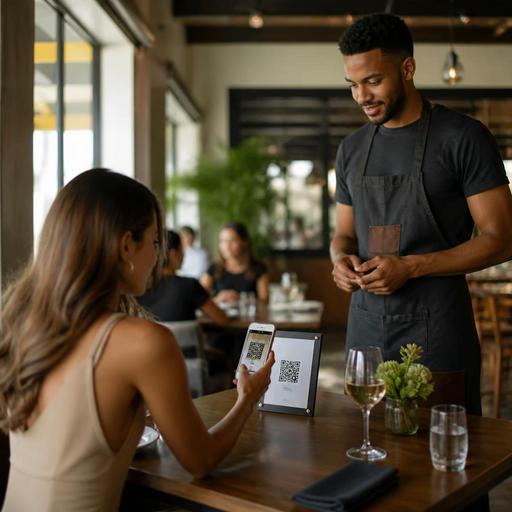
Digital Tip Jars for Restaurants: Fair Policies, Clear Guest Prompts
Digital tip jars for restaurants can improve convenience for guests, reduce awkward payment moments, and create a more consistent tipping process across dine-in, takeaway, and counter service. But the tool itself is not the strategy. If the setup feels unclear, staff may distrust the system and guests may hesitate to tip at all. The best digital tip jar experience is simple: guests understand what they are being asked, employees understand how tips are handled, and managers can explain the process without confusion.
For restaurant owners, this means treating digital tipping as both an operations decision and a guest experience decision. A tip prompt on a QR menu, online ordering page, self-order screen, or checkout terminal should match your service model, your team structure, and your internal rules for distribution. Clarity matters more than pressure. A fair system usually earns more long-term trust than an aggressive one.
Start with a tipping policy before you add any prompt
Many operators install digital tipping tools first and discuss the rules later. That creates avoidable tension. Before adding a tip jar to any channel, define the policy in plain language. The goal is not legal wording for a handbook alone. The goal is a system every team member can explain in one minute.
A practical policy should answer a few basic questions. Are tips pooled or assigned directly? Are front-of-house and back-of-house both included? How often are tips distributed? Who can review the records? What happens when tips come from different channels such as QR ordering, pickup, or reservation prepayments?
For example, a small cafe with counter ordering may choose one shared pool across all shifts because service is collaborative. A full-service restaurant may separate some channels if table sections and server accountability are central to the operation. A hybrid venue with bakery, coffee, and evening dining may need different rules by service period. The right answer depends on your concept, but the wrong answer is leaving staff to guess.
- Write the rule set down in simple English for managers and staff.
- Map every tip source including POS, QR menu orders, online pickup, and payment links.
- Decide the distribution cadence such as daily, weekly, or payroll-based.
- Assign ownership for reconciliation and staff questions.
- Review edge cases like refunds, voids, and order cancellations.
When the policy exists first, the technology becomes easier to configure and easier to trust.
Match the digital tip jar to the service experience
Not every restaurant should ask for tips in the same way. A good digital tip jar respects the context of the order. Guests are more comfortable when the request feels connected to the service they actually received.
In counter-service cafes, a tip option can appear during checkout with a short, neutral prompt. In quick-service pickup, it may be better placed after the guest confirms the order rather than before they even review it. In table service, digital tipping can appear when guests pay via QR at the table, ideally after they have finished the meal and experienced the service. For delivery handled directly by the restaurant, it helps to distinguish between a tip for service staff and a delivery-related tip if your workflow requires that distinction.
A practical example: imagine a lunch-focused bistro using QR menus and pay-at-table checkout. Instead of showing a large tip prompt at the start of browsing, the restaurant presents optional tipping only at payment, with preset amounts and a custom option. The prompt is short, polite, and easy to skip. Staff can still provide warm service without making the payment moment feel forced.
That same logic applies to online ordering. If a guest is placing a simple pickup order with minimal service interaction, your prompt should be modest and clearly optional. If the restaurant offers custom packaging, curbside handoff, allergy handling, or large group coordination, the tip language can reflect that service effort without becoming manipulative.
Make the guest prompt clear, neutral, and easy to trust
Guests respond better to transparency than pressure. A digital tip jar should never feel like a trick screen. Avoid confusing button design, hidden skip paths, or language that creates guilt. A clean interface supports both conversion and brand trust.
Use simple wording such as Tips are optional and appreciated or Support our service team if you would like to leave a tip. If tips are pooled, say so somewhere visible in the payment flow or receipt experience. If the tip supports the whole service team, that can be explained briefly and calmly. Guests do not need a long speech, but they do appreciate honesty.
Preset tip options should also fit the service model. A coffee bar, bakery counter, and full-service dining room may each need different defaults. The point is not to maximize one transaction. The point is to create a prompt that feels natural enough to repeat across hundreds of guest interactions without damaging goodwill.
- Place the tip prompt at a logical moment in the payment flow.
- Keep the language short and neutral.
- Offer a visible no-tip or skip option.
- Make custom tipping easy for guests who prefer it.
- Reflect your real service model instead of copying another brand.
If you use digital menus, QR ordering, or integrated checkout tools, the design consistency matters too. A smooth transition from menu to payment makes the tip request feel like part of the experience, not a separate pressure tactic.
Build staff trust with visibility and reconciliation
The internal side of digital tipping is where many restaurants succeed or fail. Even if guests like the convenience, staff confidence can drop quickly if tip reporting is vague. Team members want to know whether the recorded amounts match the distributed amounts and whether management can answer questions clearly.
Create a reconciliation routine that connects each tip source to a report. If your restaurant accepts tips through card terminals, QR ordering, and online checkout, those streams should be visible in one operational view or at least in a repeatable reporting process. Managers should not need to piece together numbers manually from multiple disconnected systems every week.
For staff communication, keep it concrete. Show what is tracked, when it is reviewed, and how disputes are handled. During onboarding, explain the tip process just as clearly as scheduling, side work, or shift handoff. In pre-shift meetings, managers can remind staff how digital tipping works when a new channel launches, such as table QR payments or holiday pre-orders.
This is also where restaurant digitization helps. When ordering, payment, and reporting are connected, operators can reduce ambiguity around who received what and from which channel. Platforms that centralize menu flows, order sources, and payment touchpoints can make digital tip jars easier to manage because the guest journey is already organized.
Review the setup regularly and adjust by channel
A digital tip jar should not be treated as a one-time installation. Service models change. Team structures change. Guest expectations also change depending on whether they are dining in, grabbing coffee, ordering family meals, or collecting catering trays.
Set a review schedule. Look at guest feedback, staff questions, refund patterns, and friction points in checkout. If guests often ask what the tip supports, your wording may be too vague. If staff repeatedly question distributions from online orders, your reporting may be too fragmented. If managers skip reconciliation because it takes too long, your workflow is too manual.
Consider channel-specific adjustments. A restaurant may use one approach for dine-in QR payments, another for takeaway, and another for large pre-orders. That is not inconsistency. It is operational realism. The key is to keep the principles consistent: fairness, clarity, and traceability.
Restaurant owners can use a simple monthly checklist:
- Check whether tip prompts still match the current service flow.
- Confirm staff understand distribution rules.
- Review whether guests can easily skip or customize the tip.
- Audit reporting across all digital ordering and payment channels.
- Update manager scripts for common guest or staff questions.
When digital tipping is designed carefully, it supports more than gratuities. It reinforces trust. Guests feel respected, staff feel protected, and managers spend less time untangling preventable confusion. If your restaurant is already improving QR menus, digital ordering, and payment workflows, digital tip jars should be built with the same discipline. Restomas can help restaurants connect those guest-facing and operational touchpoints in one clearer digital flow.
