Ghost Kitchen Strategy for U.S. Restaurants: Menus, Channels, and Quality Control
Ghost kitchen strategy for U.S. restaurants works best when operators treat the concept as a disciplined operating model, not just a cheaper way to add delivery. Whether you run a burger brand out of a commissary, a wing concept inside an existing sports bar, or a late-night taco menu from a hotel kitchen, the winning formula usually comes down to three things: a tightly focused menu, clear channel control, and repeatable quality checks. In the United States, that also means thinking through delivery apps, direct online ordering, pickup workflows, POS routing, tipping flows, sales tax and service charge handling, and location-specific labor realities. Operational details matter, and operators should verify current local requirements with qualified advisors and official guidance where rules apply.
Start with a menu built for travel, not just for dine-in popularity
Many ghost kitchens underperform because the menu was copied from the dining room instead of redesigned for off-premise service. A dish that looks great when a server drops it at a table may arrive soggy, spilled, or lukewarm after a 20-minute delivery run through downtown Chicago or suburban Phoenix.
Menu focus starts with a simple question: What items hold quality for the full trip from production to handoff to guest? For a U.S. fast-casual operator, that may mean grain bowls, wraps, wings, sandwiches, and family meal bundles rather than fries loaded with delicate toppings. For a breakfast concept, burritos and sandwich combos may travel better than plated eggs with toast. For a food truck testing a delivery-only evening menu from a shared kitchen, rice bowls may beat fried seafood baskets.
- Limit the core menu: Keep the opening menu narrow enough that the line can execute it cleanly during lunch and dinner peaks.
- Reduce customization: Every modifier increases ticket complexity, remakes, and timing problems.
- Use packaging-aware recipes: Separate hot and cold components, protect crisp textures, and avoid containers that trap steam.
- Build smart bundles: Combo meals, add-on beverages, and dessert packs can raise check average without overcomplicating prep.
- Test hold times: Run your own 15-minute and 30-minute quality checks before launching widely.
A practical example: a neighborhood chicken shop in Atlanta may find that bone-in wings, tenders, dry-rub fries, and bottled drinks perform consistently across delivery apps and direct pickup. The same shop may choose to remove loaded fries during Friday night rush because the product degrades too quickly and slows expo.
Control your channels before your channels control you
Ghost kitchens often depend on third-party delivery marketplaces at launch, but channel sprawl can hurt margins and confuse operations fast. If your brand appears on multiple apps, plus your own online ordering page, plus QR ordering for pickup, you need a clear plan for pricing, menu availability, handoff timing, and customer communication.
For U.S. operators, channel control usually means separating acquisition from retention. Delivery apps can help a new virtual brand get discovered in Los Angeles, Houston, or Miami. But direct online ordering is often where repeat business becomes easier to manage because you can control menu updates, pickup timing, upsells, and guest communication more directly.
Set channel rules that your team can follow
- Decide which items belong on each channel. Keep fragile items off third-party delivery if they create refunds or bad reviews.
- Use channel-specific throttling. If your kitchen is backed up, pause selected menus or extend prep times instead of letting ticket times collapse.
- Standardize naming and photos. Guests should not see one price, one item description, and one modifier set on one channel and something different on another unless that difference is intentional.
- Protect direct ordering. Promote pickup, curbside pickup where relevant, and scheduled orders through your own ordering flow.
- Route all orders into one operational view. A connected POS and kitchen display system can reduce missed tickets and duplicate entry.
Consider a multi-location salad and wrap brand in Dallas running one virtual protein-bowl concept from three stores. If one store leaves all channels open during a school-sports rush while another throttles app orders and keeps direct pickup active, results will diverge quickly. Channel discipline is part of brand consistency.
Payment workflows matter too. If guests order direct for pickup, make sure the checkout flow handles tips clearly for counter service or pickup if you choose to prompt for them, and make sure staff know how those tips are reported and reconciled in your system. If you use service charges, sales tax treatment, or marketplace-facilitated payments, confirm setup details with your POS provider and qualified tax or legal advisors because rules and treatment can vary by state and locality.
Build quality checks into the line, expo, and handoff
In a ghost kitchen, the guest does not see your dining room, host stand, or server. The food and packaging are the brand experience. That makes quality control more mechanical and more important.
Strong operators create a short, repeatable checklist at three points: production, packaging, and dispatch. In a busy New York pizza ghost kitchen, that may mean confirming bake level, slice count, vented box setup, sealed extras, and courier handoff time. In a Nashville hot chicken concept, it may mean checking heat level labels, sauce cup count, and whether slaw is packed away from hot items.
- Production check: Verify portion, temperature target, modifier accuracy, and ticket timing.
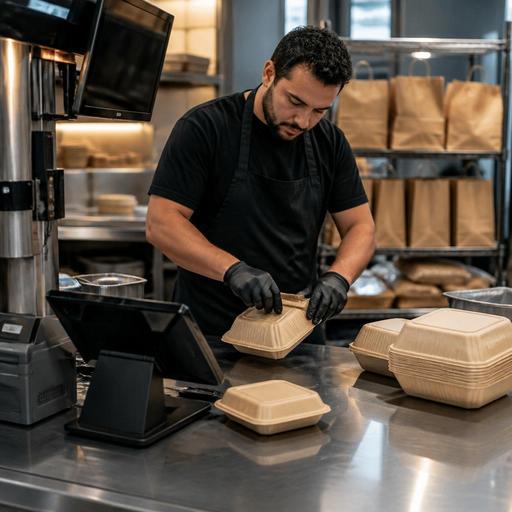
- Packaging check: Confirm the right container, tamper-aware seal if used, utensils only when needed, and separation of hot and cold items.
- Dispatch check: Match the order to the driver or pickup guest, confirm drinks, and avoid orders sitting too long on a pickup shelf.
A kitchen display system can help by showing firing timing, rush status, and station responsibility. Even in a small ghost kitchen, this matters because one delayed station can throw off the entire handoff window. If you operate from a hotel restaurant kitchen with both room service and a virtual late-night brand, screen-based routing can prevent delivery tickets from getting buried behind in-house orders.
Also think about accessibility and guest communication. If a direct ordering site uses QR access in-store or at curbside, make sure guests can still navigate menus and ordering flows clearly across devices. ADA-related expectations can depend on context, so it is wise to review digital accessibility practices and verify current requirements with qualified advisors.
Staffing, prep, and reporting should match ghost kitchen reality
Ghost kitchens can look simple on paper but become labor-heavy when menus are too broad or prep is poorly staged. A profitable setup usually depends on prep discipline, smart labor scheduling, and clean reporting by channel and daypart.
For example, a burger virtual brand running out of an existing diner in Ohio may succeed only if prep for sauces, portioned proteins, and packaging stations is completed before the dinner surge. If the same diner tries to layer on milkshakes, breakfast all day, and a second virtual concept without station redesign, ticket times may slip for both dine-in and takeout guests.
Focus your weekly review on operations, not just sales
- Order mix: Which items sell often but generate complaints, refunds, or remakes?
- Channel performance: Are delivery apps bringing volume but hurting margin compared with direct pickup?
- Daypart load: When do tickets bunch up, and does labor scheduling match those peaks?
- Prep accuracy: Which ingredients run out first or create last-minute substitutions?
- Handoff time: How long do orders wait before a courier arrives or a guest picks up?
Multi-location operators should compare these patterns store by store, not just brand wide. An airport concession, stadium venue, or urban commissary may face very different peaks, packaging needs, and courier delays than a suburban strip-center pickup kitchen. Chains that fall under FDA menu labeling rules or local menu disclosure requirements should also confirm how digital menus, marketplace listings, and direct ordering displays need to be managed for each concept and location.
Keep the model simple enough to scale
The best ghost kitchen operators in the U.S. usually resist unnecessary complexity. They launch with a menu that travels well, limit channels they cannot manage, and use simple quality checks that work every shift. Then they scale only after they understand prep load, packaging performance, refund patterns, and direct reorder behavior.
If you are testing a ghost kitchen inside an existing restaurant, start with one cuisine angle, one packaging system, and one clear handoff workflow for delivery and pickup. If you are opening a delivery-first kitchen, make sure your POS, online ordering, kitchen display system, and reporting are aligned before adding a second virtual brand. The goal is not just more tickets. The goal is reliable checks, cleaner execution, and a guest experience that holds up whether the order comes through a delivery app, a QR ordering flow, or your own direct channel.
Restomas helps operators connect digital menus, ordering, POS workflows, and kitchen coordination so ghost kitchen service stays organized as volume grows.
