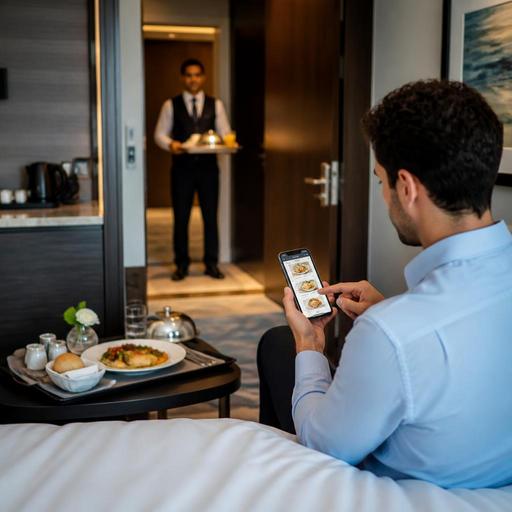
How Hotel Restaurants Can Digitize Room Service Without Friction
Digitizing room service for hotel restaurants is not just about replacing a paper menu with a QR code. It is about building a smoother ordering flow for guests, reducing manual errors for staff, and giving hotel restaurant teams better control over menu updates, delivery timing, and communication. When done well, digital room service supports guest satisfaction while making service more consistent across breakfast, late-night orders, and high-occupancy periods.
Many hotel restaurants still manage room service through printed menus, phone calls, handwritten notes, and verbal follow-up between front desk, kitchen, and service staff. That process can work in a small property, but it often creates friction. Guests may call with questions about availability, staff may mishear room numbers or modifiers, and menu items may remain listed long after they are unavailable. A digital system helps remove these weak points without removing hospitality.
Why digital room service matters in hotel restaurant operations
Room service is different from standard dine-in or takeaway. The guest is not standing at a counter, and the team cannot easily clarify every detail face to face. That makes accuracy especially important. A digital ordering flow gives guests a clearer path from browsing to confirmation, while helping the restaurant standardize how orders enter the kitchen.
For example, a guest arriving late may want a quick hot meal without calling reception. A family may need to review children’s options, allergen notes, and breakfast times before ordering. A business traveler may want to schedule breakfast delivery for the morning. Digital room service makes these decisions easier when the menu is organized well and supported by practical operations behind the screen.
The operational value is equally important. Hotel restaurant managers can update item availability, hide out-of-stock dishes, define service hours, and separate breakfast, all-day dining, minibar, or late-night menus. This reduces confusion for both guests and staff. Instead of relying on memory or repeated phone explanations, the system becomes the shared source of truth.
Build a room service menu for the way guests actually order
Digitizing room service starts with menu structure, not technology alone. A room service menu should be simpler and more decision-friendly than a full restaurant menu. Guests are often tired, in a hurry, or ordering from a small phone screen. Categories, item names, and modifiers should help them choose quickly.
Use clear categories by guest intent
Instead of listing items exactly as they appear in the restaurant, group them around room-service moments:
- Breakfast in room
- Light meals and sandwiches
- Main dishes
- Late-night options
- Desserts and beverages
- Kids' meals
This structure reflects how hotel guests think. Someone ordering at 11 p.m. does not want to scroll through a long lunch menu to find what is still available.
Write item descriptions that answer room service questions
Descriptions should be practical. Mention portion style, key ingredients, spice level if relevant, and whether the item travels well. If a burger arrives with fries that soften quickly, consider whether a different side is better for in-room delivery. If soup is popular late at night, note whether bread is included. Good descriptions reduce phone calls and hesitation.
Set up modifiers carefully
Modifiers should reflect real kitchen capability, not endless customization. Useful examples include:
- Egg style for breakfast dishes
- Choice of side
- No onions or sauce on the side
- Extra cutlery or napkins
- Allergen-related notes where appropriate
Too many modifier paths can slow production and create mistakes. Keep only the options your team can execute consistently.
Design the order flow around accuracy and guest confidence
A digital room service experience should feel easy, but it also needs operational checks in the background. The goal is not only to collect orders but to collect the right orders with the right details.
Include the details staff usually ask by phone
If the system requires room number, guest name, preferred delivery time, and special instructions, staff spend less time chasing missing information. This is especially useful during breakfast rush, when several orders may need to leave within a short window.
For scheduled orders, keep time slots realistic. If the kitchen can handle breakfast deliveries in intervals, reflect that in the order flow instead of allowing every guest to choose the same exact minute. Digital convenience should not create a production bottleneck.
Confirm what happens next
Guests should know whether the order is being prepared immediately or scheduled for later. They should also understand whether a tray collection request is separate, whether service fees apply, and how to reach staff if they need help. Clear confirmation reduces uncertainty and unnecessary calls to reception.
Connect room service with kitchen and front-of-house visibility
One common failure point in hotel operations is that the order reaches one team but not another. A good digital setup should make room service orders visible to the kitchen and easy for service staff to track. If the hotel also routes communication through the front desk, the process should still avoid duplicate handling.
For example, a late-night order might be accepted digitally, prepared in the kitchen, and delivered by a reduced staff team. In that scenario, visibility matters more than speed alone. Everyone involved needs to know what was ordered, where it is going, and whether it has left the kitchen.
Train staff for digital room service, not just the software
Even a well-built system can fail if teams treat it as an extra channel instead of the main process. Staff training should focus on service logic, handoff discipline, and exception handling.
- Define ownership. Decide who checks incoming orders, who confirms availability issues, who dispatches trays, and who closes the order after delivery.
- Create outage rules. If Wi-Fi fails or a guest cannot access the digital menu, staff should know the fallback process immediately.
- Standardize unavailable items. If an item sells out, remove it from the digital menu quickly instead of accepting the order and apologizing later.
- Use packaging and tray setup standards. Digital ordering does not fix poor transport. Soups, hot drinks, sauces, and plated desserts need delivery standards.
- Review guest notes daily. Special instructions often reveal recurring friction, such as missing condiments or unclear breakfast combinations.
Managers should also review how room service interacts with housekeeping, reception, and minibar operations. In many hotels, the guest does not separate these departments clearly. They only see whether the experience feels smooth.
Use digitization to improve guest experience without losing hospitality
Some operators worry that digital room service feels less personal. In practice, the opposite can happen when technology removes small frustrations. Guests appreciate being able to browse quietly, order in their own language where available, and avoid waiting on hold. Staff then have more time for service moments that truly need a human touch.
Consider a few practical examples:
- A family checks in late and orders simple meals from a phone without waking a sleeping child by making a call.
- A business guest schedules breakfast the night before and receives it within the expected window.
- An international traveler sees clear menu categories and item descriptions instead of guessing from a printed menu with limited detail.
These are not flashy innovations. They are small operational improvements that feel meaningful to guests.
The best digital room service systems also create better management habits. When menus are easier to update, teams are more likely to remove unavailable dishes, refine descriptions, and align service hours with actual staffing. When orders are tracked consistently, managers can spot recurring delays, unclear categories, or items that create too many special requests.
For hotel restaurants exploring this shift, a sensible starting point is simple:
- Audit the current room service process from guest order to tray pickup
- Shorten and reorganize the menu for mobile use
- Add only the most useful modifiers and notes
- Define service windows that match kitchen capacity
- Train staff on ownership and fallback procedures
- Review guest feedback and order patterns every week after launch
Digitizing room service works best when it is treated as an operational redesign, not a design project. The technology should support menu control, clear ordering, and better coordination between teams. Platforms such as Restomas can help hotel restaurants bring these pieces together through digital menus, order flow management, and practical restaurant digitization tools.
