How Live Courier Tracking Builds Guest Trust in Restaurant Delivery
Live courier tracking in restaurant delivery is no longer just a convenience feature. For many guests, it shapes whether the order feels reliable, professional, and worth repeating. When people can see where their food is, they feel more informed and less anxious. For restaurant owners, that visibility can reduce incoming calls, improve team coordination, and create a smoother delivery experience even when the kitchen is busy or traffic is unpredictable.
The key is to treat tracking as part of guest communication, not just a map on a screen. A delivery order usually includes several moments where trust can weaken: after payment, during kitchen preparation, while the courier is waiting, and when the rider is close but hard to locate. Restaurants that manage these moments well tend to create fewer misunderstandings and more repeat orders.
Why visibility matters more than speed alone
Many restaurant operators focus first on delivery speed, which is understandable. But guests do not judge service only by the final arrival time. They also judge how clear and predictable the process feels. A 35-minute delivery that is visible and well communicated often feels better than a 30-minute delivery that seems to disappear into silence.
Consider a common scenario: a family places a dinner order during peak hours. The estimated time says 40 minutes. After 20 minutes, they hear nothing. They begin to wonder whether the order was accepted, whether the kitchen is delayed, or whether the courier is lost. This uncertainty creates stress before the food even arrives. With live tracking, the same family can see that the order is prepared, handed off, and on the way. Even if traffic adds a few minutes, the experience feels more trustworthy because the delay is visible rather than mysterious.
This matters especially for first-time guests. Returning customers may already trust your brand and forgive small delays. New guests have less patience because they do not yet know how your operation performs. Live tracking helps close that trust gap by replacing guesswork with clear status updates.
Where live courier tracking reduces operational friction
Tracking is often discussed as a customer-facing feature, but it also solves internal problems. Delivery confusion creates hidden labor costs. Staff members answer phone calls, check with the kitchen, message drivers, and calm frustrated guests. That time pulls attention away from in-store service and order accuracy.
When live courier tracking is connected to the order flow, restaurants can reduce friction in several practical ways:
- Fewer status calls: Guests can check progress themselves instead of calling the store for updates.
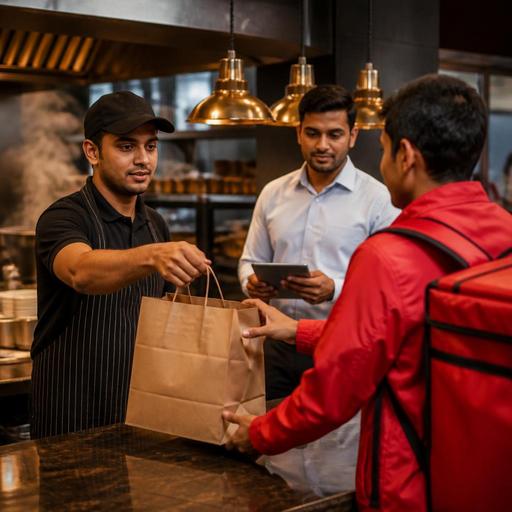
- Clearer handoff timing: Front-of-house staff can see whether a courier is arriving soon and avoid leaving packed food waiting too long.
- Better exception handling: If a courier is delayed or stationary for too long, the team can intervene earlier.
- More accurate guest communication: Staff can explain what is happening without vague guesses.
- Stronger accountability: Operators can review where delays tend to happen: preparation, pickup, routing, or final drop-off.
For example, a burger restaurant may notice repeated complaints about cold fries. The issue may not be kitchen speed. Tracking could reveal that couriers often arrive late for pickup, causing packed orders to sit too long. That insight leads to a different fix: adjusting prep timing, changing dispatch rules, or improving courier readiness.
How to use tracking to improve guest trust, not just provide data
Some restaurants add tracking but still disappoint guests because the information is incomplete or poorly framed. A moving dot on a map helps, but trust grows when tracking is paired with smart communication and realistic expectations.
Set honest delivery expectations from the start
Do not promise an unrealistically short delivery window just to win the order. If your area has traffic spikes, elevator delays, security gates, or bad weather, reflect that in the estimate. Guests are more tolerant of a realistic timeline than an optimistic one that keeps slipping.
Break the journey into meaningful stages
Guests do not think in technical system states. They want simple answers: Has the restaurant accepted my order? Is it being prepared? Has the courier picked it up? How close is it? Make sure your order flow communicates these stages clearly. This is especially useful for larger orders, office deliveries, and family meals where multiple people are waiting.
Use proactive messages for exceptions
If the courier is delayed, send a short update before the guest asks. A simple message that explains the issue and confirms the order is still on the way can prevent frustration from turning into distrust. Silence is usually interpreted as disorganization.
Help guests with final-meter delivery issues
Many problems happen at the last step: apartment entrances, office lobbies, gated communities, or unclear building numbers. Tracking works better when checkout also captures practical delivery notes. This reduces failed drop-offs and awkward calls when the courier is nearby but cannot complete the handoff.
Practical actions restaurant owners can take this month
If you want live courier tracking to improve results, treat it as an operational process, not a checkbox feature. Start with a simple review of your current delivery journey.
- Map the delivery timeline. Write down each step from order placement to handoff. Identify where guests currently lose visibility.
- Audit your status messages. Check whether guests receive clear updates at acceptance, preparation, pickup, and near-arrival stages.
- Review delay patterns weekly. Look for recurring issues such as slow pickup, traffic-heavy zones, or difficult addresses.
- Improve packaging timing. Pack temperature-sensitive items as close as possible to courier arrival.
- Train staff on delivery communication. Make sure team members know how to explain delays consistently and calmly.
- Collect better delivery notes. Ask for gate codes, floor numbers, landmarks, or lobby instructions during checkout.
- Separate kitchen delay from courier delay. Do not treat all late orders as one problem. The fix depends on where the delay starts.
These steps are practical for both independent restaurants and multi-location brands. A small cafe with a compact delivery radius may focus on final-meter clarity and packaging timing. A larger operation handling lunch rushes may focus more on dispatch visibility and support workload.
Connecting tracking with a stronger digital guest journey
Live courier tracking works best when it is part of a wider digital system. Guests experience your brand as one continuous journey: they browse the menu, place the order, receive confirmation, follow the delivery, and decide whether to order again. If one part is clear but the rest feels fragmented, trust still suffers.
For instance, menu availability should be accurate before the order is placed. Order details should be easy to confirm. Estimated times should reflect real conditions. Tracking should continue that same clarity after checkout. This is why restaurants benefit when menu management, order handling, and guest communication are connected rather than managed in separate disconnected tools.
A practical example is a pizza shop with frequent weekend surges. If sold-out items remain visible, order acceptance is delayed, and delivery updates are vague, guests may blame the entire brand experience, not just one issue. But if the digital menu stays current, the order is processed smoothly, and live tracking keeps the guest informed, even a busy service period can still feel professional.
Restaurant platforms such as Restomas can support this broader flow by helping operators keep menus current, manage incoming orders more clearly, and create a more transparent guest experience from checkout to delivery.
In delivery, trust is built minute by minute. Live courier tracking gives restaurants a practical way to reduce uncertainty, communicate better, and turn operational visibility into repeat business.