How to Stop Peak-Hour Restaurant Order Bottlenecks Before They Start
Peak-hour restaurant order chaos usually does not begin when the dining room fills up. It starts earlier, with unclear menus, weak handoff systems, poor station planning, and too many decisions being made under pressure. If you want smoother service during lunch rushes, dinner surges, or weekend spikes, the answer is not simply to ask staff to work faster. The real solution is to build a service system that stays organized when order volume rises.
For restaurant owners and operators, the goal is simple: reduce friction between the guest, the front of house, the kitchen, and the payment process. When each step is easier to understand and manage, peak periods become more predictable. That means fewer order errors, shorter waits, less stress on staff, and a better guest experience.
Start by Removing Friction From the Menu and Ordering Process
Many rush-hour problems begin with the menu itself. A menu that is too long, inconsistent, or unclear slows down ordering and creates unnecessary questions. If guests need extra explanation for modifiers, side choices, portion differences, or combo options, staff spend valuable minutes clarifying details instead of moving service forward.
A practical peak-hour menu should help guests decide quickly. That does not mean oversimplifying your brand. It means presenting choices in a way that is easy to scan and easy to execute. For example, if one burger can be ordered with five breads, six sauces, four sides, and three cooking notes, the kitchen receives too many variables during the busiest hour of the day. A more controlled structure can still feel flexible while reducing operational drag.
- Group similar dishes clearly so guests can compare options fast.
- Limit complex modifications during your busiest periods if they regularly slow production.
- Highlight best-selling items that the kitchen can produce consistently and quickly.
- Use digital menus to keep sold-out items, add-ons, and pricing updated in real time.
Digital menu management is especially useful here. If a popular side runs out at 8:15 p.m., staff should not need to explain that problem table by table. A QR menu or digital ordering flow can remove unavailable items immediately and guide guests toward alternatives. That reduces frustration and protects service speed.
Build a Clear Order Handoff Between Floor and Kitchen
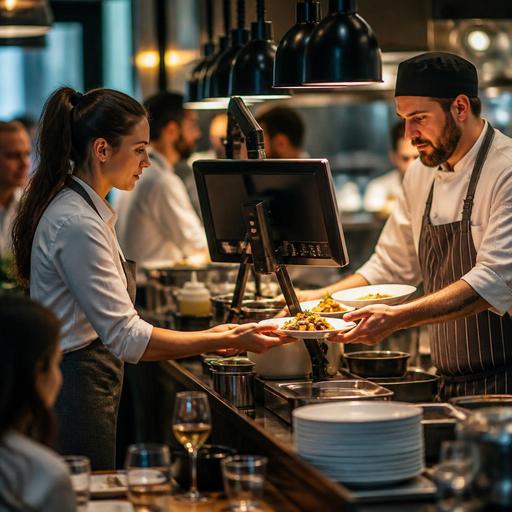
Order chaos often looks like a kitchen issue, but it is frequently a communication issue. During peak hours, even a strong kitchen can struggle if tickets arrive with missing modifiers, unclear timing, or inconsistent formatting. The handoff from server to kitchen must be standardized.
Think about what happens in a typical rush. One server writes notes differently than another. A cashier abbreviates side dishes in a way the line cook does not recognize. A table asks for one appetizer now and mains later, but that timing note gets lost. Small communication gaps quickly turn into remake orders, delayed tables, and tension between teams.
The best operators remove ambiguity from tickets and workflows. Every order should answer the same basic questions: what was ordered, what changed, where it goes, and when it should fire. This is where connected order management tools can make a real difference. A structured digital order flow creates consistency that is hard to maintain with verbal updates or handwritten notes alone.
- Standardize modifiers so staff select from clear options instead of writing free-text notes whenever possible.
- Separate dine-in, takeout, and delivery flows if they compete for the same kitchen capacity.
- Define firing rules for appetizers, mains, and coursed service before the shift begins.
- Create an escalation rule for missing items, guest complaints, and remake priority.
For example, a casual restaurant with heavy takeout volume may choose to pause one delivery platform for short intervals when the dining room fills up. Another may route dine-in drinks and desserts through separate prep stations to keep the hot line focused on mains. The point is not to make service rigid. It is to make decisions in advance so staff are not inventing a system in the middle of a rush.
Staff for Roles, Not Just Headcount
When operators prepare for peak hours, they often ask, Do we have enough people? A more useful question is, Do we have the right roles covered? Order bottlenecks happen when key responsibilities are vague. Two people may both think they are watching the pass, while nobody is managing table resets or checking takeout pickup accuracy.
Peak-hour staffing works better when responsibilities are narrow and visible. One person owns host flow. One person monitors delivery pickups. One expo checks completeness before plates leave the kitchen. One shift lead handles exceptions so other staff stay in rhythm.
Consider a cafe that gets hit by an office lunch wave. If the same cashier takes orders, answers questions, packs takeaway bags, and handles payment issues, the queue slows immediately. But if the team assigns one person to order entry, one to handoff, and one to drink production, throughput improves without changing the menu.
Pre-shift preparation matters just as much as live staffing. Before service begins, managers should confirm:
- Which items are likely to sell fastest
- Which station is most likely to become the bottleneck
- Who handles guest recovery when waits run long
- How staff will communicate 86 items or delays
Simple checklists help here. They reduce reliance on memory and make shift changes cleaner. If your operation uses digital tools for reservations, orders, and menu updates, staff can start the rush with the same information instead of learning problems table by table.
Control Guest Flow Before the Rush Feels Out of Control
Not all order chaos starts in the kitchen. Sometimes it starts at the door. If reservations, walk-ins, phone orders, and delivery pickups all hit at once, even a capable team can lose control. Managing guest flow is one of the most overlooked parts of peak-hour operations.
A practical approach is to smooth demand where possible. Reservation pacing, pickup time slots, preorder options for repeat lunch items, and realistic wait-time communication all help. The goal is not to eliminate busy periods. It is to avoid stacking too many service promises into the same 15-minute window.
For example, a neighborhood bistro may notice that 7:00 p.m. bookings create a wave of simultaneous orders fifteen minutes later. By spacing reservation slots more intentionally, the kitchen gets a steadier flow. A fast-casual concept may reduce counter congestion by letting guests browse a QR menu before reaching the register. A family restaurant may improve weekend service by preparing a limited kids' menu section that is fast to fire and easy for parents to choose.
Clear guest communication also protects the experience. If a delay is likely, tell guests early and offer an alternative. Suggest a fast-moving dish, explain prep time honestly, or encourage digital access to the menu while they wait. Guests tend to be more patient when expectations are managed clearly.
Use Peak-Hour Reviews to Fix Repeat Problems
If the same type of service breakdown happens every Friday night, it is no longer a surprise. It is a process issue. Restaurants that improve peak-hour performance do not just survive the rush; they review it. A short post-shift debrief can reveal where the real bottleneck lives.
Ask focused questions:
- Which item or station slowed service most?
- Were delays caused by volume, communication, or menu complexity?
- Did guests wait too long to order, receive food, or pay?
- Which staff role was overloaded?
- What can be simplified before the next busy shift?
The key is to look for patterns, not blame. Maybe the issue is that servers are entering too many custom notes. Maybe reservations are bunching up. Maybe takeout shelves are disorganized and drivers interrupt the host stand. Once the problem is visible, the fix is usually practical: simplify a category, change a station layout, adjust prep levels, or update the digital ordering flow.
Restaurant digitization supports this kind of improvement because it creates cleaner operational visibility. When menus, orders, and guest touchpoints are managed through connected systems, it becomes easier to spot where friction is building. You can make faster updates, communicate changes clearly, and maintain consistency across dine-in and off-premise channels.
Peak hours will always be busy, but they do not have to feel chaotic. The restaurants that perform best under pressure are usually not the ones with the loudest energy or the biggest teams. They are the ones with simple menus, clear handoffs, defined staff roles, and a guest flow designed for real-world demand. If you want calmer rushes and more reliable service, start by making fewer decisions in the moment and more decisions before the rush begins.
Restomas helps restaurants organize digital menus, ordering flows, and service operations so busy shifts can run with more clarity and less friction.
