How U.S. Restaurants Can Ask for Reviews Without Pressuring Guests
How U.S. restaurants can ask for reviews without pressuring guests is really a question about timing, channel, and hospitality. Most operators want more public feedback on Google, Yelp, or delivery apps, but guests can quickly feel cornered if the ask comes at the wrong moment. For American restaurants, the goal is simple: build a repeatable review request workflow that feels like service, not sales. Whether you run a neighborhood diner, a fast-casual salad shop, a food truck, or a multi-unit burger brand, the best review strategy fits naturally into the guest journey.
Start with the guest experience before the review ask
Reviews usually reflect the operational basics more than the wording of the request. If the fries arrived cold, the curbside handoff was confusing, or the takeout check was missing sauces, no review prompt will fix the underlying issue. Before asking guests to leave feedback, map the moments where your team most often creates friction.
In a full-service restaurant, that may be the wait for the check, a slow drink refill, or a rushed dessert upsell. In a fast-casual setting, it may be pickup shelf confusion, inaccurate modifiers, or a dining room that looks unbussed during the lunch rush. In a food truck, it could be unclear order calling or delayed mobile pickup. If you want more positive reviews, first tighten the moments guests talk about most.
A practical approach is to separate feedback into two buckets: private recovery feedback and public review requests. Guests who had a smooth experience can be invited to share it publicly. Guests who had friction should be directed to a private feedback channel so your team can respond and recover. This reduces the chance that a preventable service issue becomes a one-star review.
Choose review request moments that feel natural in U.S. service flows
The best time to ask is after value has been delivered and before the interaction feels transactional. In U.S. restaurants, that timing varies by format.
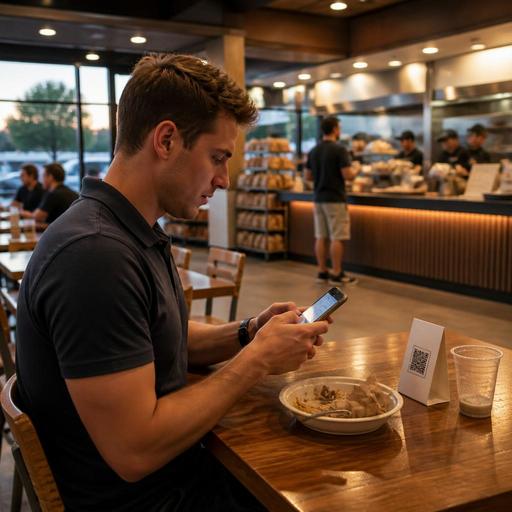
- Full-service restaurants: Train servers to read the table. A verbal ask can work after a guest compliments the meal or thanks the team, but it should be brief and optional. The printed check presenter can include a small reminder with a QR code that links to your preferred feedback page.
- Fast-casual and QSR: Add a review prompt to the digital receipt, order-ready text, or post-purchase email rather than asking at the counter while a line is building.
- Coffee shops and bakeries: Use loyalty follow-up messages after a repeat visit, especially when the guest has already opted into digital communication.
- Takeout and curbside pickup: Ask after the guest has received the order, not during the handoff. A short text sent later that day is less intrusive than asking a carside runner to request a review at the window.
- Delivery: If the order came through a marketplace, direct guests to the platform feedback flow where appropriate. If it came through direct online ordering, send a branded follow-up message after the estimated delivery window.
For bars, hotel restaurants, airport concessions, and stadium food venues, the same principle applies: do not interrupt a high-speed transaction. In these environments, digital prompts after the visit often outperform in-person asks because guests are in motion and staff need to keep lines moving.
Build low-pressure review workflows across QR, POS, and direct ordering
A low-pressure system is more reliable than relying on staff improvisation. The easiest way to do this is to place review opportunities inside channels guests already use.
Use QR codes carefully
A table QR code can work well when it leads to a simple landing page with two clear paths: one for private feedback and one for public reviews. This is especially useful in casual dining, breweries, and brunch spots where guests may browse the menu digitally already. Make sure the page is mobile-friendly and ADA-minded in its design and readability. Accessibility expectations can vary by situation, so operators should verify current requirements and best practices with qualified advisors or official guidance.
Connect the ask to the receipt flow
If your POS can trigger digital receipts, add a short line such as, Thanks for dining with us. If we made your day easier, we would love your feedback. That language is softer than directly pushing for a five-star rating. It also works across dine-in, takeout, and cafe tabs without putting pressure on tipped staff to make the ask face-to-face.
Use direct ordering follow-ups
Direct online ordering gives operators more control than delivery apps. A post-order email or SMS can ask one simple question first: How did we do? If the guest indicates satisfaction, then invite a public review. If not, route them to a private form. This protects the guest relationship and helps managers catch issues tied to packaging, missing items, or delivery timing.
For multi-location brands, keep the workflow consistent but location-specific. A guest should land on the correct store profile, not a generic homepage, especially if they are reviewing a suburban drive-up location versus an urban lunch counter.
Train staff to invite feedback without tying it to tips or pressure
In American restaurants, review requests can get awkward when they overlap with tipping. Guests should never feel that leaving a review is expected in exchange for service, a comp, or extra attention. This matters in full-service restaurants, bars, and cafes where the check, tip line, and payment device already create a sensitive moment.
Give staff a simple script and clear boundaries. For example:
- Only ask if the guest appears satisfied.
- Keep it to one sentence.
- Do not mention star ratings.
- Do not ask while the guest is entering a tip on a handheld or receipt.
- Do not offer discounts, alcohol, or freebies in exchange for a positive review unless you have verified platform rules and local requirements.
A server in a neighborhood grill might say, I am glad you enjoyed it. If you ever want to share feedback, the receipt has a quick link. A cashier at a fast-casual bowl shop might say nothing at all and let the automated receipt flow do the work. A food truck operator might place a QR code near the pickup area with a line inviting feedback after the rush, rather than asking every guest out loud.
Managers should also be careful not to turn review volume into a blunt staff performance metric. If employees feel pressured, they may pressure guests. Instead, coach teams on hospitality standards, accuracy, speed, and recovery. Those are the behaviors that generate reviews naturally.
Measure what works and protect the guest relationship
Not every review channel matters equally for every concept. A brunch cafe may care most about Google Maps visibility. A delivery-heavy wing brand may need stronger ratings inside delivery apps. A hotel restaurant may focus on both public reviews and internal guest satisfaction signals. Track which touchpoints produce feedback without hurting the experience.
Look at practical indicators such as:
- Which channel drives the most completed reviews
- Whether review volume changes by daypart or location
- Whether direct ordering follow-ups lead to private recovery opportunities
- Whether staff-led asks create complaints or awkward guest comments
- Whether pickup and curbside guests respond better to SMS than email
If you operate multiple locations, review the comments by store, shift, and service mode. You may find that one unit gets praise for dine-in service but repeated complaints about takeout packaging. Another may have strong bar reviews but weak lunch feedback because the pickup shelf is poorly marked. Those patterns are operational gold.
Also remember that some topics around payments, tipping, accessibility, alcohol service, labor practices, and digital messaging can intersect with federal, state, or local rules, as well as platform policies. Keep your process operational, not legalistic, and verify current requirements with qualified advisors or official guidance when needed.
The best review request is the one guests barely notice because it arrives at the right time, in the right channel, and after a genuinely solid experience. Restomas helps restaurants place those touchpoints more cleanly across QR menus, direct ordering, and service workflows without making the guest feel pushed.
