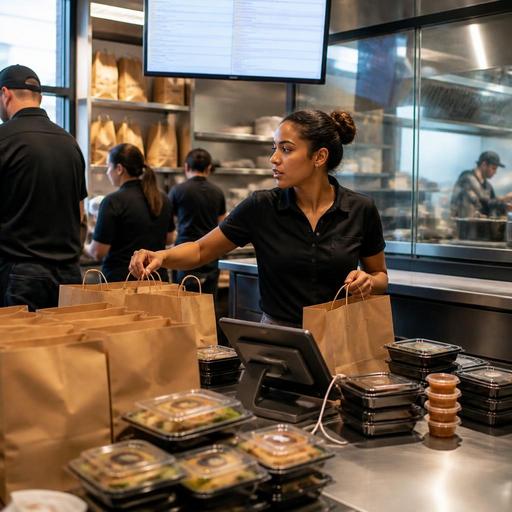
How U.S. Restaurants Handle Big Party Orders Without Kitchen Chaos
Managing large party orders without kitchen confusion is a daily operations challenge for many U.S. restaurants, from neighborhood diners and sports bars to fast-casual brands, hotel restaurants, and food trucks handling office catering. A 12-top that orders all at once, a last-minute corporate takeout request, or a youth team meal before a tournament can overwhelm the line if the order flow is not structured. The goal is not just to push food out faster. It is to protect ticket accuracy, kitchen pacing, guest experience, and staff confidence during the rush.
In the United States, large group orders often come with extra layers: split checks or one master check, tipping expectations, delivery app timing, curbside pickup, allergy notes, and sales tax or service charge questions. Operators should set up a workflow that keeps the front of house, kitchen, expo, and pickup handoff aligned. If your restaurant adds service charges, handles automatic gratuity, reports tips, serves alcohol, or manages chain menu labeling requirements, verify current local and brand-specific rules with qualified advisors and official guidance. Operational clarity matters, but compliance details can vary by state, city, concept, and service model.
Build a large-order workflow before the rush starts
The biggest mistake is treating a 15-person order like a regular table or a standard takeout ticket. Large orders need their own path from intake to handoff. That starts with deciding what information must be captured every time.
- Order type: dine-in, takeout, catering pickup, curbside pickup, hotel room block meal, airport gate delivery, or stadium suite order
- Timing: exact fire time, requested pickup time, and arrival window
- Payment method: one check, split checks, house account, online prepayment, or pay-on-arrival
- Packaging needs: trays, family packs, individually labeled boxes, utensils, condiments, and beverage carriers
- Special instructions: allergies, no-contact handoff, separate kids meals, vegetarian meals, and alcohol restrictions where applicable
For example, a suburban Italian restaurant taking a 20-person office lunch order should not leave key details in a server note or voicemail. The POS or online ordering form should require pickup time, contact name, item grouping, and packaging preferences. A sports bar hosting a fantasy football draft night may need staggered firing so wings hit first, then burgers, then dessert. A hotel restaurant serving a conference breakout group may need room numbers or meeting room names attached to the ticket.
When the intake process is standardized, the kitchen does not have to decode incomplete tickets during peak service.
Use menu controls to protect the line
Large group orders often expose menu complexity. If your line struggles with big-party tickets, the issue may be the menu mix, not just staff speed. Operators should identify which items travel well, hold well, batch well, and can be plated or packed consistently under pressure.
A practical approach is to create a short large-order menu or catering-friendly selection. That does not mean limiting guest choice everywhere. It means giving big orders a cleaner path.
Smart menu controls for big orders
- Set minimum lead times for labor-heavy items like well-done steaks, hand-breaded chicken, or custom dessert platters
- Bundle popular combinations for office lunches, team meals, and family-style events
- Limit deep modifier chains on large online orders
- Route high-volume items to stations that can batch production efficiently
- Pause fragile or slow items during peak Friday night service if needed
A fast-casual bowl concept in Chicago, for instance, may do well with a 10-bowl group pack and clearly defined protein and sauce choices rather than 10 fully customized orders entered at once. A breakfast diner near a hospital may accept a large pancake and sandwich pickup order for a nursing unit, but cap last-minute modifications after the kitchen starts production. A food truck working a brewery event might switch to a simplified event menu once a 25-order wave hits.
These controls reduce rework, help expo maintain accuracy, and keep regular dine-in guests from feeling ignored while the kitchen handles a major ticket.
Stage production with POS and kitchen display rules
Large orders should not print as one giant wall of text and land on the line with no sequencing. If your POS integrates with a kitchen display system, set up routing and coursing rules that break the order into production steps. If you still rely on paper tickets, use a consistent marking system that tells each station what fires first and what holds.
For dine-in large parties, think in waves. Appetizers, salads, entrees, kids meals, and desserts should not all hit the line at the same second unless the kitchen is intentionally set up for it. For takeout and catering, think by station and pack order. Cold items can be staged first, hot items fired closer to pickup, and expo can verify condiments, utensils, and labels before the handoff.
- Intake: capture full order details and promised time in one system
- Prep flag: alert prep or shift leads when the order crosses a size threshold
- Station routing: send items to grill, fry, pantry, dessert, and bar in a readable sequence
- Expo check: assign one person to verify completeness before the order leaves
- Guest handoff: confirm name, item count, beverages, and pickup method
A multi-location wing brand might set a rule that any order above a certain size triggers manager review and a prep alert 30 to 60 minutes ahead, depending on the concept. A coffee shop with breakfast catering may use timed holds so pastry packs are assembled early while hot breakfast sandwiches are fired later. A QSR with a pickup shelf should avoid placing oversized group orders on the public shelf if accuracy and theft risk are concerns; those orders may need a staffed handoff instead.
Assign ownership across front and back of house
Kitchen confusion usually happens when everyone touches the order but no one owns it. Large group orders need a clear point person. In a full-service restaurant, that may be the floor manager or lead server. In fast-casual, it may be a shift lead. In a hotel outlet, it may be a banquet or outlet supervisor coordinating with the kitchen.
That owner should answer four questions: Is the order complete? Is the timing realistic? Is the kitchen ready? Is the guest expectation clear?
Consider a few U.S. scenarios:
- Neighborhood Mexican restaurant: A 16-person dine-in birthday group gets pre-shifted with shared appetizer timing, pitcher setup, and one server assistant assigned to runners.
- Downtown salad shop: A law office places a 30-lunch pickup. One team member checks all names, labels each box, and stages the pickup shelf by alphabet or department.
- Airport concession: A delayed crew meal order must be packed for speed, with secure bag counts and a handoff timed to gate access rules.
- Hotel restaurant: A youth sports team order needs separate checks by family, so the staff confirms payment flow before the first plate hits the table.
Communication matters just as much as production. If a large order will take longer, tell the guest early. If a direct online ordering system cannot support complex split checks, say that before the pickup time. If your concept uses QR ordering for groups, make sure the table flow is simple for guests who want to reorder without flagging down a server, while still preserving kitchen pacing.
Train for exceptions, not just the ideal ticket
Most big-order breakdowns come from exceptions: late arrivals, missing modifiers, separate tabs, an item that 86s mid-rush, or a delivery driver showing up too early. Train staff on those moments, not just the perfect scenario.
- Create a script for confirming large orders by phone or text
- Set a cutoff for same-day high-volume custom orders
- Keep a backup packaging checklist at expo
- Define who approves substitutions when an item runs out
- Review big-order recaps after busy shifts to spot repeat bottlenecks
This is also where labor scheduling helps. If Fridays bring team dinners after local high school games, or Mondays bring pharmaceutical rep lunches, schedule prep, expo, and packaging support around those patterns. Multi-unit operators should compare locations. One store may be great at dine-in groups but weak on corporate takeout. Another may handle delivery apps well but struggle with curbside pickup timing.
Large group orders can be profitable and guest-building when the process is disciplined. The winning system is usually simple: a controlled menu path, clean intake, timed production, one owner, and a reliable handoff. Restomas can help operators connect QR ordering, POS flow, kitchen visibility, and pickup coordination into a smoother large-order process.
