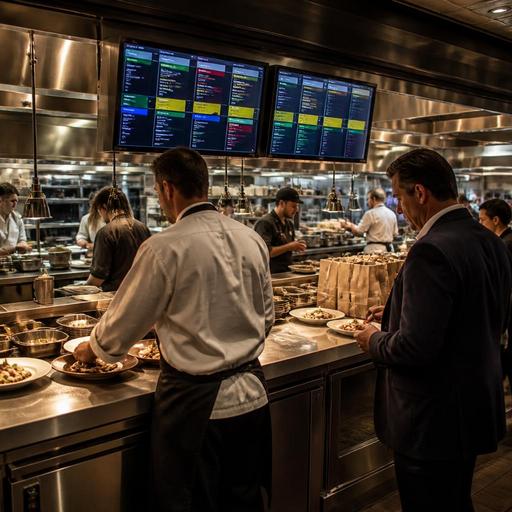
Kitchen Order Prioritization for VIP, Dine-In, and Delivery
Kitchen order prioritization for VIP, dine-in, and delivery is one of the hardest operating challenges in large restaurants. When the pass fills up with table tickets, courier pickups, special guests, and last-minute changes, the real problem is rarely speed alone. It is decision quality under pressure. A kitchen that lacks clear priority rules often creates delays, remake costs, frustrated staff, and an uneven guest experience. The good news is that order flow can be organized with simple service logic, consistent communication, and the right digital support.
In high-volume operations, every ticket feels urgent. A VIP table may expect perfect pacing, dine-in guests want hot food at the right moment, and delivery platforms punish late handoff times. If the kitchen reacts emotionally instead of following a defined system, the loudest request wins rather than the most important one. That is where many service problems begin.
Why mixed-order kitchens break down during peak service
Large kitchens do not fail only because they are busy. They fail because different order types follow different promises. A dine-in table needs course timing and synchronization. A delivery order needs packaging time, courier coordination, and travel durability. A VIP guest may require extra checks, allergy attention, or manager involvement. These promises conflict when they enter the same production line without structure.
Consider a busy Friday night steakhouse with a full dining room, a private table for repeat high-spend guests, and a steady stream of app-based delivery. If all tickets print in one queue, the grill station may fire steaks for delivery too early, causing quality loss while waiting for sides. At the same time, a four-top in the dining room may receive three plates while the fourth is delayed. Meanwhile, a VIP order gets rushed verbally, interrupting station focus and increasing the chance of a mistake.
The issue is not whether one channel matters more than another. The issue is whether the kitchen knows when each order must be fired, assembled, checked, and handed off. Priority is not a feeling. It is a sequence.
Build a practical priority framework instead of using ad hoc decisions
Restaurant owners should define priority rules before service starts, not during the rush. The most effective approach is to separate business priority from production priority. A VIP guest may be a business priority, but that does not mean every dish for that table should jump ahead instantly. Production priority should reflect service timing, station capacity, promised pickup windows, and the risk of quality decline.
A useful framework includes three layers:
- Promise layer: What time commitment has been made to the guest, table, or delivery platform?
- Experience layer: Which orders affect guest perception most if delayed or poorly sequenced?
- Production layer: Which items must start now based on cook time, hold time, and station load?
This helps managers avoid a common mistake: prioritizing by ticket arrival time alone. First-in, first-out sounds fair, but it often fails in mixed-channel kitchens. A burger for delivery with a rider arriving in eight minutes may need to move before a dine-in appetizer that was entered first but is meant to land later with drinks. Likewise, a VIP tasting course should not be sent early just because the kitchen has a free moment.
Set explicit order categories
Instead of treating every ticket as equal, define visible categories such as:
- Dine-in now: fire immediately for active table pacing
- Dine-in hold: accepted but waiting for course timing
- Delivery urgent: courier or promised handoff approaching
- Delivery staged: prep components, hold final assembly
- VIP attention: requires manager check, allergy review, or plating control
These labels create clarity without constant verbal interruption. They also reduce the dependence on one experienced expediter holding the whole operation together from memory.
Match kitchen timing to each service channel
The strongest kitchens do not simply cook faster. They use different timing logic for different channels. Dine-in, VIP, and delivery should share standards, but not the exact same fire rules.
Dine-in flow
Dine-in success depends on pacing and synchronization. The objective is not just to complete dishes, but to complete them together. For tables ordering across multiple stations, the expediter should control fire times backward from the desired service moment. That may mean delaying a quick salad so it lands with a slower grill item, or starting a side later so it stays fresh.
Owners should train floor staff to enter courses clearly and avoid sending the entire meal at once unless the concept truly supports it. Poor POS habits create false kitchen urgency.
VIP flow
VIP orders need precision, not panic. In practice, that means adding checkpoints rather than shouting for speed. A chef or manager may review modifications, plating, allergies, or wine pairing timing. The kitchen should know exactly what “VIP” changes operationally. Does it trigger final plate inspection? Does it require a specific runner? Does it alter the course pacing? If the answer is unclear, the label creates stress without improving service.
A useful rule is to reserve VIP escalation for situations with a real service reason. If every regular becomes “VIP,” the term loses value and the line stops trusting priority labels.
Delivery flow
Delivery adds two hidden steps many kitchens underestimate: packaging and handoff coordination. Even if food is cooked on time, the order can still fail if sauces are missing, labels are unclear, or hot and cold items are packed together poorly. For delivery, the target is not “food ready fast.” The target is “food ready at the right pickup moment in travel-ready condition.”
That often means staging partially completed orders and finishing them close to courier arrival. Fried foods, ice cream, and delicate garnishes especially benefit from this approach.
Use digital routing and visibility to reduce kitchen friction
Large kitchens become calmer when everyone sees the same priorities. Printed tickets and verbal updates can work in small operations, but mixed-channel volume usually requires more structured visibility. A digital workflow allows teams to sort tickets by channel, promised time, and preparation stage while reducing repetitive questions such as “Is this for the dining room or pickup?”
For example, a kitchen display setup can group tickets by service type while still showing countdown timing. An expediter can then make better decisions about firing and assembly based on actual demand rather than noise. Reservation data can also help the front and kitchen teams prepare for known VIP arrivals or high-value repeat guests without creating last-minute disruption.
Menu management matters here too. If the same item performs differently for dine-in and delivery, the restaurant should reflect that operational reality. Some dishes travel well; others need packaging adjustments, limited modifiers, or a delivery-only prep rule. Digital menus and order controls make it easier to guide guests toward items the kitchen can execute consistently under pressure.
This is where platforms like Restomas can support the operation naturally: by helping restaurants centralize menus, organize order flow, and keep service information visible across channels instead of scattered across paper, memory, and chat messages.
Clear actions restaurant owners can take this week
- Map your current ticket journey. Follow one dine-in order, one VIP order, and one delivery order from entry to handoff. Identify where delays, confusion, or duplicate communication happen.
- Define priority rules in writing. Decide what truly changes when an order is marked VIP, when delivery becomes urgent, and when dine-in pacing should override ticket sequence.
- Create channel-based prep standards. Document which items can be fired early, which must be finished just before service, and which need dedicated packaging time.
- Train servers and hosts on timing inputs. Better kitchen prioritization starts with cleaner order entry, course control, and accurate guest notes.
- Review menu items that cause flow problems. If certain dishes repeatedly disrupt service, adjust prep, reduce modifier complexity, or limit availability by channel.
- Measure exceptions, not only speed. Track remakes, missed modifiers, late handoffs, and tables with unsynchronized plate drops. These reveal priority failures more clearly than average ticket time alone.
Order prioritization in a large kitchen is not about choosing winners between VIP, dine-in, and delivery. It is about building a system where each channel gets the right timing, attention, and execution standard. When priorities are visible, definitions are clear, and menus support the workflow, kitchens operate with less stress and more consistency. If your restaurant is refining multi-channel service, Restomas can help bring menu control, order visibility, and operational structure into one practical digital workflow.