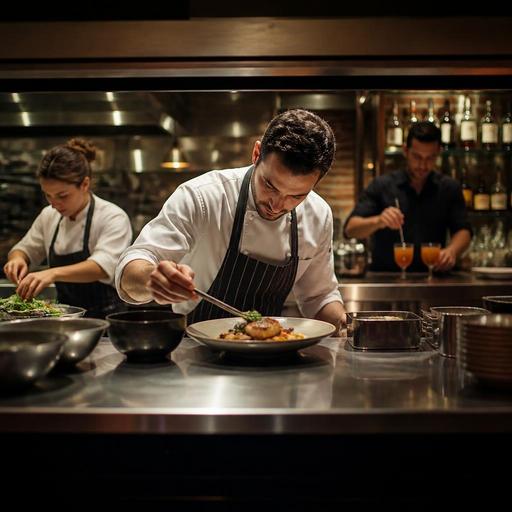
Kitchen Station Order Flow: Managing Hot Line, Cold Prep, and Bar Timing
Why kitchen station coordination breaks down during service
Kitchen station order flow becomes difficult when hot line, cold prep, and bar teams receive the same ticket but work at different speeds, with different prep logic, and different service priorities. A grilled salmon, a Caesar salad, and two cocktails may belong to one table, yet they should not always start at the same moment. If the bar makes drinks too early, ice melts and presentation suffers. If cold prep plates appetizers before the hot line is ready, food waits in the pass. If the grill is buried under a rush, the whole table feels late even when other stations are technically finished.
Many restaurants try to solve this with verbal calls, handwritten notes, or the experience of one strong expeditor. That can work on a calm Tuesday, but it often breaks under pressure. As order volume rises, the real issue is not effort. It is the lack of a clear system for sequencing, routing, and confirming work across stations.
For owners and operators, this is more than a kitchen problem. It affects guest experience, ticket times, waste, staff stress, and review quality. A table does not judge your salad station and bar separately. Guests judge whether the order arrived together, at the right temperature, and without confusion.
Build station rules before you add technology
Digital tools help most when the operation already knows how orders should move. Before changing screens, printers, or POS settings, define the service rules for each station. This creates consistency and makes training easier.
Start with three practical questions
- What should fire immediately? Examples may include bottled drinks, draft beer, simple cold starters, or items for takeaway.
- What should wait for a trigger? Examples often include cocktails, fries, steaks, and desserts that lose quality if they sit.
- Who owns table pacing? In some restaurants it is the expeditor. In others it is the floor manager or head chef. One role must be clearly responsible.
Consider a casual bistro with a hot line, garde manger, and bar. A four-top orders sparkling water, two cocktails, one burrata starter, one soup, two steaks, and one pasta. Without rules, all stations may begin at once. With rules, the water fires immediately, cocktails begin when appetizers are nearly ready, burrata and soup start first, and mains are held until the server marks the starter course down or the expo triggers the next fire.
This does not need to become overly complicated. The goal is to create a shared language such as fire now, hold, course two ready, and table complete. Once these terms are part of the workflow, digital order management can support them instead of replacing judgment.
Set up smarter routing for hot, cold, and bar orders
Good routing means each station sees only what it needs, at the right time, with the right modifiers. This sounds obvious, but many restaurants still print full tickets everywhere. That creates clutter, duplicate work, and missed details.
A better approach is to route by production responsibility. The bar sees beverage items and relevant table timing notes. Cold prep sees salads, desserts, and cold starters, plus allergy or no-onion modifiers. The hot line sees grilled, fried, sauteed, and oven items, grouped by station if needed. The expeditor or kitchen lead sees the whole order view.
Key routing practices that reduce mistakes
- Separate production by station: Do not send the entire ticket to every area unless there is a real operational reason.
- Keep modifiers attached to the item: A steak temperature or dressing-on-side request should never live only in a general note.
- Use course-based routing: Appetizers, mains, and desserts should not all appear as active work at the same moment.
- Flag shared-table dependencies: If one guest has a delayed allergy-safe dish, expo should know the rest of the mains may need pacing.
- Make re-fires visible: A corrected cocktail or re-cooked protein should be clearly marked so staff prioritize it properly.
For example, in a cafe-bar serving brunch, the cold station may plate fruit bowls and yogurt, the hot line handles eggs and toast, and the bar prepares coffee and fresh juice. If the coffee appears too early, it cools. If toast is delayed, eggs overcook in the window. Routing combined with timed firing helps the team produce a table in sync rather than as isolated items.
This is where restaurant platforms such as Restomas can support operators: digital menus, order management, and POS-connected workflows make it easier to send the right item data to the right station while keeping a shared view of the order status.
Create a pacing system the team can actually follow
The most practical pacing systems are simple enough to use during a rush. Staff should not need five extra taps or long verbal explanations to coordinate one table. Focus on visible status changes and clear handoff moments.
A workable pacing model for many restaurants
- Order received: All items are recorded, but only immediate-fire items activate.
- Course one fire: Bar and cold prep begin selected items; hot line may start soup or quick starters.
- Course one served: Server or expo marks the course down.
- Course two fire: Hot line starts mains based on actual table progress, not guesswork.
- Table check: Expo confirms all components are ready before pickup.
This structure helps in both full-service and hybrid-service models. In quick service, pacing might be compressed to seconds rather than minutes. In full-service dining, pacing may follow guest behavior more closely. Either way, the principle is the same: do not confuse order entry with production timing.
To make this stick, train with real menu examples. Run a pre-service exercise where the team maps ten common orders across stations. Which items fire first? Which wait? Which can hold? Which cannot? This reveals hidden disagreements before live service exposes them.
Use pre-shift prep and station communication to prevent bottlenecks
Station-based coordination is not only about service-time technology. It starts before the first guest arrives. If one station is under-prepped, the best routing system will not save the shift.
Pre-shift checks that matter
- Par levels by station: Verify that high-frequency items are stocked where they are used.
- Modifier readiness: Confirm substitutes, allergy-safe components, and garnishes are available.
- Menu 86 process: Make sold-out items visible immediately so they do not keep entering the flow.
- Role clarity: Define who expedites, who calls holds and fires, and who updates delays to the floor team.
- Bar-kitchen alignment: Review specials or large bookings that will change beverage and food pacing.
Suppose a restaurant has a large reservation at 8 p.m. with shared starters, wine service, and mixed dietary requests. If the bar knows the first round timing, cold prep knows the platter sequence, and the hot line knows when mains should actually fire, the table feels smooth. If each area discovers the demand separately, the evening starts with preventable friction.
Managers should also review station bottlenecks weekly. Look for patterns such as desserts backing up because one cold station also handles takeaway packaging, or the grill slowing down every Friday because modifiers are not clearly visible. Operational efficiency improves when these patterns lead to layout changes, prep changes, or routing changes, not just reminders to work faster.
Measure success through guest experience, not just speed
Faster is not always better if the table is out of sync. A strong station system should improve timing, accuracy, and confidence at once. The most useful questions are practical: Are drinks arriving when guests still want them? Are mains landing together? Are allergy notes reaching the correct station? Are servers spending less time chasing updates?
Ask your team to note a few service failures for one week. Not broad complaints like busy night, but specific breakdowns such as bar fired all cocktails before starters left the pass or cold station did not see no-cheese modifier on two salads. Then trace each issue back to one of three causes: unclear rule, poor routing, or weak communication. This makes improvement manageable.
Restaurant digitization works best when it supports these real operating decisions. A digital menu can reduce order ambiguity. Order management can route items by station. Reservation visibility can help the kitchen prepare for peaks. POS integrations can keep item status more consistent across front and back of house.
When hot line, cold prep, and bar teams work from one coordinated flow, guests notice the difference immediately. Service feels calmer, orders arrive more naturally, and staff spend less energy correcting preventable mistakes. If you are refining station-based order coordination, Restomas can help you connect menu, ordering, and service workflows in a more organized daily operation.
