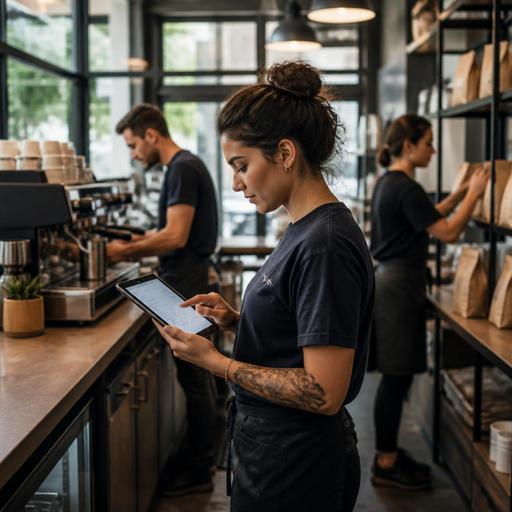
Opening Checklist Workflow for U.S. Cafes and Quick-Service Teams
An opening checklist workflow for U.S. cafes and quick-service teams does more than unlock the front door and turn on the espresso machine. It sets the pace for the entire day: morning rush speed, order accuracy, food safety habits, pickup readiness, and clean handoffs between front counter, barista station, expo, and kitchen. For American operators dealing with mobile orders, delivery apps, curbside pickup, tipped staff, and busy POS stacks, a strong opening routine is one of the simplest ways to reduce preventable mistakes before the first guest walks in.
Whether you run a neighborhood coffee shop in Seattle, a breakfast sandwich counter in Chicago, a college-town boba cafe, or a multi-location fast-casual brand in Texas, the goal is the same: every opening task should be assigned, timed, and verified. A checklist should not live only in a manager's head or on a paper sheet that nobody reviews after 8:00 a.m.
Start With an Opening Sequence, Not Just a Task List
Many operators create long lists but skip the order of operations. In practice, sequence matters. If the dining room is spotless but the POS is missing menu updates, your line still stalls. If brewed coffee is ready but your pickup shelf is unorganized, mobile orders pile up fast.
A useful opening workflow breaks tasks into time blocks and ownership:
- Arrival and security check: lights, doors, alarm, walk-through, visible maintenance issues, refrigeration status.
- Equipment startup: espresso machines, ovens, fryers, hot holding, ice machines, tea brewers, POS terminals, kitchen display system, receipt printers, tablets for delivery apps.
- Food and beverage prep: batch brewing, slicing, portioning, sauces, grab-and-go stocking, pastry case setup, line checks.
- Digital channel readiness: online ordering availability, menu item visibility, 86 list, prep times, curbside pickup instructions, QR ordering flow if used.
- Guest area readiness: restrooms, condiment station, ADA-minded path clearance, tables, patio, music, trash, exterior sweep.
- Pre-shift communication: daypart priorities, staffing gaps, expected catering or large takeout orders, limited items, promotions, and service goals.
For example, a Los Angeles cafe that opens at 6:30 a.m. may assign one opener to espresso calibration and pastry merchandising, another to POS login checks and mobile-order tablet setup, and a shift lead to temperature logs, cash drawer setup, and labor positioning for the first rush.
Build Station-Specific Checklists for Front Counter, Beverage, and Kitchen
Generic opening forms often fail because they do not reflect the actual workstations. A quick-service breakfast spot needs different checks than a smoothie bar or a food truck. The best opening checklist workflow is station-based, with each team member responsible for specific standards.
Front Counter and Register
- Confirm POS terminals are online and synced with current menus.
- Check payment devices, printer paper, receipt flow, and backup charging cables.
- Verify cash drawer counts and manager approval process.
- Test loyalty, gift card, and discount buttons commonly used during breakfast or commuter rush.
- Review service charge settings versus tipping prompts so staff understand the guest-facing flow. Operators should verify local rules and tax treatment with qualified advisors and current official guidance.
- Stage takeout bags, cup carriers, utensils, napkins, labels, and order markers.
Beverage or Barista Station
- Dial in espresso, steam wand sanitation, milk rotation, and alternative milk par levels.
- Brew first batches and label backup batches according to house procedure.
- Restock syrups, cups, lids, straws where permitted, and cold-case items.
- Check blender jars, tea pitchers, ice levels, and dishwasher readiness.
Kitchen or Assembly Line
- Turn on line equipment and confirm hot holding temperatures per your operating procedures.
- Stock proteins, breads, produce, sauces, and packaging in correct par amounts.
- Verify prep labels, date marks, and any all-day breakfast or lunch crossover items.
- Test the kitchen display system routing for dine-in, takeout, third-party delivery, and curbside pickup.
- Review the 86 process so cashiers, expediters, and app menus stay aligned.
A Denver bagel shop, for instance, may need separate open checks for the toaster line, schmear station, hot sandwich build area, and app-order shelf because each bottleneck affects ticket times differently.
Prepare for U.S. Ordering Channels Before the Rush Hits
In many American cafes and QSR concepts, the first wave of business is not just walk-in traffic. It includes delivery apps, direct online ordering, office coffee runs, commuter preorders, and pickup shelf traffic. If those channels are not ready at open, staff start the day in recovery mode.
Before service begins, managers should verify:
- Direct online ordering is live with the right hours, item availability, modifiers, and prep times.
- Delivery marketplace tablets or integrations are functioning and not carrying outdated breakfast items or sold-out pastries.
- Pickup shelf and curbside pickup workflow are clearly staged so completed orders do not mix with dine-in tickets.
- QR menu or QR ordering links work on guest phones and offer an accessible alternative when needed. Operators should review ADA-related expectations and current accessibility guidance for their setup.
- Large order notes are visible for office catering, hotel lobby pickups, or school staff breakfast runs.
A suburban Atlanta fast-casual cafe might open with only two front-of-house employees. In that setup, one broken printer or a missing curbside parking note can create immediate confusion. Digital checks at open are just as important as counting croissants or brewing drip coffee.
Use the Checklist to Support Labor, Accuracy, and Accountability
An opening checklist should help managers make labor decisions, not just document tasks. If one opener consistently finishes late, that may signal poor sequencing, unrealistic prep pars, or a training gap. If a location always runs out of cold brew lids by 9:00 a.m., the issue may be par setup, not employee effort.
Practical ways to improve accountability include:
- Assigning names, not departments, to each opening task.
- Setting target completion times for each station.
- Requiring manager verification for critical checks such as refrigeration, cash handling, and digital ordering status.
- Logging recurring failures like missing labels, offline tablets, or late bakery deliveries.
- Reviewing open-to-rush performance weekly using ticket times, void patterns, guest complaints, and item outages.
This is especially important for multi-location operators. A five-store coffee chain in Florida may think all stores open the same way, but one store may be strong in beverage speed while another struggles with mobile-order staging. Standardized checklists make those differences visible.
For labor scheduling, the opening checklist can also clarify whether your first shift has the right mix of roles. A cashier who is also expected to receive a dairy delivery, stock the pastry case, and manage app orders may be set up to fail. Review the workflow operationally and confirm any scheduling, break, payroll, or tipped-role requirements under current local rules with qualified advisors.
Keep the Opening Checklist Digital, Simple, and Easy to Update
Paper checklists often become stale. A digital checklist is easier to update when menu items change, a new POS integration is added, or your team starts offering curbside pickup. It also helps managers see whether tasks were completed on time across locations.
Keep the format simple:
- Use short action phrases.
- Separate daily tasks from weekly deep-clean or maintenance checks.
- Include photo or manager signoff only where it adds value.
- Link checklist steps to actual service outcomes such as faster first-ticket times or fewer missing modifiers.
For example, a food truck opening at a downtown Houston office park may need a compact digital checklist covering generator startup, card reader connectivity, cold holding, prep bins, and QR menu readiness. A hotel coffee bar, by contrast, may need extra coordination with room charge workflows, breakfast buffet timing, and lobby guest traffic.
The best test is simple: if a new shift lead can open smoothly using the checklist, it works. If the list is too vague, too long, or disconnected from real service problems, revise it.
Restomas can help operators organize digital menus, ordering flows, POS-connected workflows, and day-to-day service routines so opening shifts run with less guesswork.