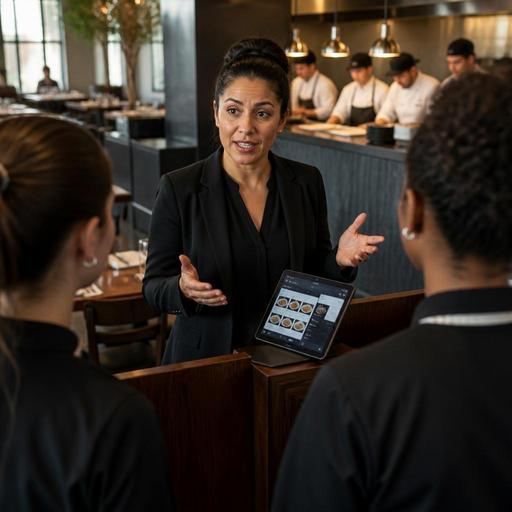
Practical AI for Restaurant Management: Processes It Can Support Today
AI for restaurant management is no longer a future-only topic. For many operators, it already plays a practical role in daily work such as menu updates, reservation flow, guest communication, reporting, and staff coordination. The key is to treat AI as a support layer for routine decisions and repetitive tasks, not as a replacement for hospitality, culinary judgment, or floor leadership. When used this way, AI can help restaurants move faster, reduce friction, and give teams more time for service.
For owners and managers, the most useful question is not whether to use AI, but which processes are structured enough for AI support right now. If a task follows patterns, depends on repeatable inputs, or requires consistent communication, it is often a strong candidate. In contrast, tasks that depend heavily on empathy, negotiation, taste, or complex exception handling still need a human lead.
Start with processes that already have clear rules
The best place to apply AI is where your restaurant already has a repeatable workflow. Think about tasks that happen every day and create small delays when done manually. Examples include updating item availability, answering common guest questions, organizing reservation notes, summarizing shift reports, or drafting social media captions from menu changes.
In practice, restaurants often benefit most when they begin with low-risk use cases such as:
- Menu content support: rewriting dish descriptions, checking tone consistency, or adapting text for different channels.
- Guest communication: preparing responses for common questions about hours, allergens, parking, reservations, or delivery areas.
- Operations summaries: turning notes from the day into a short manager-ready overview.
- Internal documentation: drafting SOPs, onboarding checklists, or cleaning task instructions from manager input.
- Marketing assistance: creating first drafts for email campaigns, social posts, or event announcements.
These tasks are valuable because they consume staff attention without requiring deep creative judgment every time. AI can produce a fast first draft, while a manager or supervisor reviews the result before it reaches guests or staff.
Where AI helps most in front-of-house operations
Front-of-house teams deal with high message volume, time pressure, and constant context switching. AI can support these environments by improving speed and consistency, especially in communication-heavy workflows.
Reservations and guest messaging
Restaurants receive many repeat questions: Do you have outdoor seating? Is there a kids' menu? Can you host a birthday group? Is a table available after 8 p.m.? AI can help classify incoming requests, suggest replies, and route guests to the correct next step. It can also summarize reservation notes so hosts quickly see useful context such as seating preferences, stroller needs, or celebration details.
For example, a host team using a digital reservation workflow can combine AI-generated response drafts with clear booking policies. The result is faster follow-up without losing control over exceptions. Human staff should still approve unusual requests, VIP handling, complaint recovery, or anything involving policy flexibility.
Waitlist and service recovery
AI can also help staff choose the right message format during busy periods. If a waitlist grows, an AI-supported system can draft short, consistent updates that explain timing, invite guests to stay informed, and reduce confusion. After service issues, managers can use AI to draft professional apology messages based on their own service standards, then personalize them before sending.
The practical rule is simple: let AI support the wording and organization, but keep human ownership over tone, compensation decisions, and guest care.
Back-of-house and admin tasks that benefit from AI support
Back-of-house operations generate a large amount of information but often lack time for analysis. AI can be useful here when it helps managers interpret patterns faster or document decisions more clearly.
Menu management and item availability
Menus change often. Items sell out, ingredients become temporarily unavailable, prices need review, and seasonal dishes require new descriptions. AI can assist by turning chef or manager notes into clean menu text, adapting descriptions for QR menus, takeaway platforms, or social channels, and flagging places where wording may be inconsistent.
This matters because menu management is not just a design task. It affects ordering speed, guest expectations, and staff confidence. A clear digital menu supported by a platform such as Restomas makes it easier to push updates quickly, while AI can help generate the first draft of the content that appears there.
Shift reports and manager handovers
Many managers finish service with scattered notes: one item sold out early, two guests complained about timing, a server called in sick, and a prep issue affected one station. AI can turn these rough notes into a structured handover summary with sections for service, staffing, stock, and follow-up actions. That makes the next shift easier to start and reduces information loss between managers.
Staff training materials
Restaurants frequently need simple training content: how to explain a new dish, how to handle a reservation change, how to close a section, or how to follow an opening checklist. AI can help draft these materials in plain language, but managers should review them for accuracy and fit with house standards.
What AI should not decide on its own
AI is most useful when the restaurant sets boundaries. It should not be allowed to make every decision automatically, especially where errors affect trust, food safety, or team morale.
Areas that still need strong human control include:
- Allergen and dietary claims: always verify against actual ingredients and kitchen procedures.
- Pricing decisions: AI can organize inputs, but final pricing must reflect your costs, concept, and local market.
- Hiring and performance judgments: use human review for fairness, context, and legal compliance.
- Complaint resolution: empathy and judgment matter more than speed.
- Brand voice on sensitive topics: public responses should be reviewed by a manager.
A good operating principle is to classify tasks into three groups: AI drafts, human approves, and human only. This prevents over-automation and keeps accountability clear.
How restaurant owners can adopt AI without creating chaos
The fastest way to fail with AI is to add it everywhere at once. The better approach is to start with one or two narrow workflows, define what success looks like, and train staff on when to use it and when not to use it.
- Pick one repetitive process. Choose something like menu description updates, reservation replies, or manager shift summaries.
- Use your real standards. Feed AI your actual tone, policies, and examples rather than generic prompts.
- Keep a review step. Assign a manager or supervisor to approve guest-facing output.
- Document exceptions. Make it clear which cases must go directly to a human.
- Connect AI to digital workflows. AI works better when menus, reservations, and order-related information are already organized in a digital system.
This last point is important. AI does not fix disorganized operations by itself. If your menu information is inconsistent across channels, your reservation notes live in multiple places, or your staff relies on memory instead of process, AI will simply reflect that confusion faster. Restaurants usually see better results when they first strengthen their digital foundation, then add AI to support the flow of information.
That is why practical digitization matters. A restaurant using digital menus, centralized updates, reservation tools, and structured guest communication already has the kind of operational clarity that makes AI genuinely useful. Instead of chasing novelty, operators can use AI to remove repetitive admin work, improve consistency, and help teams focus on hospitality.
For restaurants exploring this shift, Restomas can support the digital workflows that make AI adoption more practical, especially around menu management, guest-facing updates, and smoother day-to-day operations.
