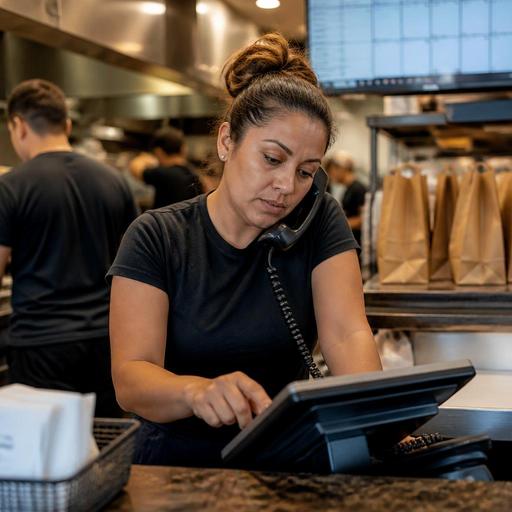
Reducing Phone Order Errors in U.S. Restaurants With Clear Call Workflows
Reducing phone order errors in U.S. restaurants starts with a simple idea: do not rely on memory, shorthand, or rushed conversations during peak service. Phone orders still matter for pizza shops, neighborhood diners, Chinese takeout spots, family-owned Mexican restaurants, bars with wings and late-night pickup, hotel restaurants handling guest orders, and food trucks taking large advance catering calls. But when the process lives only in the host stand notebook or in one experienced cashier’s head, mistakes multiply fast.
A missed modifier, wrong pickup time, unclear name, or incomplete payment step can create remake costs, longer ticket times, frustrated guests, and pressure on tipped staff who end up apologizing for problems they did not cause. A structured workflow gives operators a repeatable system that works on a Friday night rush, during a lunch rush at a fast-casual counter, or across multiple locations with different teams.
Why phone orders break down during real U.S. service
Most phone order mistakes do not come from careless employees. They come from noisy environments, menu complexity, and inconsistent handoff between front-of-house and kitchen teams. In a busy American restaurant, the person answering the phone may also be greeting guests, checking curbside pickup arrivals, managing the pickup shelf, and helping delivery drivers find the right bag.
Common breakdown points include:
- Verbal menu confusion: Guests order from an old social post, a third-party delivery menu, or a memory of a past special that is no longer available.
- Modifier overload: Allergy notes, side swaps, sauce choices, doneness, drink selections, and combo changes are spoken quickly and entered inconsistently.
- Name and contact errors: Similar-sounding names, bad cell reception, and no callback number make recovery difficult.
- Pickup timing issues: The kitchen hears “ASAP,” while the guest meant pickup in 45 minutes after soccer practice.
- Payment confusion: Card-on-phone, pay-at-pickup, house account, hotel room charge, and service charge questions can all interrupt flow.
For example, a suburban pizza shop may take 80 phone orders on a Friday night. If the cashier writes “no onions” on paper but the POS ticket only shows the base item, the kitchen makes the standard pie and the guest arrives to the wrong order. In a hotel restaurant, a room-service style pickup order may be attached to the wrong room number if the staff member does not confirm both guest name and room details. In a sports bar, a family ordering burgers, kids’ meals, and sauces over the phone can easily end up with missing sides unless every item follows a set input sequence.
Build a standard phone order script that staff actually use
The best phone workflow is short, repeatable, and built around the order entry screen. Staff should not sound robotic, but they should follow the same checkpoints every time. The goal is to reduce guesswork, not create a long call center script.
A practical call flow
- Greeting and order type: Confirm whether the guest wants takeout, curbside pickup, future pickup, or another service option your restaurant supports.
- Use the current menu only: Staff should enter from the live POS or digital menu, not from memory.
- Capture the guest identifier early: Full name and callback number before the order gets too long.
- Enter each item with modifiers in sequence: Item, size, temperature if relevant, sides, sauces, add-ons, and allergy note location.
- Repeat back the full order: Especially proteins, sides, drinks, quantities, and special instructions.
- Confirm timing: Give a realistic pickup window based on kitchen load, not habit.
- Confirm payment process: Pay now, pay at pickup, or approved house workflow.
- Close with pickup instructions: Where to park for curbside, where the pickup shelf is, or whether to check in at the host stand.
This script works in many U.S. formats. A diner can use it for breakfast takeout with egg prep and toast choices. A fast-casual bowl concept can use it for protein, base, toppings, and dressing sequence. A food truck taking office lunch preorders can use it to confirm arrival window, contact number, and bulk packaging needs.
Keep the script visible at each phone station and train staff to read back the order exactly as entered. Read-back is often the cheapest and fastest error-reduction tool available.
Set up your menu and POS to prevent avoidable mistakes
Phone order accuracy improves when the system makes the right action easier than the wrong one. If your POS allows open-text chaos, staff will type different phrases for the same request, and the kitchen will interpret them differently. Structured modifiers are better than freeform notes whenever possible.
Menu design choices that help
- Use required modifiers: Force size, side, sauce, doneness, or drink choices where needed.
- Limit duplicate item names: Make it easy to distinguish lunch combo from family pack or kids’ meal from full entrée.
- Retire outdated items everywhere: Keep your website, QR menu, delivery app menus, and phone-order reference menu aligned.
- Create clear allergy and special-instruction workflows: Train staff on where to place notes so the kitchen sees them. Operators should verify current local and federal guidance with qualified advisors or official sources when handling allergen communication or accessibility-related practices.
- Add pickup promise settings: If your system supports pacing, use realistic prep-time buffers during rushes.
A good example is a chicken wing concept that receives frequent phone orders during game nights. Instead of letting staff type “extra crispy, sauce on side, ranch, all flats if possible” in different ways, build consistent modifier buttons. In a multi-location burger brand, standardizing these buttons across stores helps franchise teams reduce retraining and ticket confusion.
For chains and larger operators, menu consistency also matters if nutrition or labeling workflows apply to your concept. The operational takeaway is simple: one source of truth for menu data. If your business may fall under FDA menu labeling rules or local disclosure requirements, verify current obligations with qualified advisors and official guidance.
Improve handoff from the phone to the kitchen to pickup
Many restaurants think the mistake happened on the call, but the real failure happened later. A clean handoff process should connect the phone order to production, bagging, and guest pickup without relying on verbal memory.
Use a three-point handoff
- Kitchen display or printed ticket clarity: The kitchen should see the same modifiers the cashier confirmed on the call.
- Bagging check: One team member matches containers, sides, sauces, utensils, and beverages against the ticket before the order leaves the line.
- Pickup confirmation: At handoff, staff confirm guest name and key items, especially for large orders or similar names.
This matters in real U.S. scenarios. At an airport concession, rushed travelers may grab the wrong bag if names are called loosely. At a café with a crowded pickup shelf, two orders for “Mike” can be swapped unless staff confirm the last initial or phone number. At a hotel restaurant, room-charge or guest pickup orders need a tighter identity check than a casual coffee pickup.
If you accept tips on phone orders or at pickup, make sure the workflow is consistent between staff and payment screens. Also keep service charges and tips clearly separated in your internal process and guest communication. Exact requirements can vary by state and locality, so operators should confirm current tax, payroll, tip reporting, and service charge treatment with qualified advisors and official guidance.
Train for peak periods, not perfect conditions
Phone order systems fail when training only happens on a quiet Tuesday afternoon. Staff need practice for the real pressure points: Friday dinner rush, Sunday brunch, playoff nights, school pickup traffic, and weather-driven takeout spikes.
Run short scenario drills:
- Noisy line test: Can the cashier still confirm a callback number correctly?
- Modifier-heavy order: Can a new host enter six customized bowls without losing details?
- Future order test: Can the team route a 6:30 p.m. pickup without firing it too early?
- Curbside workflow: Does the guest know where to park and how to check in?
- Recovery call: If an item is out of stock, who calls the guest and how is the substitution documented?
Review error patterns weekly. Look for repeated issues like missing drinks, wrong sides, incorrect pickup times, or incomplete allergy notes. Then fix the workflow, not just the employee. Sometimes the answer is better scripting. Sometimes it is removing a confusing menu item. Sometimes it is routing more guests to direct online ordering or QR ordering for highly customizable items while keeping phone ordering for simpler checks.
For many U.S. operators, the strongest setup is a blended one: phone ordering remains available for guests who prefer it, while digital ordering handles detail-heavy customization more cleanly. Restomas can support that kind of structured flow with organized menus, ordering, and operational visibility across service channels.