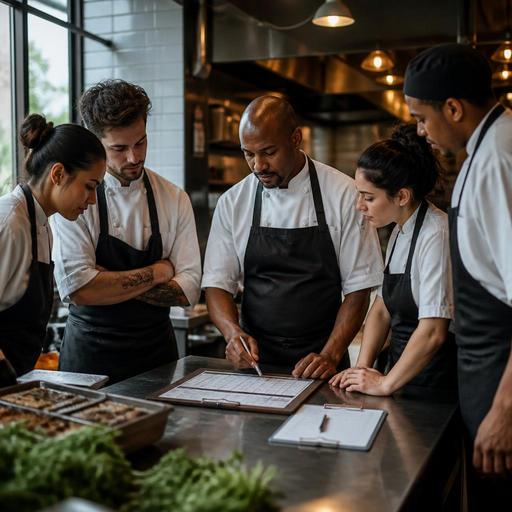
Restaurant Kitchen Staff Rotation Planning for Fair Shifts and Consistent Service
Kitchen staff rotation planning is one of the most practical ways to improve consistency in a restaurant without adding unnecessary complexity. When rotations are designed well, they help owners balance fairness, protect service quality, reduce burnout, and make sure critical stations are always covered. In busy kitchens, the goal is not simply to fill shifts. It is to build a repeatable system that keeps prep, line service, handoff, and closing routines stable even when demand changes or someone calls out.
Many restaurants struggle because schedules are created week by week with too much focus on availability and not enough attention to station continuity. A cook may be moved from grill to salads with little notice, a strong opener may be scheduled to close after a heavy weekend, or new team members may be placed on difficult services before they are ready. These decisions may solve a short-term problem, but over time they create uneven execution, frustration, and avoidable mistakes. A stronger rotation plan gives managers a clear structure for who can work where, when they should rotate, and how to keep knowledge spread across the team.
Why kitchen rotation planning matters beyond filling shifts
In most kitchens, fairness and efficiency are connected. If the same people always get the easiest prep windows, the preferred days off, or the least stressful stations, morale drops. If the strongest cooks always carry peak service, the restaurant becomes dependent on a few individuals and vulnerable when one is absent. Rotation planning helps solve both problems by distributing workload more deliberately while preserving quality standards.
Think about a casual dining restaurant with four core kitchen zones: prep, fry, grill, and plating. If one cook is the only person trusted on grill during Friday dinner, that station becomes a bottleneck in scheduling. The manager may feel forced to build the whole week around that person. A more resilient approach is to develop a rotation plan where at least two or three team members can handle grill at the expected standard, one can back up plating during rush periods, and newer staff are gradually introduced during lower-risk services.
Good rotation planning also supports continuity. Continuity does not mean keeping everyone in the same role forever. It means making sure each shift has the right mix of experience, speed, and station knowledge. A kitchen runs better when every service includes a dependable anchor on each critical area and a clear backup plan.
Build rotations around station maps, not just employee names
A common mistake is to create schedules based only on who is available. A better method is to start with a station map. List every station or task block that matters in your operation, such as morning prep, cold line, hot line, pass, desserts, receiving, family meal, and closing sanitation. Then define the skill level required for each one.
You can keep this simple with three categories:
- Lead: can run the station independently, solve problems, and train others.
- Support: can work the station during normal service with some oversight.
- Trainee: can assist and learn but should not be left alone during a high-pressure period.
Once this map exists, rotation planning becomes much clearer. Instead of saying, Who can work Tuesday? you ask, Who is our lead on grill, who supports fry, and where can we place a trainee safely? That shift in thinking makes schedules more operationally sound.
For example, if your lunch business is steady but manageable, Tuesday lunch may be the right time to rotate a support-level cook into plating while a lead oversees the pass. Saturday dinner, by contrast, may require your most stable pairings and very limited experimentation. Rotation should not mean random movement. It should mean controlled movement with service risk in mind.
How to balance fairness with performance standards
Fairness in scheduling does not mean every employee gets identical shifts or equal time on every station. It means the process is clear, consistent, and tied to business needs as well as development opportunities. Strong kitchen teams usually accept difficult shifts when they believe assignments are made for sensible reasons.
Owners and kitchen managers can improve perceived fairness by setting a few transparent rules:
- Rotate high-pressure and lower-pressure stations over time where skill allows.
- Share opening, closing, and weekend duties across qualified team members.
- Use training pathways so employees know how to earn access to better stations or more hours.
- Avoid relying on personal preference as the main reason for assignments.
- Review schedules after each cycle to spot repeated imbalances.
Consider a small bistro where one line cook repeatedly closes five nights a week because they are the fastest cleaner. This may feel efficient in the short term, but it often leads to resentment and fatigue. A better system might keep that employee as the lead closer on the busiest nights while training two others to share close-down procedures on quieter services. The result is more fairness without sacrificing standards.
Documentation matters here. If your managers track station competency, shift history, and training progress in one place, it becomes easier to justify assignments and identify when one person is carrying too much of the load. Digital tools that centralize shift notes, station responsibilities, and service patterns can make these decisions more objective and less reactive.
Create continuity through overlap, cross-training, and handoff routines
Continuity in the kitchen depends on more than skill coverage. It also depends on how information moves between people and shifts. A rotation plan works best when it includes overlap periods, clear prep handoffs, and written notes that reduce confusion.
For instance, imagine the morning prep cook finishes sauces, partial protein prep, and garnish setup before lunch service. If there is no structured handoff, the lunch line may waste time checking what is complete, what is low, and what has changed. With a simple digital checklist or station note, the incoming shift can see open tasks immediately. This is especially useful when staff are rotating across stations and may not know another cook's usual habits.
Cross-training should also be deliberate. Do not rotate everyone everywhere at once. Use a phased approach:
- Start by identifying single points of failure, such as one person handling all fryer setup or final plating checks.
- Pair a lead with one support-level employee for repeated practice on lower-risk shifts.
- Document station standards, par levels, and common service issues.
- Promote employees to the next competency level only after observed consistency.
This approach protects quality while building flexibility. Over time, the kitchen becomes less fragile because knowledge is spread across the team instead of locked inside one or two experienced employees.
Practical weekly actions for owners and kitchen managers
If your current schedule feels chaotic, improve rotation planning one layer at a time. Start with the next schedule cycle and focus on operational clarity rather than perfection.
1. Review the last two weeks of service
Look for repeated stress points. Were ticket times slower on specific days? Did one station struggle during peak periods? Were the same employees always used as emergency backups? These patterns reveal where your rotation plan is too thin.
2. Create a simple station competency grid
List each kitchen employee vertically and each station horizontally. Mark who is lead, support, or trainee. This single document often reveals where your scheduling risk is highest.
3. Protect your busiest services
Do not test major new rotations during your most important service windows. Keep peak periods stable while using quieter shifts for training and development.
4. Add one handoff process this week
Introduce a short opening-to-service or service-to-close checklist. Even a basic routine improves continuity when staff rotate between tasks.
5. Use digital visibility to support better decisions
When reservations, order flow, and service volume are easier to see in advance, staffing choices improve. A restaurant platform like Restomas can help teams align front-of-house demand, digital orders, and operational planning so kitchen rotations are based on real service patterns rather than guesswork.
Kitchen rotation planning is not only a scheduling exercise. It is a management system for protecting standards, developing people, and reducing dependency on a few key employees. Restaurants that plan rotations carefully tend to handle absences better, train faster, and deliver more consistent service because the kitchen is built around shared capability instead of improvisation. If you want stronger operations, start by mapping stations, defining competency levels, and making each weekly schedule a tool for both fairness and continuity.
Restomas can support this kind of operational discipline by helping restaurants connect demand visibility, digital workflows, and day-to-day coordination in one place.