Restaurant Order Flow Mapping: Finding Hidden Service Bottlenecks
Restaurant order flow mapping gives operators a practical way to see where service slows down, where errors begin, and where staff effort gets wasted. In many restaurants, delays are not caused by one major failure. They come from small handoff problems between the dining room, kitchen, bar, pickup area, and payment process. When owners map the full order journey step by step, bottlenecks become visible and easier to fix with better menu structure, clearer routing, stronger communication, and digital tools that support the team.
What order flow mapping actually means in a restaurant
Order flow mapping is the process of documenting every step an order takes from the moment a guest decides what to buy until the meal is served, paid for, or handed off for delivery. The goal is not to create a complicated operations chart. The goal is to identify where the order pauses, gets re-entered, gets misunderstood, or competes with too many other tasks.
A simple map often includes these stages: menu browsing, order entry, kitchen routing, preparation, assembly, service, payment, and post-service updates. For delivery or takeaway, it may also include packaging, dispatch, and pickup confirmation.
For example, a cafe may discover that the real delay is not coffee preparation. The delay starts earlier, when guests ask staff repeated menu questions because modifiers are unclear. A casual restaurant may think the grill station is too slow, but the actual issue may be that online and in-house orders arrive in unpredictable bursts without proper pacing. A full-service venue may notice long ticket times during dinner, only to find that servers are manually clarifying side choices after orders are already sent.
When the flow is visible, management can separate symptoms from causes.
Where hidden bottlenecks usually appear
Many bottlenecks hide in handoffs rather than in cooking itself. Restaurants often focus on kitchen speed, but service problems frequently start in the spaces between teams and systems.
- Menu decision stage: Guests hesitate because item descriptions, add-ons, allergens, or portion details are unclear.
- Order entry: Staff retype orders from paper notes, phone calls, messaging apps, or separate devices.
- Routing: Drinks, desserts, and mains are sent to the wrong station or sent without timing coordination.
- Modifier handling: Special requests are buried in free text and missed during prep.
- Kitchen queue management: Easy tickets and complex tickets compete in the same sequence without prioritization rules.
- Pass and pickup area: Finished items wait because no one knows they are ready or because packaging is incomplete.
- Payment and closeout: Tables turn slowly because bill requests and payment steps create another line at the end of service.
A brunch restaurant offers a good example. The team may assume the egg station is the bottleneck because guests wait longest for breakfast plates. But a flow review may show that the real issue begins with too many build-your-own options entered inconsistently by different servers. The kitchen then spends extra time checking toast choices, side substitutions, and sauce requests. The station is not only cooking. It is also decoding unclear instructions.
How to map your order flow without overcomplicating it
The best order flow maps are simple enough to use during a busy week. Start with one service period, such as Friday dinner or weekday lunch, and trace one order type at a time: dine-in, takeaway, delivery, or counter service.
- Choose one journey. For example, map a dine-in order from QR menu scan or printed menu browsing to payment.
- List each step in sequence. Include every handoff, confirmation, and waiting point.
- Mark who owns each step. Server, cashier, bar, hot line, expo, runner, packer, or manager.
- Note where information changes form. Spoken request to paper, paper to POS, POS to kitchen ticket, kitchen to pickup shelf.
- Highlight delays and rework. Ask where staff must check, correct, resend, or clarify.
- Compare planned flow versus real flow. What should happen is often different from what actually happens during rush periods.
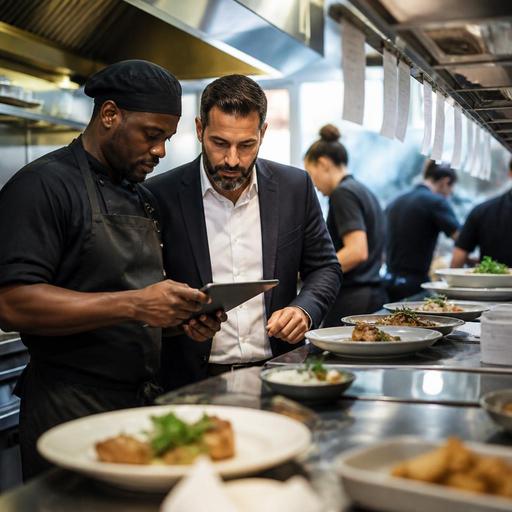
Walk the floor and observe real service. Do not rely only on memory. Staff often normalize workarounds and stop noticing them. A manager may think every takeaway order goes directly from POS to kitchen, but during peak hours the host may also answer phone questions, rewrite modifications, and interrupt the line to confirm availability.
It helps to ask practical questions such as:
- Which orders require the most clarification?
- Where do tickets pile up first?
- Which station waits on another station most often?
- When do staff leave their positions to solve avoidable issues?
- Which guest complaints point to a process problem rather than an individual mistake?
Fixes that improve speed, accuracy, and guest experience
Once bottlenecks are visible, the strongest fixes are usually operational, not dramatic. Small structural changes can remove recurring friction.
Clean up the menu structure
If guests and staff regularly ask the same questions, the menu is part of the bottleneck. Clarify sizes, included sides, cooking options, add-ons, and allergens. Group modifiers logically instead of leaving them as open text whenever possible. A better menu structure reduces hesitation at the table and confusion in the kitchen.
Reduce duplicate entry
Every time an order is copied from one place to another, the chance of delay and error increases. Digital ordering paths can help by sending guest selections directly into a managed workflow instead of relying on handwritten notes, scattered chat messages, or repeated verbal confirmation.
Separate order types when needed
If dine-in guests suffer when delivery demand spikes, the issue may be queue design. Some restaurants benefit from separate prep lanes, packaging zones, or timing rules for different channels. A pickup shelf, dedicated runner, or expo checkpoint can also reduce congestion around the pass.
Standardize modifier language
“No onions,” “without onion,” and “onion allergy” should not be treated as the same instruction. Build clear modifier categories and train staff to use them consistently. This protects accuracy and reduces back-and-forth questions.
Use status visibility to prevent silent waiting
Orders often appear late not because they are uncooked, but because no one knows their status. When teams can see whether an order is accepted, in prep, ready for service, or waiting for pickup, handoffs become faster and guest communication improves.
This is where a platform like Restomas can support operations naturally: digital menus, organized order capture, and clearer order management can reduce unclear choices, manual repetition, and hidden delays without changing the identity of the restaurant.
Turn flow mapping into a weekly management habit
Order flow mapping is most useful when it becomes a repeatable management practice rather than a one-time exercise. Menus change, staff changes, demand shifts by season, and new sales channels create new pressure points. A workflow that worked in winter may break during patio season or holiday traffic.
Set a short weekly review around one operational theme. One week, review ticket clarity. Another week, review pickup congestion. Another, compare dine-in and delivery timing conflicts. Keep the discussion specific and blame-free. The purpose is to improve the system staff work inside.
Good signs that your flow is improving include fewer order clarifications, smoother station handoffs, less crowding around the pass, more consistent pacing between courses, and fewer guest complaints about missing items or long unexplained waits.
Restaurant owners do not need a complex consulting project to uncover bottlenecks. They need a clear view of how orders actually move through the business. When the flow is mapped honestly, hidden friction becomes visible, and practical improvements become easier to prioritize.
If you are reviewing your service flow, Restomas can help you support that process with digital menus, organized order routing, and a smoother guest journey.
