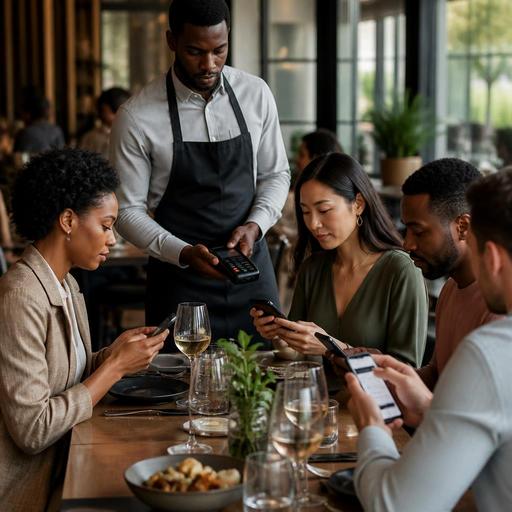
Split Checks for Large Parties: Faster Restaurant Service
Split-bill technology for restaurants is no longer a niche convenience. For many dining rooms, it is a practical tool for handling group tables without slowing down service, frustrating guests, or overloading staff at the end of the meal. When friends, families, coworkers, or tourists dine together, payment often becomes the most complicated part of the visit. A smooth split-bill process can shorten table-close time, reduce mistakes, and leave guests with a better final impression.
For restaurant owners and operators, the issue is not only about payment preferences. It is about workflow. A table of six or ten can move through ordering and dining with no problem, then create a service delay when everyone wants to pay differently. One guest pays for drinks, another covers two children, someone else needs an itemized receipt, and another wants to use cash while the rest pay by card. Without the right process, a simple request becomes a long manual task.
Why group payments create hidden service delays
Restaurants usually notice split-bill friction during busy periods. The dining room may be full, servers are juggling new orders, and the POS is already under pressure. At that moment, one large table asks to divide the bill in multiple ways. If the system is rigid, staff must manually recalculate items, reassign seats, print corrected checks, void errors, and explain totals to guests. That creates a delay not only for that table but for the next tables waiting for attention.
The operational problem is bigger than a few extra minutes. Group payment confusion can affect table turnover, staff confidence, and guest satisfaction. The end of a meal is the last service moment the guest remembers clearly. If everything was enjoyable but payment becomes awkward or slow, the overall experience feels less polished.
Common pain points include:
- Guests deciding late how to split the bill
- Servers trying to remember who ordered which item
- Manual corrections that increase risk of mistakes
- Long queues at a cashier station
- Difficulty handling mixed payment methods
- Awkward conversations when totals do not match expectations
These issues are especially common in casual dining, cafes with shared orders, tourist-heavy restaurants, and venues that host birthdays, office lunches, or family gatherings.
What effective split-bill technology should actually do
Not every digital payment feature solves the real problem. The most useful split-bill setup supports the service flow before the payment request becomes complicated. In practice, that means the restaurant should be able to connect orders clearly to seats, items, or guests from the beginning.
A strong split-bill workflow often includes several capabilities:
- Seat-based order entry so each item is tied to the correct guest or position at the table.
- Item-level bill splitting so shared dishes, drinks, or desserts can be assigned accurately.
- Multiple payment methods on one table including card, cash, or a mix.
- Fast bill review so staff can confirm totals with guests without redoing the entire check.
- Digital menu and ordering connection so the original order structure supports easier payment later.
For example, imagine a group of eight at a brunch restaurant. Two guests order cocktails, three share starters, one parent pays for children, and another guest leaves early and wants to settle immediately. If the POS and order flow already track seats and items clearly, the server can close that table with far less back-and-forth.
By contrast, if all items sit under one generic table ticket, the payment step becomes a manual puzzle.
How split-bill tools improve guest experience
Guests do not usually describe their needs in system language. They simply expect payment to be easy. When restaurants support that expectation well, the experience feels modern and considerate. This matters because groups often choose venues based on convenience as much as food quality, especially for work lunches, celebrations, and social gatherings.
Split-bill technology improves guest experience in several practical ways:
- Less waiting at the end of the meal: Guests can leave on time instead of waiting for repeated bill corrections.
- Fewer uncomfortable conversations: Clear itemization reduces disputes over who owes what.
- Better fit for modern payment habits: Many groups expect separate payments as a normal option.
- Greater trust: Transparent checks make guests more confident that charges are accurate.
Consider a busy city cafe serving lunch to office teams. The kitchen may perform well, and food may arrive quickly, but if staff need ten minutes to separate one table's bill, the service feels slower than it really was. On the other hand, a fast and accurate split payment can make the whole visit feel efficient.
This is also useful for international guests. In tourist areas, diners may come from places where separate payments are common. A digital menu and payment process that supports item clarity can reduce language friction and make the transaction simpler for both staff and guests.
Operational steps restaurants can take right now
Technology matters, but process matters just as much. Restaurant owners should review how group tables move from ordering to closing, then remove friction at each point. The goal is not to add more screens. It is to create a cleaner service path.
1. Set up seat-based ordering as a standard
Train servers to attach items to seats from the start, especially for parties above a certain size. Even when guests say they will pay together, plans often change by the end of the meal.
2. Define a house policy for shared items
Decide how staff should handle shared bottles, platters, tasting items, or family-style dishes. Clear internal rules reduce hesitation and inconsistency.
3. Make the split request easy to understand
Servers should have a simple script such as asking whether guests want to split by seat, by item, or by amount. This short question can prevent a longer correction later.
4. Reduce cashier bottlenecks
If possible, allow payment at the table instead of forcing every split check through one fixed station. This is particularly helpful during rush periods.
5. Connect menu structure to payment clarity
Clear item names, modifiers, and add-ons in the digital menu help guests recognize what they ordered. That makes it easier to confirm charges quickly.
6. Train for exceptions, not just normal cases
Large groups often create unusual situations: one guest leaves early, another wants a business receipt, or someone pays only for alcohol. Staff should know how to resolve these requests without escalating every case to a manager.
Where Restomas fits into a smoother group dining workflow
Split-bill performance improves when the restaurant's digital tools work together rather than in isolation. QR menus, organized ordering flows, and POS-connected operations all contribute to cleaner table data and faster checkout. When guests can review items clearly and staff can manage orders in a structured way, payment becomes easier to handle.
This is where restaurant digitization has a practical advantage. A platform approach helps operators connect front-of-house service with menu control and order management instead of treating payment problems as a last-minute issue. For example, a well-structured QR menu can reduce ordering ambiguity, while integrated order handling can make seat and item tracking more reliable throughout the meal.
Restaurant owners evaluating split-bill improvements should ask a few direct questions:
- Can our team split checks by seat, item, or custom amount without manual workarounds?
- Do our menu and ordering systems create clear, recognizable line items?
- Can staff handle group payments quickly during peak service?
- Are guests waiting too long for the final bill compared with food delivery time?
- Do payment issues regularly require manager intervention?
If the answer to several of these questions is yes, the problem is likely operational, not just financial.
Group dining should be profitable and enjoyable, not stressful at the final step. Restaurants that improve split-bill handling can serve large parties more smoothly, free up staff attention, and create a more professional guest experience from first order to final payment. If you are reviewing your digital service flow, Restomas can help you organize menus, ordering, and restaurant operations in a way that supports faster, cleaner group service.
